

Why Does an Extended Family Play an Important Role in Social Life?
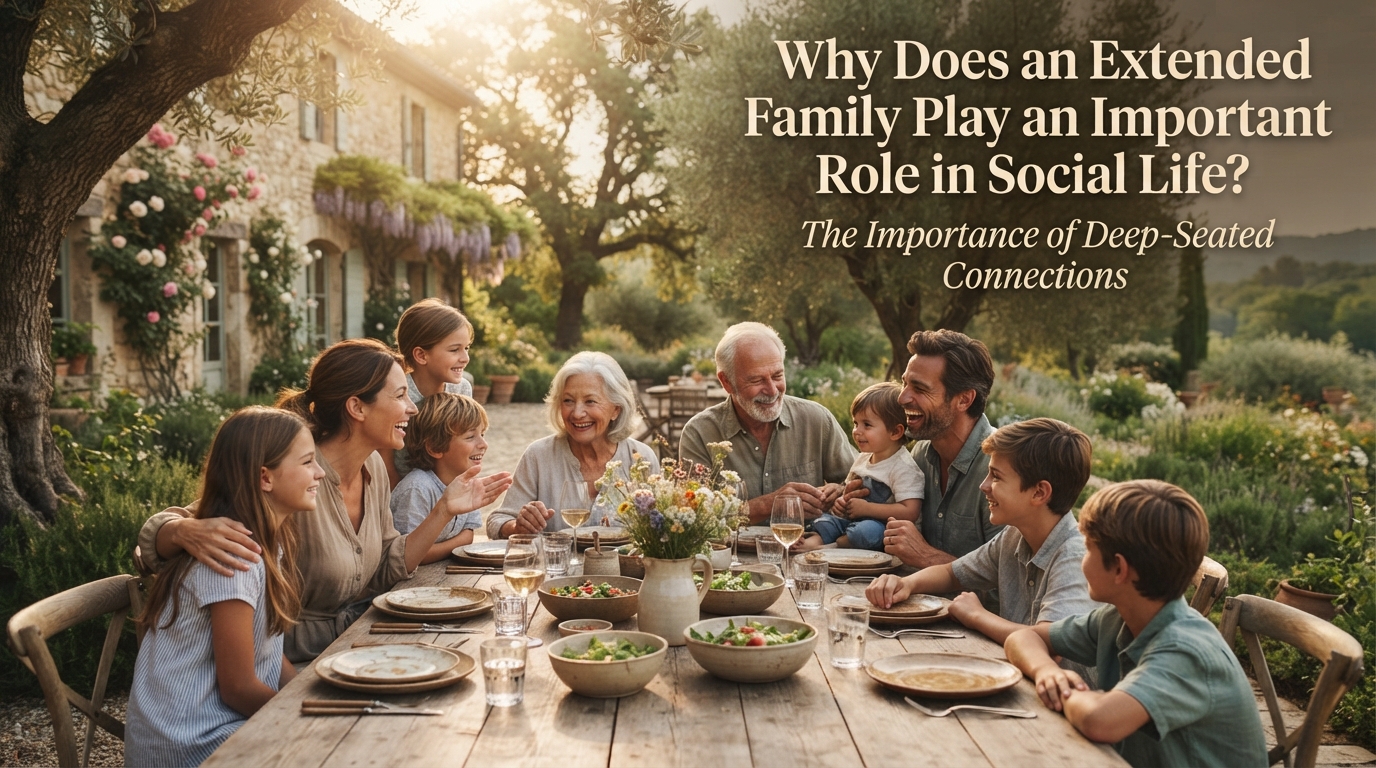
An extended family plays an important role in social life because it creates strong relationships, encourages cooperation, and provides support among different generations. Unlike a nuclear family, an extended family involves several relatives, such as grandparents, uncles, aunts, and cousins, who contribute to one another's lives. These relationships help individuals develop social skills, understand different perspectives, and build a sense of belonging within their family and community.
In everyday life, extended families can become an important source of emotional, social, and practical support. Family members often share experiences, exchange advice, help one another during difficult situations, and participate in social activities. Their involvement also helps preserve cultural traditions and teach younger generations about respect, responsibility, and togetherness. Therefore, an extended family has a meaningful influence on individual development and the social environment.
STRENGTHENING SOCIAL RELATIONSHIPS
One important role of an extended family is strengthening social relationships among relatives. Regular interactions between grandparents, parents, children, and other family members create opportunities to develop trust and maintain meaningful connections. These relationships teach individuals how to communicate, respect differences, and understand the feelings of others. Family gatherings and shared activities also help relatives become more familiar with one another.
Strong family relationships can influence how individuals interact with people outside their households. People who grow up in supportive family environments may become more confident in building friendships and maintaining positive social connections. Through everyday interactions, extended families help create a foundation for healthy relationships in society.
PROVIDING EMOTIONAL AND SOCIAL SUPPORT
Extended families provide emotional support when family members experience personal difficulties, stress, or challenging situations. Having several relatives to talk to can help individuals feel understood and less isolated. Grandparents, aunts, uncles, and cousins may offer advice, encouragement, or practical assistance based on their experiences. This support can strengthen emotional connections and create a feeling of security.
Besides emotional support, extended families also provide practical help in daily life. Relatives may assist with childcare, education, household responsibilities, or unexpected financial difficulties, depending on their abilities and circumstances. This spirit of cooperation teaches family members that helping others is an important part of maintaining healthy social relationships.
TEACHING SOCIAL VALUES AND RESPONSIBILITY
An extended family plays an important role in teaching social values to younger generations. Children can learn respect, honesty, patience, empathy, and responsibility through their interactions with different relatives. Parents and older family members often demonstrate these values through everyday behavior and family activities. These lessons help children understand how to treat others fairly and behave appropriately in different social situations.
Furthermore, children learn that every family member has responsibilities and deserves respect. They may participate in household activities, help younger relatives, or assist older family members. Such experiences encourage cooperation and develop a sense of responsibility that can be applied to schools, workplaces, and communities.
PRESERVING CULTURAL TRADITIONS AND FAMILY IDENTITY
Extended families contribute to society by preserving cultural traditions and passing them from one generation to another. Older relatives often introduce younger family members to traditional celebrations, local customs, family histories, and cultural practices. Through storytelling and shared activities, children gain a better understanding of their background and identity. This process helps prevent important family traditions from being forgotten.
Family celebrations, religious or cultural events, and traditional gatherings also strengthen relationships between relatives. These activities create opportunities for family members to share experiences and maintain their cultural connections. As a result, extended families help preserve cultural diversity and strengthen the sense of identity within society.
DEVELOPING COMMUNICATION AND COOPERATION SKILLS
Living in or regularly interacting with an extended family provides opportunities to develop communication skills. Family members often have different ages, personalities, opinions, and experiences. Through daily conversations, individuals learn how to express their thoughts, listen carefully, and understand different points of view. These abilities are important for building positive relationships in social environments.
Cooperation is another valuable skill developed through extended family relationships. Relatives may work together to organize family events, manage household activities, or help one another solve problems. These shared experiences teach individuals how to divide responsibilities, make decisions, and achieve common goals. Such skills are useful when participating in community activities and working with other people.
BUILDING A SENSE OF BELONGING AND SOCIAL IDENTITY
An extended family helps individuals develop a sense of belonging by providing a social environment where they can feel accepted and valued. Knowing that several relatives care about their well-being can increase confidence and emotional security. Family members also help individuals understand their backgrounds, relationships, and responsibilities within a larger family network. This connection can become an important part of personal identity.
A strong sense of belonging may encourage individuals to become more active in their communities. People who experience positive family relationships can develop a greater understanding of cooperation, trust, and social responsibility. Although every person has different experiences, supportive family connections can provide a valuable foundation for participating in social life.
SUPPORTING CHILDREN AND OLDER GENERATIONS
Extended families can provide valuable support for both children and older generations. Grandparents may share knowledge, offer guidance, and help parents care for children when necessary. Meanwhile, younger family members can provide companionship and assistance to older relatives who need additional support. These relationships encourage intergenerational cooperation and strengthen connections between different age groups.
Interactions between generations also allow family members to exchange knowledge and experiences. Children can learn from the life experiences of older relatives, while grandparents may gain new perspectives from younger generations. This mutual relationship encourages understanding and appreciation between age groups, creating a more supportive family environment.
ENCOURAGING COMMUNITY PARTICIPATION
The positive values developed within an extended family can encourage individuals to participate in community activities. Families may work together in neighborhood events, social gatherings, charitable activities, or local celebrations. Through these experiences, children and adults learn the importance of helping others and contributing to their surroundings. Family cooperation can also inspire individuals to become more responsible members of society.
In addition, relatives can introduce one another to wider social networks and community relationships. These connections may create opportunities to exchange information, develop friendships, and participate in collective activities. When families maintain positive relationships with their surroundings, they can contribute to a stronger and more connected community.
CONCLUSION
An extended family plays an important role in social life because it strengthens relationships, provides emotional support, teaches social values, and preserves cultural traditions. It also helps individuals develop communication skills, cooperation, responsibility, and a sense of belonging. Through interactions between different generations, family members can exchange knowledge and support one another in various situations.
Although modern lifestyles may change how relatives communicate and spend time together, the importance of extended family relationships remains significant. By maintaining regular communication, mutual respect, and shared responsibilities, extended families can contribute to healthier individuals and stronger communities.
Recent Posts

How Does Technology Make Daily Evaluation... 21.11.2026/57 View

Apa Strategi Menghadapi Kesenjangan antara Kompetensi... 21.11.2026/59 View

Mengapa Inventaris Aset Penting bagi Kelancaran... 21.11.2026/55 View

When Should Musicians Join a Record... 21.11.2026/54 View

Daily Evaluation or Daily Planning Which... 21.11.2026/61 View
