

Why Does an OTP Code Have a Short Expiration Time?
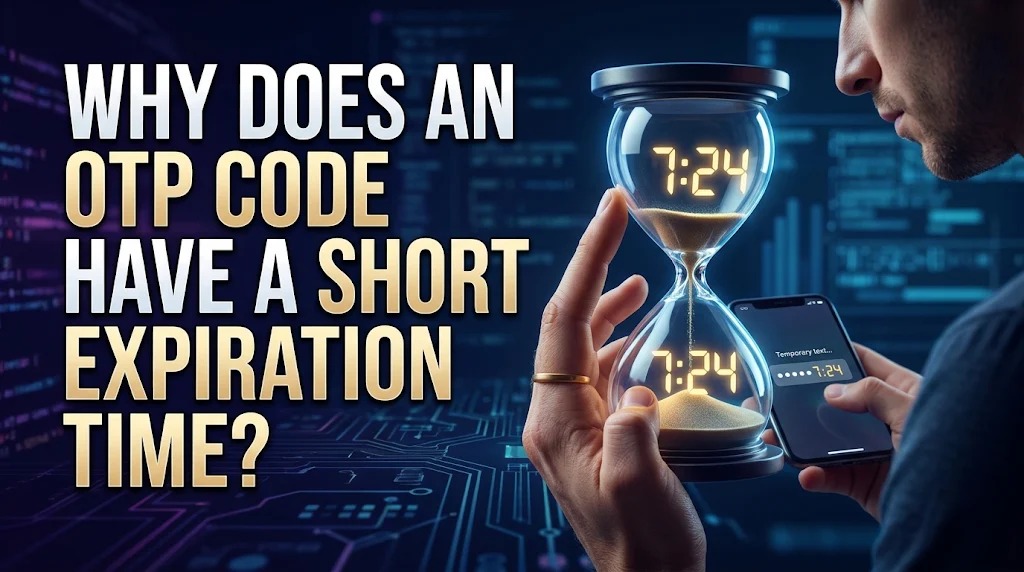
Digital accounts have become essential for communication, shopping, banking, and many other everyday activities. As more people depend on online services, protecting personal information and preventing unauthorized access have become increasingly important. One security feature commonly used by digital platforms is the One-Time Password (OTP), a temporary verification code that helps confirm a user's identity.
One characteristic that makes OTP codes different from regular passwords is their short expiration time. Users often have only a few minutes to enter the code before it becomes invalid. Although this limitation may sometimes feel inconvenient, it serves an important purpose in protecting digital accounts. Understanding why OTP codes expire quickly can help users recognize their security benefits and use them correctly.
UNDERSTANDING WHY OTP CODES HAVE AN EXPIRATION TIME
An OTP code, or One-Time Password, is a temporary authentication code used to verify a user's identity during a specific digital activity. It may be required when logging in, creating an account, resetting a password, or confirming an online transaction. Unlike permanent passwords, OTP codes are designed to remain valid for a limited period or a particular verification session.
The expiration period is an important part of the security system because it limits how long a code can be used. Once the validity period ends, the authentication system will reject the code even if the user enters the correct numbers. This prevents old verification codes from remaining available for future unauthorized attempts.
Different digital platforms may use different expiration periods depending on their security requirements. Some codes remain valid for a few minutes, while certain authenticator applications generate codes that change at regular intervals. The exact duration depends on the authentication technology and the policies established by the service provider.
REDUCING THE RISK OF UNAUTHORIZED ACCOUNT ACCESS
One of the main reasons OTP codes have short expiration times is to reduce opportunities for cybercriminals to misuse stolen verification information. If a code remains active for a long period, criminals have more time to obtain and use it. A shorter validity period limits the time available for unauthorized individuals to complete the authentication process.
For example, imagine someone receives an OTP code but accidentally shares it with another person. If the code remains valid for only a short period, the opportunity to misuse it becomes more limited. However, this does not mean that an expired code automatically protects an account from every threat.
Short expiration times are particularly useful when users access accounts through public networks or unfamiliar devices. These situations may involve additional security risks, especially when users are not careful about protecting their login information. By limiting the validity of each code, digital platforms can strengthen the authentication process.
Nevertheless, users should remember that cybercriminals may attempt to use stolen codes immediately. Therefore, short expiration times should be combined with other protective measures, including strong passwords, secure devices, and careful handling of verification messages.
PREVENTING THE REUSE OF OLD VERIFICATION CODES
Another important purpose of OTP expiration is to prevent the repeated use of previously generated verification codes. Regular passwords may remain valid until users change them, but OTP codes are designed for temporary authentication. Once a code has been successfully used or has expired, it should no longer be accepted for another verification attempt.
This feature helps protect accounts against certain forms of replay attacks. In these attacks, criminals attempt to reuse previously captured authentication information to gain unauthorized access. A properly implemented OTP system limits this risk by checking whether the submitted code is still valid and associated with the correct authentication session.
For example, when a user requests a new verification code, the system may automatically invalidate the previous one. This prevents multiple codes from remaining active at the same time, depending on the platform's security design. As a result, users should always enter the latest OTP code instead of selecting an older message.
The one-time nature of OTP codes also makes authentication more controlled. Each verification request is connected to a specific security event, reducing the possibility of old codes being used for unrelated activities. This is particularly important for banking applications and other services that handle sensitive information.
IMPROVING SECURITY DURING DIGITAL TRANSACTIONS
Short OTP expiration times are especially important when users complete financial activities. Banking applications, digital wallets, and online payment platforms may require temporary verification codes before allowing certain transactions. These codes help confirm that the user is actively participating in the requested activity.
For instance, when someone makes an online payment, the platform may send an OTP code to confirm the transaction. The user must enter the code within the specified period to complete the process. If the code expires, the transaction may require a new verification request.
This system helps reduce the time during which intercepted verification information can potentially be misused. It also encourages users to complete authentication promptly rather than leaving sensitive verification messages unattended. However, OTP expiration alone cannot guarantee that every transaction is legitimate.
Users should always check transaction details before entering a verification code. They should pay attention to the amount, recipient, and purpose of the transaction, especially when the code is connected to financial activities. If the information does not match their intentions, they should stop the process and contact the official service provider.
FACTORS THAT CAN AFFECT OTP EXPIRATION AND DELIVERY
Several factors can influence how users experience OTP expiration. One of the most common problems is delayed message delivery. SMS notifications may arrive late because of mobile network congestion, weak signals, or temporary communication service disruptions. When this happens, the code may already be invalid before the user receives it.
Another factor is the authentication technology used by the platform. SMS-based and email-based OTP codes are commonly generated for a specific verification request, while time-based authenticator applications produce codes that change according to a predefined interval. Each method may have different validity rules.
Repeatedly requesting new OTP codes can also create confusion. Some platforms invalidate earlier codes whenever users request replacements. Therefore, entering an older code may result in a verification failure even when its original expiration period has not passed.
To avoid these problems, users should request a code only when necessary, maintain a stable connection, and enter the newest code promptly. If an OTP code repeatedly expires before it can be used, contacting the official service provider may help identify whether the problem comes from the network, application, or authentication system.
CONCLUSION
An OTP code has a short expiration time because temporary authentication helps reduce the risk of unauthorized access, prevents the reuse of old verification information, and strengthens security during digital transactions. By limiting how long a code remains valid, digital platforms can make it more difficult for criminals to misuse stolen verification information.
However, short expiration times do not provide complete protection against every cyber threat. Users should enter their latest verification codes promptly, check transaction details carefully, and never share OTP codes with other people. Combining temporary authentication with strong passwords, secure devices, and responsible digital habits can help maintain better account protection.
Recent Posts

Bagaimana Sistem SKS pada Program Kuliah... 22.11.2026/35 View

How Does Technology Make Daily Evaluation... 21.11.2026/69 View

Apa Strategi Menghadapi Kesenjangan antara Kompetensi... 21.11.2026/69 View

Mengapa Inventaris Aset Penting bagi Kelancaran... 21.11.2026/67 View

When Should Musicians Join a Record... 21.11.2026/68 View
