

Why Does Circular Economy Matter in Construction?
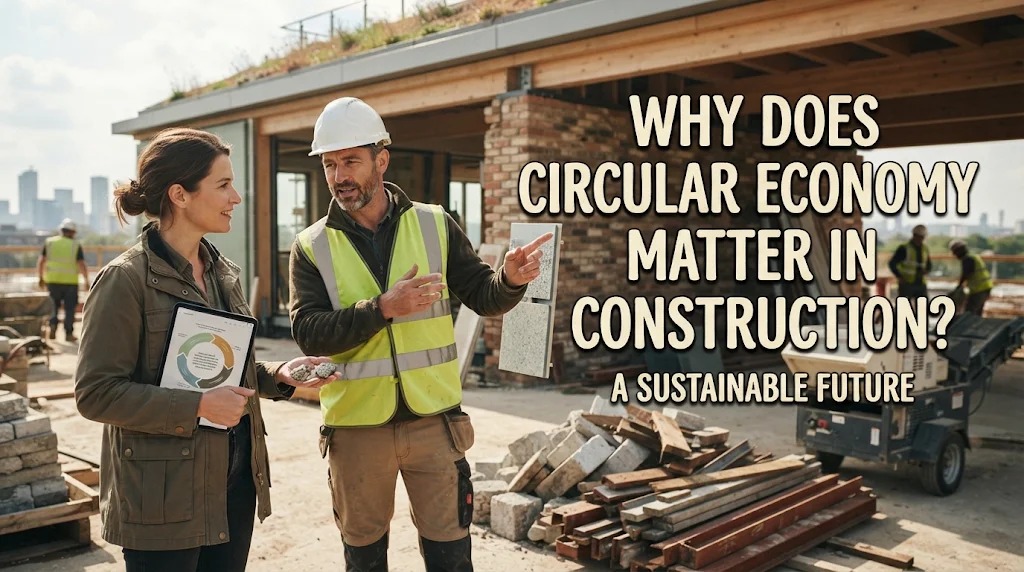
A circular economy matters in construction because it encourages companies to use materials efficiently, reduce waste, and extend the lifespan of valuable resources. Traditional construction practices often follow a linear system in which materials are purchased, used, and discarded after a project is completed. This approach can increase resource consumption, landfill waste, and environmental pollution. A circular economy offers a more sustainable alternative by promoting material reuse, recycling, repair, and responsible resource management throughout the building process.
REDUCES CONSTRUCTION WASTE
One of the main benefits of a circular economy is reducing the amount of waste generated during construction activities. Companies can achieve this by planning material requirements carefully, preventing unnecessary purchases, and recovering leftover materials for future use. Concrete, wood, metal, bricks, and other building materials can often be reused or recycled instead of being sent directly to landfills. These practices help create cleaner construction sites and improve overall waste management.
CONSERVES NATURAL RESOURCES
Construction requires significant quantities of natural resources, including sand, gravel, timber, and minerals. Excessive extraction of these materials can damage ecosystems and reduce the availability of natural resources. A circular economy helps address this problem by encouraging the use of recycled and recovered materials. For example, crushed concrete can replace some natural aggregates in suitable applications, while reclaimed timber can be used for furniture and interior components. This reduces dependence on newly extracted resources.
LOWERS CONSTRUCTION COSTS
Applying circular economy principles can help construction companies control project expenses. Reusing existing materials reduces the need to purchase new supplies, while recycling can lower certain waste transportation and disposal costs. Companies can also generate additional income by selling recovered materials that remain suitable for other applications. Although some recycling and recovery processes require initial investment, efficient resource management can provide long-term economic benefits.
SUPPORTS ENVIRONMENTAL PROTECTION
A circular economy contributes to environmental protection by reducing waste disposal, conserving resources, and limiting pollution associated with material production. Manufacturing new construction materials often requires energy and generates greenhouse gas emissions. Using recovered materials can reduce the demand for new production in appropriate applications. Proper waste management also helps prevent discarded construction materials from contaminating soil and water sources.
ENCOURAGES INNOVATION IN BUILDING MATERIALS
Circular economy practices create opportunities for developing innovative construction materials and products. Manufacturers can transform recovered concrete, recycled plastics, reclaimed wood, and other discarded resources into useful building components. Architects and engineers can also design structures that make materials easier to repair, replace, dismantle, and reuse. These innovations encourage more efficient building methods and create new opportunities for sustainable product development.
EXTENDS THE LIFESPAN OF BUILDING MATERIALS
Extending material lifespan is an important part of a circular economy. Instead of immediately replacing damaged components, construction companies can consider repairing or restoring materials whenever practical. Doors, windows, steel components, roofing materials, and other building elements may remain useful after proper inspection and maintenance. Designing buildings with adaptable structures and reusable components also makes future renovations and material recovery easier.
CREATES NEW BUSINESS OPPORTUNITIES
Circular construction can create economic opportunities for recycling companies, material suppliers, manufacturers, and specialized service providers. Businesses can develop activities focused on collecting, processing, and selling recovered construction materials. Reclaimed timber, recycled aggregates, and reused building components can become valuable products in the construction market. Cooperation between different industries also encourages resource sharing and supports the development of more sustainable business models.
CONCLUSION
A circular economy matters in construction because it reduces waste, conserves natural resources, lowers material expenses, and supports environmental protection. It also encourages innovation, extends the lifespan of building materials, and creates new business opportunities. By adopting circular principles throughout planning, construction, renovation, and demolition activities, the construction industry can become more efficient, economically responsible, and environmentally sustainable.
Recent Posts

How Does Technology Make Daily Evaluation... 21.11.2026/58 View

Apa Strategi Menghadapi Kesenjangan antara Kompetensi... 21.11.2026/60 View

Mengapa Inventaris Aset Penting bagi Kelancaran... 21.11.2026/56 View

When Should Musicians Join a Record... 21.11.2026/55 View

Daily Evaluation or Daily Planning Which... 21.11.2026/63 View
