

Why Does Construction Waste Continue to Increase?
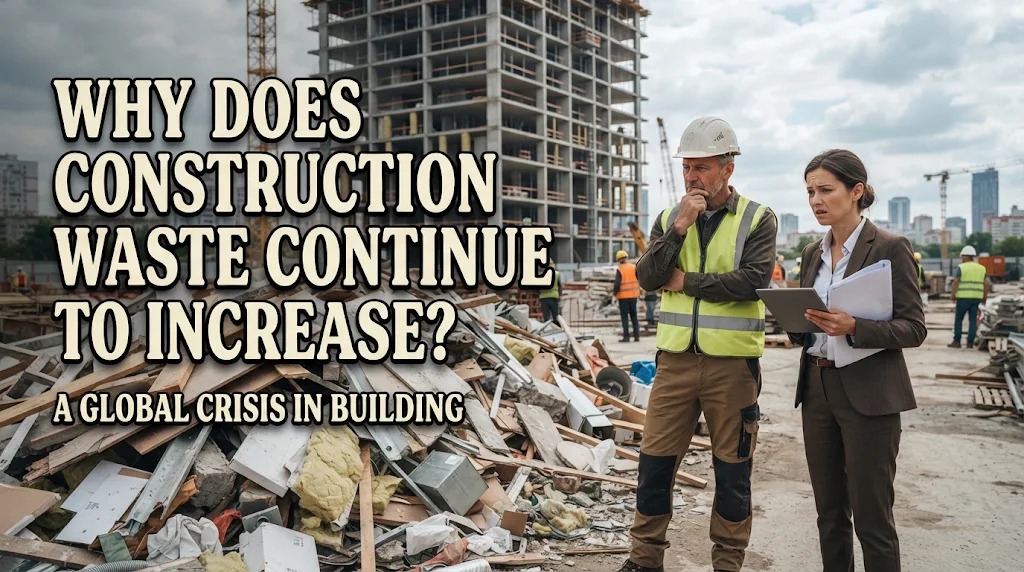
Construction waste has become a growing concern as residential development, infrastructure projects, and commercial construction continue to expand. Every construction activity can produce leftover materials, damaged supplies, packaging, and debris from demolition or renovation. Common examples include concrete, bricks, wood, steel, glass, plastic, and discarded tiles. When these materials are not properly managed, they can accumulate at construction sites and create environmental problems.
The increasing volume of construction waste is influenced by several factors, including poor project planning, changing building designs, inefficient work practices, and limited recycling facilities. Addressing these causes requires more than simply improving disposal methods. Construction companies must also reduce unnecessary material consumption and find ways to reuse resources throughout the building process.
EXPANSION OF CONSTRUCTION PROJECTS
Population growth and economic development increase the demand for houses, offices, shopping centers, roads, and public infrastructure. As more projects are developed, construction companies require larger quantities of raw materials. Consequently, even small amounts of waste from individual projects can create a substantial total volume when combined across many construction sites.
Large infrastructure projects also involve excavation, land preparation, and structural development. These activities can generate soil, concrete fragments, metal scraps, and other unwanted materials. Without effective waste management, increasing construction activity can place additional pressure on disposal facilities.
INEFFICIENT MATERIAL ESTIMATION
Incorrect material calculations are a common source of construction waste. When contractors purchase supplies without accurate measurements, they may order more materials than the project actually requires. Unused products can remain in storage until they become damaged, outdated, or unsuitable for other construction activities.
Underestimating material requirements can also create problems. Additional purchases may result in repeated deliveries, more packaging, and delays. Using detailed project measurements and monitoring material inventories can help construction teams control consumption more effectively.
FREQUENT DESIGN MODIFICATIONS
Changes to building designs during construction can make previously installed or purchased materials unusable. Clients may request different room layouts, finishing materials, structural adjustments, or decorative features after work has already started. These modifications sometimes require existing components to be removed and replaced.
Poor communication between designers, engineers, contractors, and clients can increase the likelihood of unnecessary revisions. Completing important design decisions before construction begins can reduce repeated work and prevent materials from becoming waste.
INCREASE IN DEMOLITION AND RENOVATION ACTIVITIES
Older buildings are frequently renovated, expanded, or demolished to accommodate changing needs. These activities generate large quantities of construction debris, including concrete, bricks, roofing materials, timber, and metal components.
Renovation can also produce waste when property owners replace functional materials simply because they want a different appearance. Although some demolition materials can be recovered, improper separation and handling may make them difficult to reuse. Careful assessment of existing structures can help identify materials that remain suitable for use.
POOR MATERIAL STORAGE AND HANDLING
Construction materials can lose their quality when stored in unsuitable conditions. Exposure to rain, moisture, excessive heat, and careless handling may damage products before workers have an opportunity to use them. Cement can become unusable when exposed to moisture, while timber and certain finishing products may deteriorate under improper storage conditions.
Disorganized construction sites also increase the risk of material damage. Supplies can be misplaced, contaminated, or accidentally destroyed by equipment and construction activities. Proper storage areas, inventory systems, and handling procedures can reduce these losses.
LIMITED USE OF RECYCLING TECHNOLOGY
Many construction materials can be processed for reuse, but recycling requires suitable equipment, facilities, and technical knowledge. Concrete may need crushing, metal requires sorting, and certain materials must undergo additional treatment before they can be used again.
When recycling facilities are unavailable or located far from construction sites, transportation costs can discourage companies from recovering waste materials. Improving access to recycling technology and establishing partnerships with waste processors can make material recovery more practical.
LACK OF WORKER TRAINING
Construction workers influence how materials are handled, installed, separated, and discarded. Without adequate training, workers may use materials inefficiently, produce unnecessary offcuts, or mix recyclable materials with general waste.
Clear instructions and regular supervision can improve daily construction practices. Training should explain how to measure materials accurately, prevent damage, separate different waste categories, and identify items that can still be reused.
DEPENDENCE ON DISPOSABLE MATERIALS
Construction activities often involve packaging, protective coverings, temporary supplies, and other products designed for limited use. Although these materials can support safety and convenience, excessive dependence on disposable products increases the amount of waste generated.
Plastic packaging and protective materials are particularly difficult to manage when they are mixed with other construction debris. Companies can reduce this problem by choosing reusable alternatives where practical, coordinating packaging requirements with suppliers, and arranging separate collection for recyclable materials.
INSUFFICIENT WASTE MANAGEMENT POLICIES
Construction waste management requires clear procedures for collection, separation, transportation, recycling, and final disposal. When responsibilities are poorly defined, construction teams may handle waste inconsistently or rely on unsuitable disposal methods.
Effective policies can establish minimum standards for waste separation and encourage companies to monitor the amount of material discarded. Regular inspections and accurate waste records also help identify areas where construction processes can be improved.
PRACTICAL WAYS TO REDUCE CONSTRUCTION WASTE
Reducing construction waste begins with better preparation before work starts. Project managers should calculate material requirements carefully, coordinate design decisions, and select construction methods that minimize unnecessary cutting and replacement.
During construction, companies can separate waste at its source, protect materials from damage, and monitor inventory levels. Reusable materials should be identified before disposal, while recyclable items can be sent to appropriate processing facilities. Prefabrication and modular construction may also reduce on-site waste when the project design and conditions are suitable.
CONCLUSION
Construction waste continues to increase because of expanding development, inaccurate material estimates, frequent design changes, demolition activities, and inefficient construction practices. Limited recycling technology, inadequate worker training, and weak waste management procedures can make the problem more difficult to control.
Reducing construction waste requires cooperation among developers, architects, contractors, workers, suppliers, and waste management providers. Through accurate planning, responsible material handling, recycling, and sustainable construction methods, the industry can reduce unnecessary waste while improving resource efficiency and environmental protection.
Recent Posts

How Does Technology Make Daily Evaluation... 21.11.2026/58 View

Apa Strategi Menghadapi Kesenjangan antara Kompetensi... 21.11.2026/60 View

Mengapa Inventaris Aset Penting bagi Kelancaran... 21.11.2026/56 View

When Should Musicians Join a Record... 21.11.2026/55 View

Daily Evaluation or Daily Planning Which... 21.11.2026/63 View
