

Why Does Digital Transformation Require Teachers to Continuously Improve Their Teaching Skills?
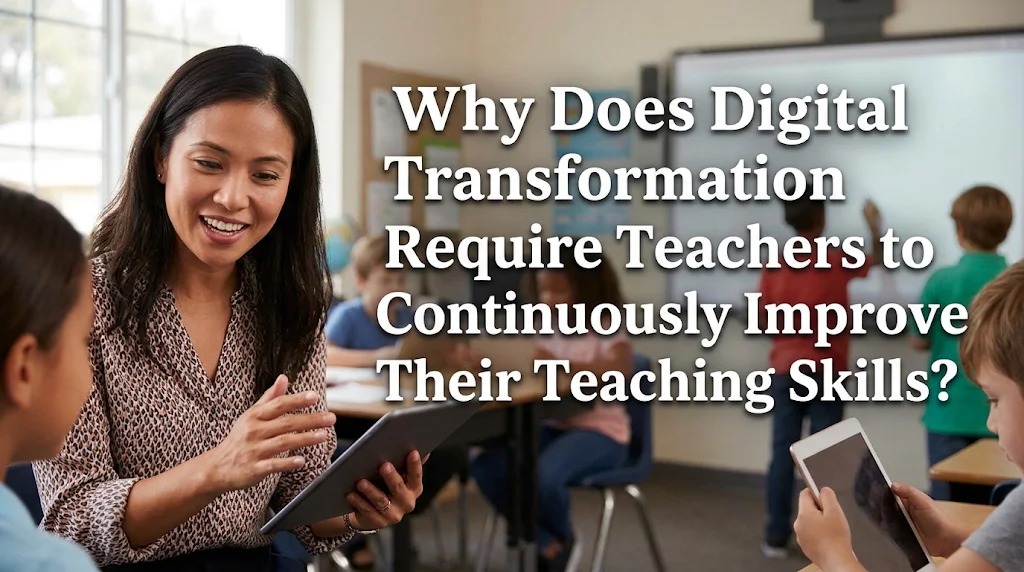
Digital transformation has significantly changed the way education is delivered and experienced. The development of internet technology, digital learning platforms, artificial intelligence, and interactive applications has created new opportunities for teachers and students. Traditional teaching methods are no longer the only way to deliver educational materials because technology allows information to be presented through various digital formats. These changes require teachers to continuously improve their teaching skills to remain effective in an increasingly modern educational environment.
Teachers play an important role in helping students understand information, develop critical thinking, and build essential competencies. However, technological developments also change students' learning preferences and educational needs. Teachers must therefore learn how to use digital tools, create engaging learning activities, and adapt their teaching strategies. Continuous professional development is essential to ensure that technology improves educational quality rather than becoming an additional challenge.
ADAPTING TO RAPID TECHNOLOGICAL DEVELOPMENTS
Technology continues to develop and introduce new tools that can support educational activities. Teachers who previously depended on printed textbooks and conventional classroom presentations now have opportunities to use digital learning platforms, educational videos, interactive applications, and virtual classrooms. Understanding these technologies helps educators deliver learning materials in more varied and accessible ways. Without continuous adaptation, teachers may find it difficult to meet the changing expectations of modern education.
Furthermore, new technologies such as Artificial Intelligence (AI) and virtual reality are creating additional possibilities for teaching and learning. AI-powered applications can help teachers prepare learning materials, generate practice questions, and provide ideas for classroom activities. Virtual simulations can also help explain complex subjects through more realistic experiences. Teachers do not need to master every new technology immediately, but they should continuously explore tools that are relevant to their subjects and students' needs.
CREATING MORE INTERACTIVE AND ENGAGING LEARNING EXPERIENCES
Students may lose interest when learning activities rely entirely on one-way explanations and repetitive assignments. Digital transformation provides teachers with opportunities to create more interactive educational experiences. They can use digital quizzes, educational games, animations, videos, and online discussions to encourage active student participation. These methods help students understand lessons through different approaches and make classroom activities more interesting.
However, using technology does not automatically make learning effective. Teachers must understand how to select appropriate digital tools and connect them with specific learning objectives. For example, interactive quizzes can help evaluate students' understanding, while educational videos can provide visual explanations of difficult concepts. By improving their instructional skills, teachers can combine digital resources with effective teaching strategies to create more meaningful learning experiences.
IMPROVING DIGITAL LITERACY AND TECHNOLOGICAL COMPETENCIES
Digital literacy is an essential competency that teachers need to develop in the modern educational environment. It involves understanding how to access, evaluate, create, and communicate information through digital technology. Teachers with strong digital literacy can use online resources more effectively and guide students in identifying reliable educational information. They can also help students recognize misinformation, understand copyright, and practice responsible online behavior.
In addition, teachers need practical skills to operate educational software, manage digital classrooms, and use online assessment systems. These abilities can improve the organization of teaching activities and make communication with students more efficient. Schools should provide regular training, workshops, and professional learning opportunities to support educators in developing these competencies. Strong digital teaching skills allow teachers to use technology confidently while maintaining appropriate educational standards.
SUPPORTING DIFFERENT STUDENT LEARNING NEEDS
Every student has different abilities, interests, learning speeds, and levels of understanding. Digital transformation provides teachers with additional resources to respond to these differences. Educational platforms can offer various learning materials, exercises, and interactive activities that support different learning needs. Teachers can use these resources to provide additional explanations for students who experience difficulties and enrichment activities for those who need greater challenges.
Some digital learning systems also provide information about student performance through assessment results and learning progress reports. This information can help teachers recognize topics that students find difficult and identify areas requiring additional attention. However, educators must interpret the information carefully because learning progress cannot be measured through numbers alone. By combining personalized learning with direct guidance and classroom observation, teachers can provide more appropriate support for individual students.
STRENGTHENING PROFESSIONAL COMPETITIVENESS AND CAREER DEVELOPMENT
Teachers need to continuously improve their competencies to remain professionally relevant. Educational institutions increasingly expect educators to understand modern teaching approaches, digital communication, and technology-based assessment methods. Teachers who develop these abilities can adapt more easily to changes in educational policies and institutional requirements. Continuous learning also helps them improve their confidence when handling new teaching responsibilities.
Professional development can be achieved through various activities, including online courses, educational seminars, teacher communities, workshops, and academic training programs. Teachers can also exchange experiences with colleagues to discover effective teaching strategies and discuss challenges in digital education. These activities encourage educators to evaluate their performance and identify areas that need improvement. Developing professional teaching competencies can strengthen career opportunities while contributing to better educational outcomes.
MAINTAINING HUMAN CONNECTION AND RESPONSIBLE TECHNOLOGY USE
Although digital technology offers many benefits, teachers must understand that education involves more than delivering information through digital devices. Students also need emotional support, motivation, social interaction, and guidance in developing positive character. Teachers play an important role in building relationships that encourage students to feel comfortable asking questions and expressing their opinions. These human aspects of education cannot be replaced entirely by digital applications.
Teachers must also understand the risks associated with excessive technology use. Too much screen time, online distractions, privacy violations, and dependence on artificial intelligence can affect students' learning habits. Educators need to establish clear guidelines for responsible technology use and encourage students to balance online activities with direct interaction and practical experiences. By maintaining human-centered education, teachers can ensure that technological innovation supports students' academic and personal development.
CONCLUSION
Digital transformation requires teachers to continuously improve their teaching skills because technology, student expectations, and educational needs continue to change. Teachers need to develop digital literacy, understand modern learning platforms, create interactive activities, and adapt their teaching methods to different student abilities. These competencies help educators use technology more effectively while improving the quality of classroom experiences.
However, successful digital education does not depend entirely on advanced technological tools. Teachers must also maintain personal interaction, provide emotional support, and guide students in using technology responsibly. Through continuous professional development and a balanced approach to digital learning, teachers can remain effective educators and prepare students to face future academic and professional challenges.
Recent Posts

Bagaimana Sistem SKS pada Program Kuliah... 22.11.2026/33 View

How Does Technology Make Daily Evaluation... 21.11.2026/67 View

Apa Strategi Menghadapi Kesenjangan antara Kompetensi... 21.11.2026/67 View

Mengapa Inventaris Aset Penting bagi Kelancaran... 21.11.2026/65 View

When Should Musicians Join a Record... 21.11.2026/66 View
