

Why Does Family Environment Play an Important Role in Personality Formation?
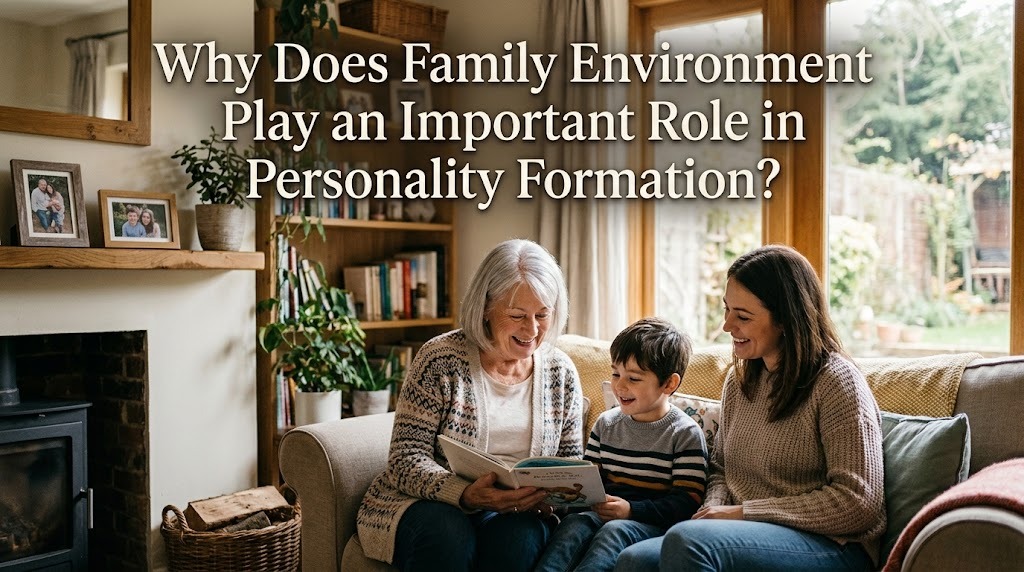
Personality is an important part of human development because it influences how individuals think, feel, behave, and interact with others. Every person has different personality traits, such as being confident, patient, responsible, friendly, or independent. These characteristics do not develop overnight but are influenced by various factors throughout life. One of the most important factors is the family environment, where individuals first learn about values, attitudes, habits, and social behavior.
The family is generally the first social environment experienced by children. Through daily interactions with parents, siblings, and other family members, children begin to understand how to communicate, express emotions, solve problems, and respond to different situations. A supportive family environment can encourage positive personality development, while an unhealthy environment may create difficulties in building confidence and emotional stability. Therefore, understanding the role of family environment in personality formation is essential for supporting healthy individual development.
WHAT IS PERSONALITY FORMATION?
Personality formation is the process through which a person's characteristics, attitudes, thoughts, emotions, and behavioral patterns develop over time. This process is influenced by both internal factors, such as temperament and genetic characteristics, and external factors, including family, education, culture, and social interactions. Personality helps determine how someone responds to challenges, builds relationships, and makes decisions in everyday life.
Personality development begins in early childhood and continues throughout different stages of life. During childhood, individuals learn many basic behaviors by observing and interacting with the people around them. As they grow older, their experiences at school, in friendships, and within society also contribute to shaping their personalities. However, the family environment remains one of the earliest and most influential foundations because it introduces children to their first experiences of communication, discipline, affection, and responsibility.
WHY IS THE FAMILY ENVIRONMENT IMPORTANT IN PERSONALITY FORMATION?
The family environment plays an important role in personality formation because it provides the first place where children learn how to behave and interact with other people. Parents and family members become examples that children observe and often imitate. The way family members communicate, handle disagreements, express emotions, and treat others can influence children's attitudes and behavior.
A positive family environment can help children develop confidence, empathy, independence, and responsibility. When children receive attention, affection, and appropriate guidance, they are more likely to feel valued and secure. These experiences can become important foundations for developing healthy relationships and positive social behavior as they grow older. In contrast, constant conflict, neglect, or excessive criticism may make it more difficult for children to develop emotional security and self-confidence.
HOW DO PARENTS INFLUENCE CHILDREN'S PERSONALITY DEVELOPMENT?
Parents have a significant influence on children's personality because they are usually the first people children interact with regularly. Their parenting styles, communication habits, and daily behavior provide examples that children may follow. For instance, parents who demonstrate honesty, patience, and responsibility can encourage children to practice these values in their own lives.
Parenting styles also influence how children develop their personalities. Parents who combine affection with clear rules and reasonable expectations can help children become more disciplined and independent. Meanwhile, overly strict parenting may make some children afraid of making mistakes or expressing their opinions. On the other hand, a lack of supervision and guidance can make it harder for children to understand boundaries and responsibilities. Therefore, balanced parenting is important in supporting healthy personality development.
HOW DOES FAMILY COMMUNICATION SHAPE A CHILD'S PERSONALITY?
Communication within the family helps children learn how to express their thoughts, feelings, and opinions. When parents listen carefully and encourage open discussions, children can become more comfortable sharing their experiences. This interaction also teaches them how to respect different opinions and communicate appropriately with others.
Healthy family communication can also strengthen children's confidence and emotional understanding. For example, when children are allowed to explain their problems without immediately receiving criticism, they may become more willing to discuss difficult situations. They can gradually learn to identify their emotions, understand other people's perspectives, and find appropriate ways to resolve disagreements. These communication skills are valuable for building positive relationships at school, in friendships, and in the wider community.
WHAT IS THE ROLE OF FAMILY VALUES IN PERSONALITY FORMATION?
Family values provide important guidance for children's behavior and decision-making. Values such as honesty, respect, discipline, responsibility, tolerance, and kindness are often introduced through everyday family activities. Children gradually understand these principles by observing how their family members apply them in real situations.
For example, parents who consistently demonstrate honesty can encourage children to become truthful in their words and actions. Similarly, teaching children to respect others helps them develop empathy and understand the importance of treating people fairly. When family values are practiced consistently rather than explained only through words, children have more opportunities to understand and apply them. These values can eventually become part of their personality and influence how they behave in different social environments.
HOW DOES FAMILY RELATIONSHIPS AFFECT EMOTIONAL DEVELOPMENT?
Relationships between family members have a strong connection with children's emotional development. A warm and supportive relationship can help children feel safe, accepted, and appreciated. These feelings are important because they allow children to develop emotional security and become more comfortable expressing themselves.
Positive relationships with parents and siblings can also teach children empathy, patience, cooperation, and conflict resolution. For example, children who learn to share with their siblings may gradually understand the importance of considering other people's needs. However, frequent arguments, emotional neglect, or a lack of affection may create emotional challenges. Although every child responds differently to family experiences, a healthy family relationship can provide valuable emotional support throughout development.
CAN A NEGATIVE FAMILY ENVIRONMENT AFFECT PERSONALITY DEVELOPMENT?
A negative family environment can influence personality development, particularly when children are repeatedly exposed to unhealthy interactions. Frequent arguments, verbal aggression, neglect, excessive pressure, and a lack of emotional support can affect how children understand themselves and other people. Some children may become less confident, anxious, withdrawn, or sensitive to criticism because they do not consistently experience a sense of security at home.
However, the effects of an unhealthy family environment are not always permanent or identical for every individual. Personality development is influenced by many factors, including friendships, education, community support, and personal experiences. Children who receive positive support from teachers, relatives, mentors, or other trusted individuals may develop healthier ways to manage difficult experiences. This shows that although the family environment is highly influential, it does not completely determine a person's future personality.
HOW CAN FAMILIES CREATE A POSITIVE ENVIRONMENT FOR PERSONALITY DEVELOPMENT?
Families can support positive personality development by creating a home environment based on affection, respect, communication, and mutual understanding. Parents should provide children with opportunities to express their opinions, ask questions, and discuss their problems without feeling afraid. Listening to children and acknowledging their feelings can help them develop confidence and emotional awareness.
In addition, families should establish clear rules and responsibilities that are appropriate for children's ages and abilities. Giving children opportunities to make simple decisions, complete household tasks, and learn from mistakes can encourage independence and responsibility. Parents should also demonstrate positive behavior through their everyday actions because children often learn more from what adults practice than from what they say. Consistent support and good examples can help children develop positive habits that remain valuable throughout their lives.
CONCLUSION
The family environment plays an important role in personality formation because it provides the foundation for developing values, attitudes, emotional stability, and social behavior. Through parenting styles, family communication, relationships, and everyday experiences, children learn how to understand themselves and interact with others. A supportive family environment can encourage confidence, independence, empathy, and responsibility, while unhealthy family interactions may create challenges in emotional and social development.
Nevertheless, personality is not determined by family experiences alone. Education, friendships, culture, and personal experiences also contribute to individual development. By creating a loving, supportive, and respectful home environment, families can help children build positive personalities and develop the skills needed to face different situations in life. Therefore, a healthy family environment is an essential foundation for raising individuals who are confident, responsible, and capable of maintaining positive relationships with others.
Recent Posts

Bagaimana Sistem SKS pada Program Kuliah... 22.11.2026/46 View

How Does Technology Make Daily Evaluation... 21.11.2026/73 View

Apa Strategi Menghadapi Kesenjangan antara Kompetensi... 21.11.2026/75 View

Mengapa Inventaris Aset Penting bagi Kelancaran... 21.11.2026/71 View

When Should Musicians Join a Record... 21.11.2026/75 View
