

Why Does Global Warming Accelerate Climate Change?
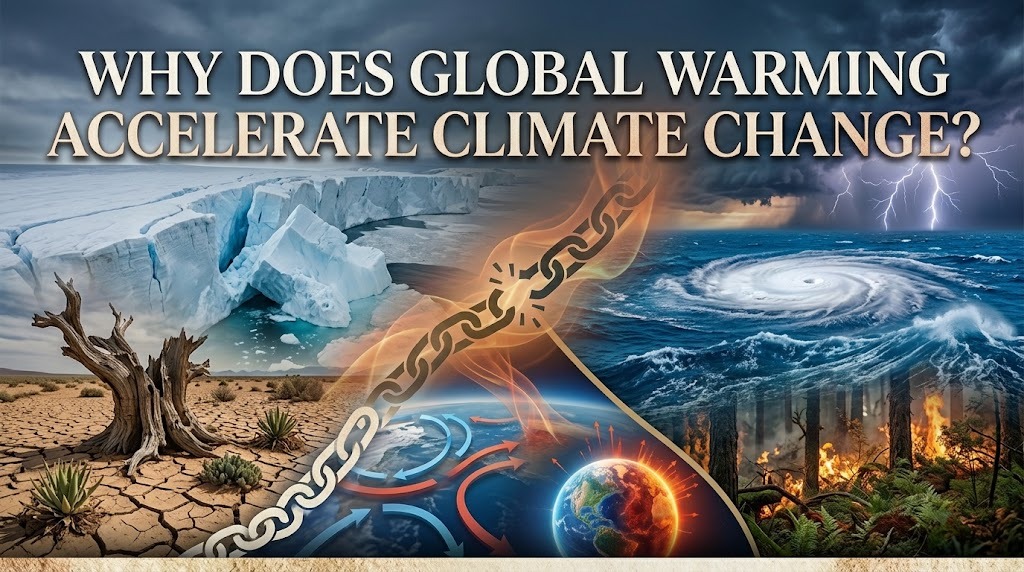
Global warming and climate change are closely connected environmental issues that affect the entire planet. Global warming refers to the long-term increase in Earth's average temperature, mainly caused by human activities that release greenhouse gases. Climate change includes broader changes in temperature, rainfall, sea levels, and extreme weather patterns. As global temperatures rise, natural systems can change more rapidly, creating additional environmental challenges. Understanding how global warming influences climate change is important for developing effective solutions and protecting the planet for future generations.
1. THE ROLE OF GREENHOUSE GASES
Greenhouse gases play a natural role in keeping Earth warm enough to support life. However, human activities such as burning coal, oil, and natural gas release additional carbon dioxide into the atmosphere. Agriculture, industrial processes, and waste disposal also contribute gases such as methane and nitrous oxide. These gases trap more heat, strengthening the greenhouse effect and increasing Earth's average temperature. As a result, human-caused global warming changes the climate system and contributes to long-term shifts in weather patterns and environmental conditions.
2. RISING TEMPERATURES CHANGE WEATHER PATTERNS
Higher global temperatures influence the movement of heat and moisture throughout the atmosphere. Warmer air can hold more water vapor, which can contribute to heavier rainfall when weather conditions are suitable. At the same time, higher temperatures increase evaporation and can worsen drought conditions in some regions. These changes affect the timing and intensity of rainfall, as well as the frequency and severity of certain extreme weather events. Although the effects differ from place to place, rising temperatures are changing weather patterns across many parts of the world.
3. MELTING ICE AND RISING SEA LEVELS
Global warming causes glaciers and ice sheets to lose ice, contributing to rising sea levels. Warmer ocean water also expands, adding to the rise in sea levels. These changes increase the risk of coastal flooding, erosion, and damage to low-lying communities. Melting sea ice can also reduce the amount of sunlight reflected back into space, allowing the ocean to absorb more solar energy. This process, known as the ice-albedo feedback, can amplify warming in certain regions and contribute to further changes in the climate system.
4. THE IMPACT OF GLOBAL WARMING ON OCEANS
The oceans absorb most of the excess heat accumulating in the climate system, making them essential in understanding global warming. Ocean temperatures are rising, affecting marine ecosystems, ocean circulation, and weather patterns. Warmer ocean water can provide additional energy and moisture to tropical storms, potentially increasing their rainfall and intensity under suitable conditions. The oceans also absorb carbon dioxide, which causes ocean acidification and threatens organisms such as corals and shell-forming animals. These interconnected changes can damage marine habitats and affect the natural systems that help regulate Earth's climate.
5. FEEDBACK LOOPS THAT AMPLIFY WARMING
Climate feedback loops occur when an initial change triggers additional changes that strengthen or weaken the original effect. For example, melting snow and ice expose darker surfaces that absorb more sunlight, increasing warming and causing further melting. Another example occurs when thawing permafrost releases carbon dioxide and methane from previously frozen organic matter. These additional greenhouse gas emissions can contribute to further global warming. Feedback loops do not mean that warming increases without limits, but they can make climate change more severe than it would otherwise be.
6. EFFECTS ON FORESTS AND NATURAL ECOSYSTEMS
Forests and other natural ecosystems help regulate the climate by absorbing carbon dioxide and storing carbon. However, higher temperatures, droughts, and wildfires can weaken these natural carbon sinks. When forests burn or decay, some of their stored carbon returns to the atmosphere. Climate change can also affect plant growth, wildlife habitats, and the balance of different species within ecosystems. If natural ecosystems lose their ability to absorb carbon effectively, more greenhouse gases may remain in the atmosphere, potentially increasing global warming.
7. HUMAN ACTIVITIES MAKE GLOBAL WARMING WORSE
Human activities are the main reason current global warming is occurring so rapidly. Burning fossil fuels, deforestation, industrial production, and unsustainable land use increase greenhouse gas emissions and reduce the planet's ability to absorb carbon. Growing energy demand and transportation needs can increase emissions when they depend heavily on fossil fuels. These activities intensify the greenhouse effect and increase the pressure on ecosystems already affected by rising temperatures. Reducing emissions through cleaner energy, improved efficiency, and forest protection is essential to limit further climate change.
HOW CAN WE SLOW GLOBAL WARMING AND CLIMATE CHANGE?
Slowing global warming requires reducing the greenhouse gases released into the atmosphere. Governments and businesses can expand renewable energy, improve energy efficiency, and develop cleaner transportation systems. Individuals can contribute by saving electricity, using public transportation, reducing waste, and making sustainable consumption choices. Protecting forests, restoring damaged ecosystems, and improving agricultural practices can also help reduce emissions. Rapid and sustained emission reductions can limit future warming, reduce climate risks, and give communities and ecosystems more time to adapt.
CONCLUSION
Global warming accelerates many aspects of climate change by increasing Earth's average temperature and disrupting natural systems. Rising temperatures, melting ice, warming oceans, and climate feedback loops can intensify environmental changes and increase risks to people and ecosystems. Human activities remain the main driver of current global warming, making emission reductions a critical priority. By adopting cleaner energy, protecting nature, and supporting effective climate policies, societies can limit future warming. Taking action now is essential to reduce climate risks and protect the planet for future generations.
Recent Posts

Bagaimana Sistem SKS pada Program Kuliah... 22.11.2026/47 View

How Does Technology Make Daily Evaluation... 21.11.2026/75 View

Apa Strategi Menghadapi Kesenjangan antara Kompetensi... 21.11.2026/77 View

Mengapa Inventaris Aset Penting bagi Kelancaran... 21.11.2026/73 View

When Should Musicians Join a Record... 21.11.2026/77 View
