

Why Does Global Warming Cause Polar Ice to Melt?
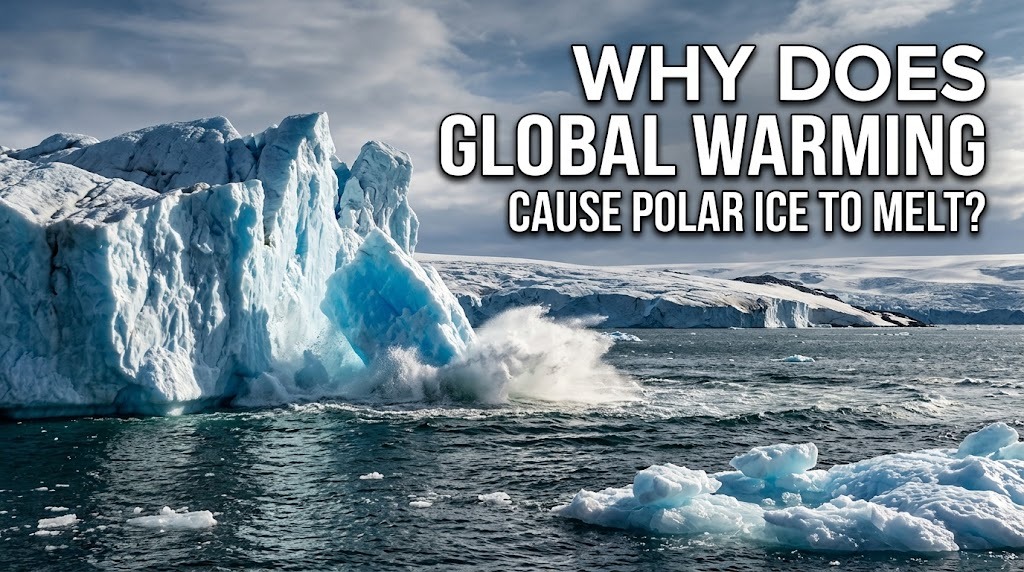
Global warming is one of the major environmental challenges affecting the planet. One of its most visible consequences is the melting of polar ice in the Arctic and Antarctica. As the Earth's average temperature rises, glaciers, ice sheets, and floating sea ice experience changes that can affect ecosystems, sea levels, and weather patterns.
The melting of polar ice occurs because higher air and ocean temperatures increase the amount of ice that melts and reduce the conditions needed for ice to form and remain stable. However, the effects differ between land-based ice sheets, glaciers, and floating sea ice. Understanding why global warming causes polar ice to melt helps explain the connection between rising temperatures and changes in the Earth's climate system.
RISING AIR TEMPERATURES INCREASE ICE MELTING
One of the main reasons global warming causes polar ice to melt is the increase in air temperature across many parts of the planet, including polar regions. When temperatures rise, the surface of glaciers and ice sheets can absorb more heat and begin to melt. During warmer periods, melting can occur more frequently and last longer than it did under cooler conditions.
The Arctic has warmed particularly rapidly compared with the global average, contributing to substantial reductions in sea ice. Warmer conditions can also affect the amount of snowfall that accumulates during colder seasons. If less snow builds up while more ice melts, the total amount of ice may decrease over time. These changes demonstrate how rising global temperatures can alter the balance between ice formation and ice loss.
WARM OCEAN WATER MELTS ICE FROM BELOW
Air temperature is not the only factor responsible for polar ice melting. The ocean also plays an important role, particularly where relatively warm water reaches the undersides of glaciers and ice shelves. Heat from the ocean can melt ice from below, even when the surrounding air remains very cold.
In Antarctica and parts of Greenland, ocean water can contribute to the thinning of ice shelves and the melting of glaciers that flow into the sea. Ice shelves are floating extensions of land-based ice that can help slow the movement of glaciers toward the ocean. When these shelves become thinner or break apart, some glaciers may flow faster into the sea, increasing the loss of land-based ice. This process can contribute to sea level rise when additional land ice enters the ocean.
THE ICE ALBEDO EFFECT ACCELERATES WARMING
Another important factor is the ice albedo effect, which describes how ice and snow reflect sunlight. Bright surfaces reflect a large proportion of incoming solar energy back into space, helping keep polar regions cool. When ice melts, darker surfaces such as open water or exposed land become visible and absorb more solar energy.
The additional absorbed heat can warm the surrounding environment and cause more ice to melt. This creates a positive feedback loop, in which an initial increase in temperature leads to ice loss, and the resulting darker surface absorbs more heat. The process can amplify warming in polar regions, especially in the Arctic. As a result, the loss of reflective ice can make it more difficult for the region to maintain its previous ice coverage.
GREENHOUSE GASES TRAP MORE HEAT IN THE ATMOSPHERE
Human activities contribute to global warming by increasing the concentration of greenhouse gases in the atmosphere. Burning coal, oil, and natural gas releases carbon dioxide, while agriculture, waste management, and fossil fuel production can release methane and other greenhouse gases. These gases trap some of the heat that the Earth radiates, increasing the planet's average temperature.
As this warming continues, polar regions experience changes in air and ocean temperatures that affect ice sheets, glaciers, and sea ice. The relationship is not limited to one season or one location because the climate system connects the atmosphere, oceans, and frozen regions of the Earth. Reducing greenhouse gas emissions can help limit future warming and reduce the risks associated with continued ice loss. However, the amount of future melting will also depend on how quickly emissions decline and how the climate system responds.
MELTING POLAR ICE AFFECTS SEA LEVELS AND POLAR ECOSYSTEMS
The consequences of melting polar ice depend partly on the type of ice involved. Floating sea ice already displaces seawater, so its melting has little direct effect on global sea levels. In contrast, glaciers and ice sheets resting on land add water to the ocean when they melt, contributing to rising sea levels.
Rising sea levels can increase the risk of coastal flooding, erosion, and saltwater intrusion in vulnerable communities. Polar ice loss also affects animals that depend on sea ice for hunting, resting, breeding, or finding food, including polar bears and some seal species. Changes in ice coverage can alter marine food webs and the conditions in which polar wildlife survives. These effects show that polar ice melting is not only a problem for the Arctic and Antarctica but also a concern for ecosystems and communities around the world.
CONCLUSION
Global warming causes polar ice to melt because rising air temperatures and warmer ocean water increase ice loss, while the reduction of reflective ice allows darker surfaces to absorb more heat. Greenhouse gas emissions contribute to this warming, and feedback processes can intensify changes in some polar regions. The effects vary depending on whether the ice is floating sea ice or land-based ice.
Melting polar ice can affect wildlife, marine ecosystems, and coastal communities, particularly when land-based ice contributes to rising sea levels. Reducing greenhouse gas emissions, improving energy efficiency, and expanding low-carbon energy sources can help limit future warming. Although some changes may continue because of past emissions, sustained climate action can reduce the risks of further ice loss.
Recent Posts

Bagaimana Sistem SKS pada Program Kuliah... 22.11.2026/48 View

How Does Technology Make Daily Evaluation... 21.11.2026/76 View

Apa Strategi Menghadapi Kesenjangan antara Kompetensi... 21.11.2026/78 View

Mengapa Inventaris Aset Penting bagi Kelancaran... 21.11.2026/73 View

When Should Musicians Join a Record... 21.11.2026/78 View
