

Why Does Human-Robot Interaction Design Affect Operator Performance?
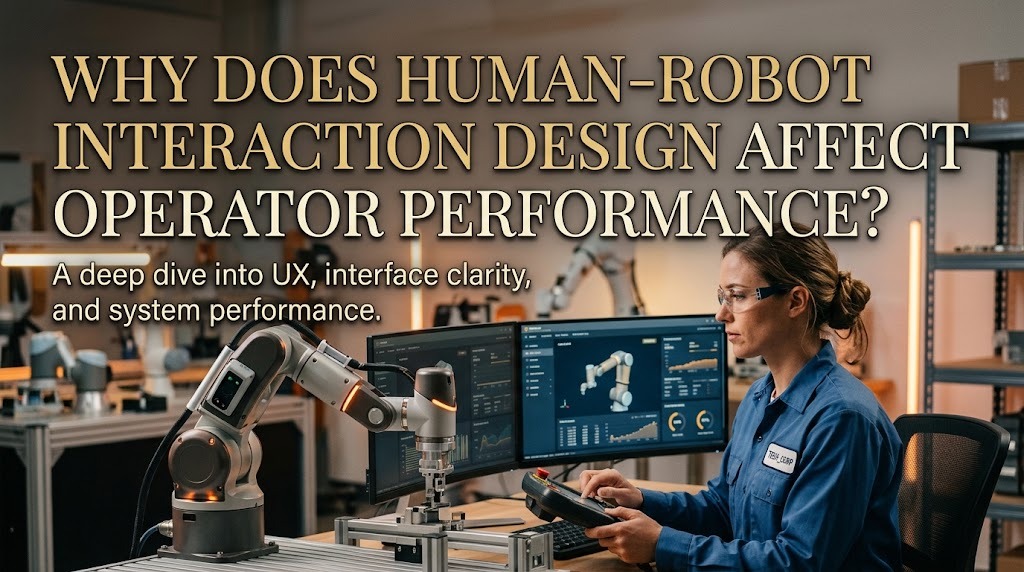
Human-robot interaction design plays an important role in determining how effectively people operate robotic systems. In manufacturing, healthcare, logistics, and other industries, operators must understand robot behavior, provide commands, and respond to system feedback. Poorly designed interfaces can cause confusion, delays, and operational errors, while intuitive designs can improve efficiency and safety. By considering human abilities, task requirements, and communication methods, engineers can create robotic systems that are easier to control and more reliable in real-world environments.
UNDERSTANDING HUMAN-ROBOT INTERACTION DESIGN
Human-robot interaction design focuses on how people communicate with, control, and interpret robotic systems. It includes physical controls, visual displays, voice commands, feedback signals, and the robot's movements or behavior. A well-designed system makes important information easy to understand and allows operators to issue commands without unnecessary complexity. Designers must also consider the operator's experience, working environment, and the consequences of incorrect commands. These factors influence how comfortably and accurately people can perform robotic tasks.
IMPROVING CONTROL ACCURACY
Clear control interfaces help operators direct robots toward intended positions and actions. Controls should use predictable responses, understandable labels, and consistent command structures. When operators can easily identify the function of each control, they are less likely to make accidental selections or incorrect movements. Visual indicators and confirmation messages can also clarify whether a command has been received and completed. These features are particularly important in tasks that require precise positioning, delicate manipulation, or repeated movements.
REDUCING COGNITIVE WORKLOAD
Operators must often monitor robot movements, interpret sensor information, and make decisions at the same time. Complicated interfaces can increase cognitive workload by forcing users to search for information or remember too many control steps. Human-centered design reduces this burden by presenting relevant information clearly and organizing functions logically. For example, a dashboard that highlights critical alerts can help operators recognize important changes more quickly. Lower cognitive workload can support better decisions, especially during demanding or time-sensitive operations.
STRENGTHENING COMMUNICATION AND FEEDBACK
Effective interaction requires robots to communicate their status and intentions in understandable ways. Visual indicators, sounds, text messages, and haptic feedback can inform operators about movement, contact, system errors, or task completion. For instance, a robot working near people may use predictable movements and clear signals to indicate its next action. Appropriate feedback helps operators develop an accurate understanding of what the robot is doing. However, excessive alerts or confusing signals can distract users, so feedback should be relevant and consistent.
ENHANCING SAFETY IN ROBOTIC OPERATIONS
Interaction design affects safety because operators need to understand robot behavior and respond appropriately to unexpected situations. Emergency stops, clear warnings, and accessible control functions help users intervene when necessary. Robot movements should also be predictable enough for people to anticipate potential hazards. In collaborative environments, visual or auditory signals can help communicate operational status and intended movement. These design measures must work alongside physical safeguards, risk assessments, and established safety procedures rather than replace them.
SUPPORTING OPERATOR LEARNING AND TRAINING
An intuitive interface can reduce the time required for operators to learn a robotic system. Consistent controls, clear instructions, and helpful feedback make it easier for users to understand system functions and recognize mistakes. Training modes and simulated practice can allow operators to develop skills before performing tasks in a live environment. Good design also supports experienced workers by making frequently used functions accessible without unnecessary steps. Nevertheless, complex robotic applications still require appropriate technical training and an understanding of system limitations.
BUILDING TRUST IN ROBOTIC SYSTEMS
Operator performance can be affected by how much people trust a robot's capabilities and decisions. If a system behaves unpredictably or provides unclear feedback, operators may hesitate to use it or rely on it too heavily without verification. Transparent system status, predictable behavior, and clear explanations of limitations help users develop appropriately calibrated trust. This means understanding when a robot can perform a task independently and when human intervention is necessary. Balanced trust supports better cooperation and more informed decisions.
ADAPTING DESIGN TO DIFFERENT OPERATING ENVIRONMENTS
A human-robot interface that works well in one setting may be unsuitable in another. Factory operators may need large displays and physical controls, while field technicians may require portable interfaces that remain readable outdoors. Noise, lighting, protective gloves, limited visibility, and time pressure can also affect interaction. Designers should evaluate these conditions and test interfaces with representative users performing realistic tasks. Adapting the design to the environment helps maintain usability and performance across different situations.
EVALUATING HUMAN-ROBOT INTERACTION PERFORMANCE
Engineers can assess interaction design through usability studies, simulated tasks, and real-world trials. Useful measures include task completion time, command error rates, operator workload, learning time, and the frequency of safety-related incidents. User feedback can reveal confusing controls or information that is difficult to interpret. Testing should also examine how the interface performs when faults or unexpected events occur. These findings help designers improve the system based on measurable performance rather than assumptions alone.
CONCLUSION
Human-robot interaction design affects operator performance by influencing control accuracy, cognitive workload, communication, safety, and trust. Clear interfaces and meaningful feedback help operators understand robotic behavior and complete tasks more efficiently. Because different environments and tasks create different demands, effective designs must be tested with real users under realistic conditions. Combining human-centered design with proper training and safety measures supports more reliable human-robot collaboration.
Recent Posts

Bagaimana Sistem SKS pada Program Kuliah... 22.11.2026/49 View

How Does Technology Make Daily Evaluation... 21.11.2026/77 View

Apa Strategi Menghadapi Kesenjangan antara Kompetensi... 21.11.2026/78 View

Mengapa Inventaris Aset Penting bagi Kelancaran... 21.11.2026/74 View

When Should Musicians Join a Record... 21.11.2026/79 View
