

Why Does Inflation Reduce People's Purchasing Power?
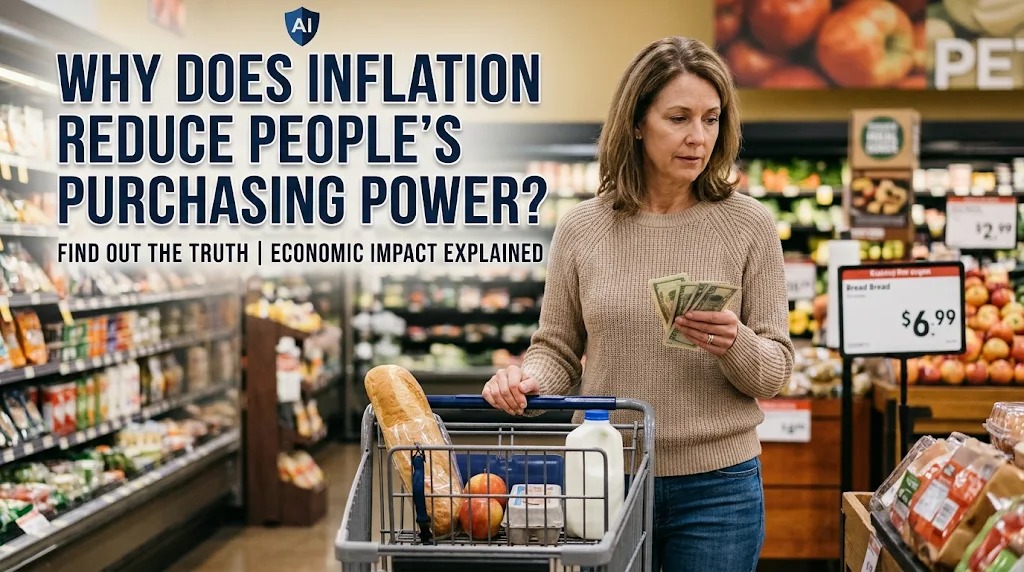
Inflation is an economic condition that causes the general prices of goods and services to increase over time. One of its most noticeable effects is the decline in people's purchasing power, which refers to the amount of products and services they can afford with a certain amount of money. When prices rise but income remains unchanged, consumers may find it increasingly difficult to meet their everyday needs. This situation can affect household budgets, savings, financial decisions, and overall living standards. Understanding why inflation reduces purchasing power helps individuals recognize the relationship between rising prices and the value of money.
UNDERSTANDING THE RELATIONSHIP BETWEEN INFLATION AND PURCHASING POWER
Purchasing power describes how much money can buy at a particular point in time. It depends on the prices of goods and services as well as the amount of income available to consumers. When the general price level increases, the same amount of money usually buys fewer products than before.
For example, a person who previously had enough money to purchase several grocery items may need to spend more to buy the same products after prices increase. Even though the amount of money in their wallet remains unchanged, its purchasing capacity has declined. This demonstrates how inflation can reduce the real value of money in everyday transactions.
The relationship between inflation and purchasing power is closely connected to the cost of living. As essential expenses such as food, transportation, housing, and electricity become more expensive, households need more income to maintain their previous consumption levels. If earnings do not adjust accordingly, consumers may experience greater financial pressure.
RISING PRICES REDUCE THE VALUE OF MONEY
One of the main reasons inflation reduces purchasing power is that it increases the prices of goods and services across the economy. Businesses may raise their prices because of higher production costs, stronger consumer demand, or limited product availability. As these increases spread across different sectors, consumers must allocate more money to their regular purchases.
For instance, rising food prices can affect household budgets because groceries are essential expenses that people need to purchase regularly. Transportation costs may also increase when fuel becomes more expensive, affecting commuting and product distribution. When several essential expenses rise simultaneously, households may have less money available for other needs.
Inflation does not necessarily reduce the numerical amount of money people own. Instead, it reduces what that money can purchase. This distinction is important because someone may have the same salary or savings balance while experiencing a decline in their real purchasing power. Therefore, the value of money should be considered in relation to changing prices rather than its nominal amount alone.
INCOME DOES NOT ALWAYS INCREASE AT THE SAME RATE AS INFLATION
Another important reason purchasing power declines is that wages and household income do not always increase as quickly as prices. Employees may receive the same salary for an extended period, even when the costs of everyday necessities continue to rise. As a result, their income may cover fewer expenses than it did previously.
For example, an employee whose monthly salary remains unchanged may need to spend a larger portion of their earnings on food, transportation, and household bills. This can reduce the amount available for education, entertainment, savings, and other financial priorities. Families with limited income may experience greater pressure because essential expenses already represent a substantial part of their budgets.
The difference between nominal income and real income helps explain this situation. Nominal income refers to the amount of money a person receives, while real income reflects its purchasing power after considering changes in prices. If wages increase by 3% while inflation reaches 5%, real purchasing power generally declines, assuming other factors remain constant. This is why salary increases do not always mean that people's financial conditions have improved.
THE EFFECT OF INFLATION ON SAVINGS AND HOUSEHOLD EXPENSES
Inflation can also reduce the purchasing power of personal savings. When money is kept in an account that earns interest below the inflation rate, its real value may decrease over time. Although the account balance may remain unchanged or increase slightly, the money may purchase fewer goods and services in the future.
For example, someone who saves money for education, housing, or other long-term goals may discover that the estimated expenses have increased. If their savings do not grow at a rate that keeps pace with rising prices, reaching those financial goals may become more difficult. This makes it important to consider inflation when planning long-term financial needs.
Household expenses can also become more difficult to manage during periods of high inflation. Families may need to adjust their budgets, compare product prices, and prioritize essential purchases. Some may reduce spending on nonessential activities to maintain their ability to pay for basic needs. These adjustments demonstrate how inflation influences everyday financial decisions and household consumption patterns.
HOW PEOPLE CAN MAINTAIN THEIR PURCHASING POWER
Although individuals cannot directly determine the national inflation rate, they can develop financial habits that help manage its effects. One useful step is preparing a realistic monthly budget that records income, essential expenses, savings, and other financial commitments. Regularly reviewing this budget can help identify unnecessary spending and areas where adjustments may be needed.
Another approach is comparing prices and considering alternative products with similar quality. Consumers can plan their purchases, avoid unnecessary expenses, and prioritize essential goods. These habits can help households use their available income more effectively when prices increase.
Building savings and improving financial knowledge are also important. An emergency fund can provide financial flexibility when unexpected expenses occur, while understanding interest rates and inflation can help people evaluate different saving options. Individuals may also consider developing their professional skills to improve their long-term income opportunities. Although these strategies cannot eliminate inflation, they can help people prepare for changing economic conditions and manage their purchasing power more carefully.
CONCLUSION
Inflation reduces people's purchasing power because rising prices make the same amount of money capable of buying fewer goods and services. This effect becomes more noticeable when wages and household income do not increase at the same pace as inflation. Savings may also lose real value when their returns remain below the inflation rate. By understanding the relationship between inflation, income, and everyday expenses, individuals can make better financial decisions through budgeting, prioritizing essential needs, and developing responsible saving habits.
Recent Posts

Bagaimana Sistem SKS pada Program Kuliah... 22.11.2026/35 View

How Does Technology Make Daily Evaluation... 21.11.2026/69 View

Apa Strategi Menghadapi Kesenjangan antara Kompetensi... 21.11.2026/69 View

Mengapa Inventaris Aset Penting bagi Kelancaran... 21.11.2026/67 View

When Should Musicians Join a Record... 21.11.2026/68 View
