

Why Does Lecturer Certification Matter for Professional Development?
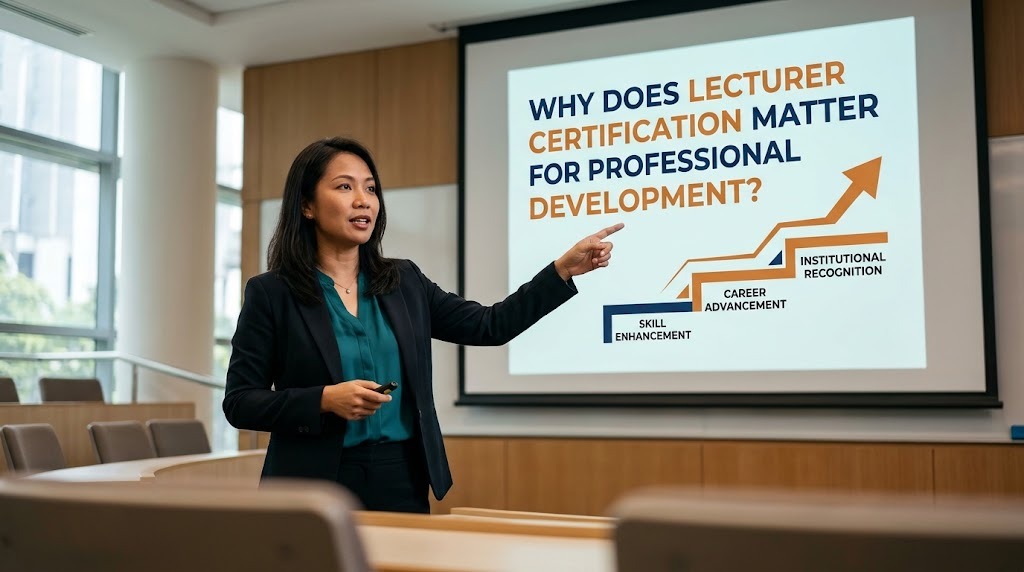
Lecturer certification plays an important role in professional development because it provides formal recognition of an educator's competence and encourages continuous improvement. Lecturers are expected to maintain their knowledge, improve their teaching abilities, conduct research, and contribute to society. These responsibilities require more than academic qualifications because educators must also develop professional skills throughout their careers.
In higher education, professional development for lecturers is an ongoing process that helps educators adapt to changes in academic knowledge, teaching methods, and technology. Certification can support this process by encouraging lecturers to evaluate their performance and demonstrate their professional achievements. Although certification is not the only way to develop academic competence, it can serve as an important part of a lecturer's professional journey.
RECOGNIZING PROFESSIONAL COMPETENCE
One reason lecturer certification matters is that it provides formal recognition of professional competence. The certification process evaluates whether lecturers meet established standards related to their academic qualifications, teaching responsibilities, and professional performance. This recognition can help educators understand the competencies expected in their roles.
The process also encourages lecturers to reflect on their professional abilities. They may review their teaching experience, academic achievements, research activities, and contributions to the institution. Through this evaluation, lecturers can identify areas that require improvement and develop a clearer direction for their professional growth.
ENCOURAGING CONTINUOUS LEARNING AND SKILL DEVELOPMENT
Professional development requires lecturers to keep learning and updating their knowledge. Academic fields continue to evolve, while new research findings, digital tools, and educational approaches influence how learning activities are conducted. Continuous learning for lecturers helps educators remain familiar with these developments and apply relevant knowledge in their academic work.
Certification can encourage lecturers to take their professional responsibilities more seriously and recognize the importance of improving their competencies. They may participate in academic workshops, professional training, research seminars, and further education programs. These activities can strengthen their abilities and help them respond to changing needs in higher education.
IMPROVING TEACHING METHODS AND STUDENT LEARNING
Another important benefit of professional lecturer development is the opportunity to improve teaching quality. Lecturers need to understand how to prepare learning materials, communicate complex concepts, organize discussions, and evaluate student progress. Developing these abilities can make academic activities more structured and responsive to students' needs.
Certification can encourage educators to review their teaching performance and consider whether their methods remain effective. Lecturers may explore interactive learning strategies, digital educational resources, and assessment techniques that support student participation. When combined with feedback and institutional support, these improvements can contribute to more meaningful learning experiences.
STRENGTHENING RESEARCH AND ACADEMIC CONTRIBUTIONS
Professional development is not limited to classroom activities. Lecturers are also expected to conduct research, publish academic work, and participate in community service activities. These responsibilities allow educators to expand knowledge, address relevant problems, and apply their expertise to support society.
The certification process can encourage lecturers to document and evaluate their academic contributions. By reviewing their research and community service activities, they can identify opportunities for collaboration and further development. Universities can support these efforts through research facilities, funding opportunities, academic partnerships, and professional mentoring.
SUPPORTING CAREER GROWTH AND PROFESSIONAL ACCOUNTABILITY
Lecturer certification can also support academic career development by providing formal recognition of professional competence. This recognition may be relevant to certain career opportunities or administrative considerations, depending on the regulations and institutional policies that apply. However, certification does not automatically guarantee promotion or every professional benefit.
In addition to career recognition, lecturers must maintain professional accountability. They are expected to uphold academic integrity, treat students fairly, fulfill their teaching responsibilities, and continue improving their abilities. Certification should therefore be viewed as part of an ongoing commitment to professional standards rather than the final achievement of an academic career.
CONCLUSION
Lecturer certification matters for professional development because it recognizes professional competence, encourages continuous learning, supports improvements in teaching methods, and strengthens awareness of research and community service responsibilities. It can also contribute to career development by providing formal recognition of an educator's qualifications and professional performance.
Nevertheless, professional growth requires consistent effort beyond obtaining a certificate. Lecturers need to update their knowledge, participate in academic activities, maintain ethical standards, and respond to changes in higher education. By combining professional certification with continuous learning and institutional support, educators can strengthen their abilities and make meaningful contributions to students and academic communities.
Recent Posts

Bagaimana Sistem SKS pada Program Kuliah... 22.11.2026/45 View

How Does Technology Make Daily Evaluation... 21.11.2026/73 View

Apa Strategi Menghadapi Kesenjangan antara Kompetensi... 21.11.2026/75 View

Mengapa Inventaris Aset Penting bagi Kelancaran... 21.11.2026/71 View

When Should Musicians Join a Record... 21.11.2026/75 View
