

Why Does Physical Distance Matter in Communication?
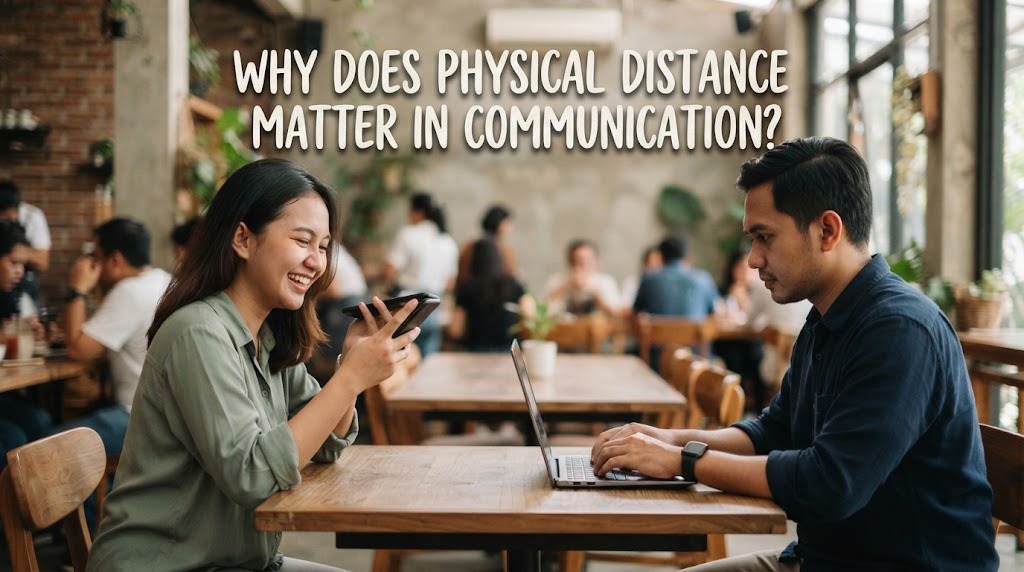
Physical distance is an important part of nonverbal communication. The space people maintain between themselves and others can communicate feelings of comfort, trust, familiarity, respect, or formality. Although people may not consciously think about personal space during every interaction, distance can influence how a conversation feels. Understanding why physical distance matters in communication can help people communicate more comfortably and respectfully.
The appropriate distance can change depending on the relationship, situation, culture, and environment. People may stand closer to family members or close friends but maintain more space when talking to strangers or participating in professional interactions. Because of these differences, physical distance should be understood together with other nonverbal signals and the context of the conversation.
SHOWS COMFORT AND PERSONAL BOUNDARIES
Physical distance can indicate how comfortable people feel around one another. Close friends and family members may usually feel comfortable communicating at a shorter distance because they have an established relationship. In contrast, strangers may prefer more space because they do not yet have the same level of familiarity. Respecting this difference can help create a more comfortable interaction.
Personal space also represents an individual's boundaries. Moving too close without permission can make another person feel uncomfortable, pressured, or unsafe. Maintaining an appropriate distance shows awareness of the other person's comfort. This is especially important when meeting someone for the first time or communicating with people from different social and cultural backgrounds.
AFFECTS TRUST AND SOCIAL RELATIONSHIPS
The distance between people can influence how an interaction is perceived. A comfortable distance may help people feel relaxed and willing to communicate, while an unnecessarily large distance may sometimes create a feeling of formality or emotional separation. The meaning depends heavily on the relationship and situation. For example, close friends may naturally stand closer than coworkers during a casual conversation.
Physical distance can also change as relationships develop. People who become more familiar with each other may gradually feel comfortable communicating at a closer distance. However, this does not mean that everyone has the same preferences. Individual boundaries remain important even in close relationships, so people should pay attention to the comfort of others rather than assuming that closeness is always appropriate.
INFLUENCES PROFESSIONAL COMMUNICATION
Physical distance is particularly important in professional environments. During interviews, meetings, presentations, or conversations with customers, maintaining an appropriate distance can create a respectful and professional atmosphere. Standing or sitting too close may make the interaction uncomfortable, while standing too far away can make communication feel unnecessarily distant. Finding a balanced distance can support effective interaction.
The appropriate space can also depend on the type of professional setting. A formal meeting may require more personal space than a collaborative activity where people work closely together. Employees who interact with customers should also consider the customer's comfort and the physical environment. Being aware of distance can help create better experiences and more respectful workplace communication.
CULTURE AND CONTEXT CHANGE EXPECTATIONS
Different cultures can have different expectations regarding personal space. In some cultures, people may commonly communicate at a closer distance, while others may prefer more physical space during conversations. These differences do not necessarily indicate friendliness or unfriendly behavior. They are often influenced by social norms and cultural habits.
Context also changes how physical distance is interpreted. A crowded public space may naturally require people to stand close together, while a private conversation may allow more freedom to choose a comfortable distance. Because of this, people should avoid making quick judgments about someone's behavior based only on physical distance. Considering culture, environment, relationship, and other nonverbal signals provides a more accurate understanding.
HOW TO USE PHYSICAL DISTANCE EFFECTIVELY
Using physical distance effectively starts with paying attention to the other person's reactions. If someone moves backward, turns away, or appears uncomfortable after you move closer, it may be a sign that they need more personal space. Respecting these signals can make communication feel safer and more comfortable. People should also consider whether the setting is formal, casual, crowded, or private.
Physical distance should work together with other forms of nonverbal communication. Appropriate eye contact, facial expressions, gestures, and body posture can help create a balanced interaction. The goal is not to maintain one exact distance in every situation but to adjust according to the people, environment, and purpose of the conversation.
CONCLUSION
Physical distance matters in communication because it can communicate comfort, personal boundaries, familiarity, respect, and formality. The space between people can influence how safe, relaxed, or connected an interaction feels. However, there is no single distance that is appropriate for every situation because relationships, cultures, environments, and individual preferences are different.
Being aware of physical distance can help people communicate more respectfully and avoid making others uncomfortable. By observing personal boundaries and adjusting distance according to the situation, people can create more positive and effective interactions.
Recent Posts

Bagaimana Sistem SKS pada Program Kuliah... 22.11.2026/40 View

How Does Technology Make Daily Evaluation... 21.11.2026/71 View

Apa Strategi Menghadapi Kesenjangan antara Kompetensi... 21.11.2026/73 View

Mengapa Inventaris Aset Penting bagi Kelancaran... 21.11.2026/69 View

When Should Musicians Join a Record... 21.11.2026/73 View
