

Why Does Population Density Differ Across Regions?
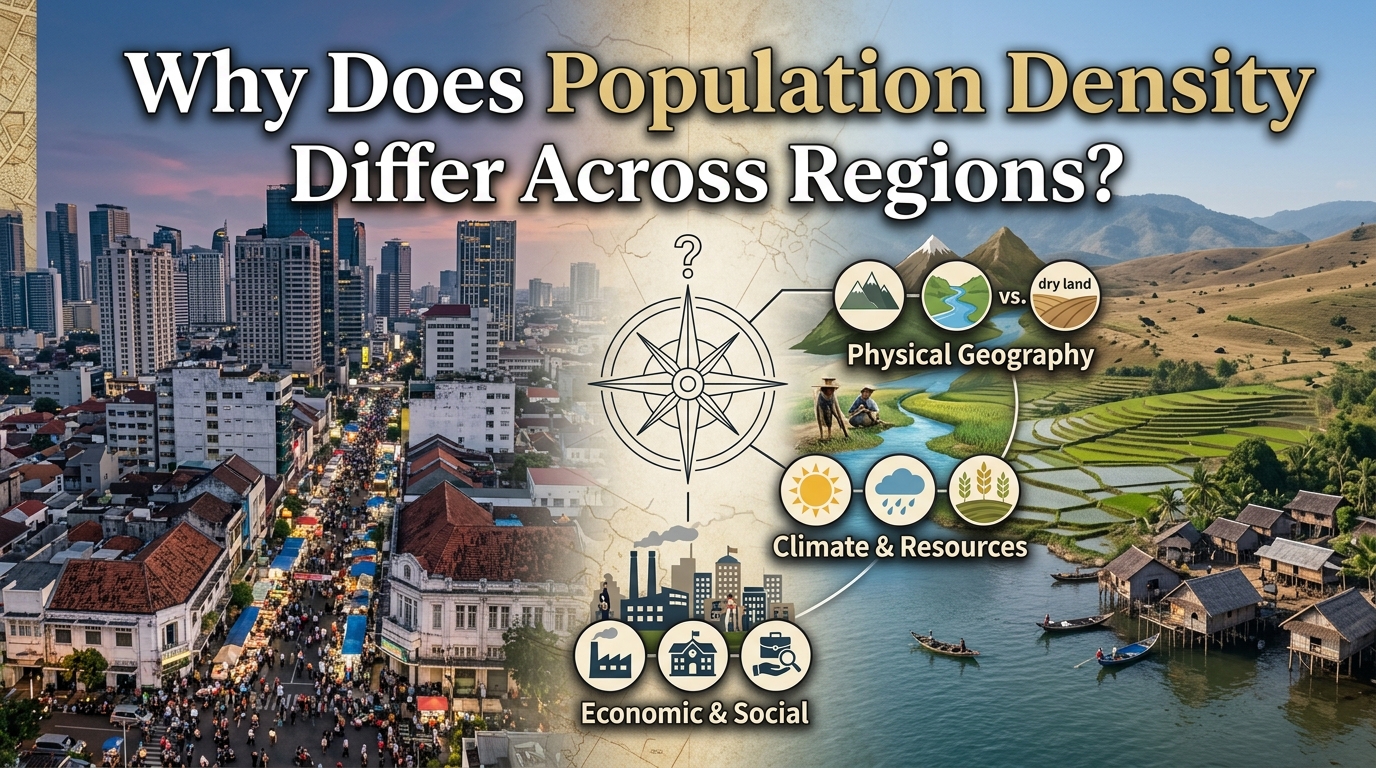
Population density varies significantly from one region to another. Some areas are crowded with large populations, while others have relatively few residents spread across wide areas of land. These differences are influenced by several factors, including natural conditions, economic opportunities, infrastructure, and government policies. For example, major cities often attract more people because they provide better access to jobs, education, healthcare, and transportation. Meanwhile, remote areas may have fewer residents because of limited facilities and challenging geographical conditions. Understanding why population density differs across regions helps explain population distribution and the development of human settlements.
WHAT CAUSES DIFFERENCES IN POPULATION DENSITY?
Population density differs across regions because people do not live in all places under the same conditions. Some locations offer better opportunities, comfortable living environments, and easier access to essential services. These advantages encourage people to settle in certain areas, resulting in higher population concentrations. In contrast, regions with limited resources, difficult terrain, or fewer economic opportunities often have lower population densities.
Another important reason is the relationship between population size and land area. A region with many residents living within a small territory generally has higher population density than a larger region with fewer people. Population migration also contributes to these differences because people frequently move from one location to another to find employment, education, or better living conditions. As a result, population density can change over time depending on social, economic, and environmental developments.
THE INFLUENCE OF NATURAL AND GEOGRAPHICAL CONDITIONS
Natural conditions are among the main factors influencing population distribution. Regions with fertile soil, reliable water sources, suitable climates, and relatively flat land are generally more attractive for residential settlements. These conditions support agriculture, economic activities, and the development of infrastructure. For this reason, plains and coastal areas often have larger population concentrations than certain mountainous or desert regions.
In contrast, areas with extreme temperatures, steep mountains, limited water supplies, or frequent natural disasters may be less suitable for large settlements. These environmental challenges can make transportation, construction, and daily activities more difficult. However, natural conditions do not determine population density entirely. Modern technology, infrastructure, and economic development can also make challenging environments suitable for human habitation.
ECONOMIC OPPORTUNITIES AND EMPLOYMENT AVAILABILITY
Economic opportunities have a major influence on where people choose to live. Cities and industrial centers usually attract residents because they offer various employment opportunities in manufacturing, trade, technology, education, and services. People often migrate to these locations to earn higher incomes and improve their living standards. This movement can increase population density, especially in areas with rapidly growing industries and businesses.
Meanwhile, regions with limited employment opportunities may experience slower population growth or outward migration. Young people, in particular, may move to larger cities to pursue careers and higher education. When economic activities become concentrated in specific locations, population distribution can become increasingly uneven. Therefore, regional economic development plays an important role in creating a more balanced population distribution.
THE ROLE OF INFRASTRUCTURE AND PUBLIC FACILITIES
Infrastructure also affects population density because people generally prefer locations with convenient access to essential facilities. Roads, public transportation, electricity, clean water, and communication networks make an area more suitable for residential and business activities. Regions with well-developed infrastructure can attract residents, investors, and companies. As more economic activities develop, population growth may increase.
Public facilities such as schools, universities, hospitals, shopping centers, and government services also influence settlement patterns. Areas with complete facilities are often more attractive because residents can meet their daily needs more easily. On the other hand, communities in remote regions may remain less populated when access to these services is limited. Improving infrastructure and public facilities can therefore encourage development and support population growth in less developed areas.
THE IMPACT OF URBANIZATION AND POPULATION MIGRATION
Urbanization is the process through which an increasing proportion of a population lives in urban areas. This process often occurs when people move from rural communities to cities in search of employment, education, healthcare, and better living conditions. As a result, cities may experience rapid population growth and increasing population density. Large urban centers can become important economic and social hubs that attract people from surrounding regions.
However, rapid urbanization can also create challenges when population growth exceeds the capacity of existing infrastructure. Traffic congestion, housing shortages, pollution, and pressure on public services may become more serious. Meanwhile, some rural areas may experience population decline as residents move elsewhere. This situation demonstrates how internal migration can create significant differences in population density between urban and rural regions.
GOVERNMENT POLICIES AND REGIONAL DEVELOPMENT
Government policies can influence population density by determining how regions are developed and managed. Investments in transportation, education, healthcare, housing, and industrial facilities can make less populated areas more attractive for settlement. Governments may also introduce regional development programs to reduce economic inequality and encourage investment outside major cities. These efforts can help distribute economic activities and population growth more evenly.
In addition, housing policies, land-use regulations, and urban planning decisions affect where people can live and work. For example, the development of new industrial areas or administrative centers may attract workers and their families. However, ineffective planning can lead to overcrowding in certain locations while other regions remain underdeveloped. Therefore, balanced regional policies are important for managing population distribution sustainably.
WHY DO SOME REGIONS HAVE HIGHER POPULATION DENSITY THAN OTHERS?
Regions with high population density generally combine several attractive characteristics, such as employment opportunities, developed infrastructure, accessible public services, and favorable living conditions. Major cities often have these advantages, making them popular destinations for migration. The concentration of businesses, educational institutions, and government facilities also encourages people to settle nearby. Consequently, population density can become much higher in urban centers than in surrounding rural areas.
In comparison, regions with low population density may have limited economic activities, challenging geographical conditions, or insufficient infrastructure. Large forests, mountain ranges, and remote islands may also have fewer settlements because of environmental and accessibility constraints. Nevertheless, low population density does not always indicate poor development, just as high population density does not automatically mean better living conditions. Each region has different characteristics and development needs.
THE IMPORTANCE OF UNDERSTANDING REGIONAL POPULATION DENSITY
Understanding differences in population density is important for effective regional planning and sustainable development. Governments need accurate population information to determine where schools, hospitals, roads, housing, and other public facilities should be built. Areas with growing populations may require additional infrastructure and services to maintain a good quality of life. Meanwhile, less populated regions may need better transportation and economic investment to improve accessibility.
Population density information is also useful for environmental protection and natural resource management. Areas with high population concentrations may face greater demand for water, energy, food, and residential land. By understanding these conditions, policymakers can develop strategies to manage resources responsibly and reduce environmental pressure. This information also helps researchers identify population trends and evaluate differences in regional development.
CONCLUSION
Population density differs across regions because of various geographical, economic, social, and political factors. Natural conditions, employment opportunities, infrastructure, urbanization, migration, and government policies all influence where people choose to live. Regions with better facilities and stronger economic opportunities often attract more residents, while remote or less accessible areas may have lower population concentrations.
Understanding these differences helps governments and communities create better development strategies. Through balanced infrastructure investment, improved public services, and sustainable regional planning, population distribution can become more manageable. Ultimately, understanding population density is essential for building comfortable, accessible, and sustainable communities.
Recent Posts

Bagaimana Sistem SKS pada Program Kuliah... 22.11.2026/33 View

How Does Technology Make Daily Evaluation... 21.11.2026/67 View

Apa Strategi Menghadapi Kesenjangan antara Kompetensi... 21.11.2026/67 View

Mengapa Inventaris Aset Penting bagi Kelancaran... 21.11.2026/65 View

When Should Musicians Join a Record... 21.11.2026/66 View
