

Why Does Reading Culture Matter for the Future?
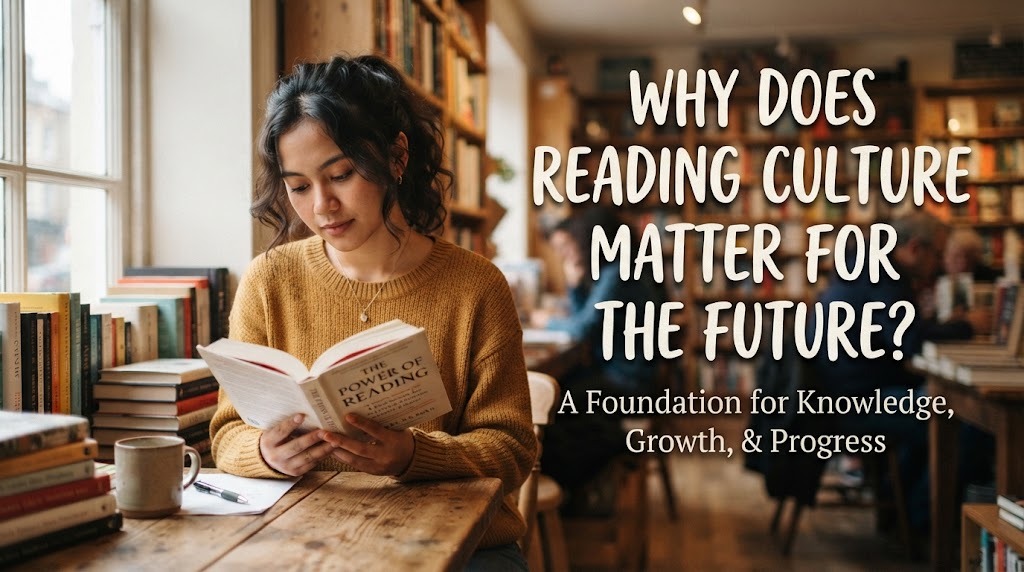
Reading culture is important because it influences how people learn, think, communicate, and respond to changes in society. A strong reading culture encourages individuals to seek information, understand different perspectives, and develop knowledge throughout their lives. These abilities are increasingly valuable in a world shaped by technology, rapid information, and changing career demands. Reading is not only useful for academic success but also for personal and professional development. Therefore, building a strong reading culture today can help prepare individuals and communities for the future.
BUILDS A KNOWLEDGEABLE SOCIETY
A strong reading culture helps people gain knowledge from a wide range of sources. Books, articles, research materials, and digital resources can introduce readers to science, technology, history, culture, business, and many other subjects. People with broader knowledge can better understand changes happening around them. They can also use information to make more informed decisions in daily life. Over time, widespread reading habits can contribute to a more knowledgeable society.
DEVELOPS CRITICAL THINKING
The future will require people to evaluate large amounts of information carefully. Reading different sources encourages individuals to compare ideas, examine arguments, and consider evidence. These activities can strengthen critical thinking and reduce the tendency to accept information without checking it. Critical thinking is particularly important when people encounter misleading content or unreliable information online. A strong reading culture can therefore prepare people to become more careful and responsible information users.
SUPPORTS EDUCATIONAL DEVELOPMENT
Reading is a fundamental part of learning in almost every area of education. Students need reading skills to understand textbooks, instructions, research materials, and other learning resources. A strong reading culture can encourage students to study independently and explore topics beyond classroom lessons. Better reading habits can also support vocabulary development and comprehension. These benefits can contribute to stronger educational outcomes over time.
PREPARES PEOPLE FOR FUTURE CAREERS
Modern workplaces require employees to understand information, communicate clearly, and continue learning new skills. Reading can help people stay informed about developments in their industries and understand professional materials. It can also improve vocabulary and the ability to explain ideas effectively. As technology changes the nature of many jobs, workers may need to learn new concepts throughout their careers. A strong reading habit can provide a foundation for this continuous professional development.
ENCOURAGES LIFELONG LEARNING
Learning does not end when someone graduates from school or university. People need to continue developing their knowledge as technology, industries, and social conditions change. Reading provides an accessible way to learn new subjects at almost any stage of life. Individuals can read about new skills, hobbies, professional topics, or current developments according to their needs. A strong reading culture can therefore encourage lifelong curiosity and personal growth.
IMPROVES COMMUNICATION SKILLS
Reading exposes people to different vocabulary, sentence structures, writing styles, and ways of expressing ideas. Regular exposure can help individuals communicate more clearly in both written and spoken situations. Strong communication skills are valuable in education, employment, relationships, and community life. People who can understand and express information effectively may also find it easier to collaborate with others. Developing these abilities can help individuals adapt to future social and professional environments.
SUPPORTS INNOVATION AND CREATIVITY
Reading introduces people to new ideas and different ways of solving problems. Exposure to diverse information can help individuals connect concepts and develop original approaches. Students, entrepreneurs, researchers, and professionals can use knowledge from reading as inspiration for new ideas. A society that encourages reading can therefore create more opportunities for creativity and innovation. These qualities are increasingly important for addressing future challenges.
BUILDS EMPATHY AND OPEN-MINDEDNESS
Reading can introduce people to experiences, cultures, and perspectives that differ from their own. Stories and personal accounts can help readers understand how other people think and experience different situations. This can encourage empathy and reduce narrow assumptions about others. Open-mindedness can become increasingly important in diverse and interconnected societies. A strong reading culture can help people become more willing to understand perspectives different from their own.
HELPS PEOPLE ADAPT TO CHANGE
The future is likely to bring continuous changes in technology, education, employment, and society. People who are comfortable learning through reading may find it easier to understand new information and adjust to unfamiliar situations. Reading can help individuals stay informed instead of depending only on existing knowledge. It also encourages curiosity, which can motivate people to learn new skills when circumstances change. These abilities can make individuals more adaptable in a rapidly changing world.
REDUCES DEPENDENCE ON SUPERFICIAL INFORMATION
Modern technology provides large amounts of short and quickly consumed content. While this information can be useful, it may not always provide enough detail or context. A strong reading culture encourages people to explore longer and more comprehensive sources. This can help them understand complex issues instead of relying only on headlines or short summaries. Developing deeper reading habits can therefore improve the quality of information people use in the future.
STRENGTHENS DEMOCRATIC AND SOCIAL PARTICIPATION
An informed population is better prepared to participate responsibly in society. Reading can help people understand public issues, social developments, policies, and different viewpoints. It can encourage individuals to evaluate claims and form opinions based on reliable information. This does not mean every reader will have the same opinion, but they can make decisions with greater awareness. A strong reading culture can therefore contribute to thoughtful participation in community and public life.
CONCLUSION
Reading culture matters for the future because it helps people build knowledge, think critically, communicate effectively, and continue learning. It also supports creativity, empathy, career development, and the ability to adapt to rapid changes. In a world filled with information, strong reading habits can help individuals distinguish meaningful knowledge from superficial content. Families, schools, libraries, and communities all have roles in making reading a valued part of everyday life. Investing in reading culture today can help create a more knowledgeable, adaptable, and capable society in the future.
Recent Posts

Bagaimana Sistem SKS pada Program Kuliah... 22.11.2026/35 View

How Does Technology Make Daily Evaluation... 21.11.2026/69 View

Apa Strategi Menghadapi Kesenjangan antara Kompetensi... 21.11.2026/70 View

Mengapa Inventaris Aset Penting bagi Kelancaran... 21.11.2026/67 View

When Should Musicians Join a Record... 21.11.2026/69 View
