

Why Does Social Media Encourage Hateful Behavior?
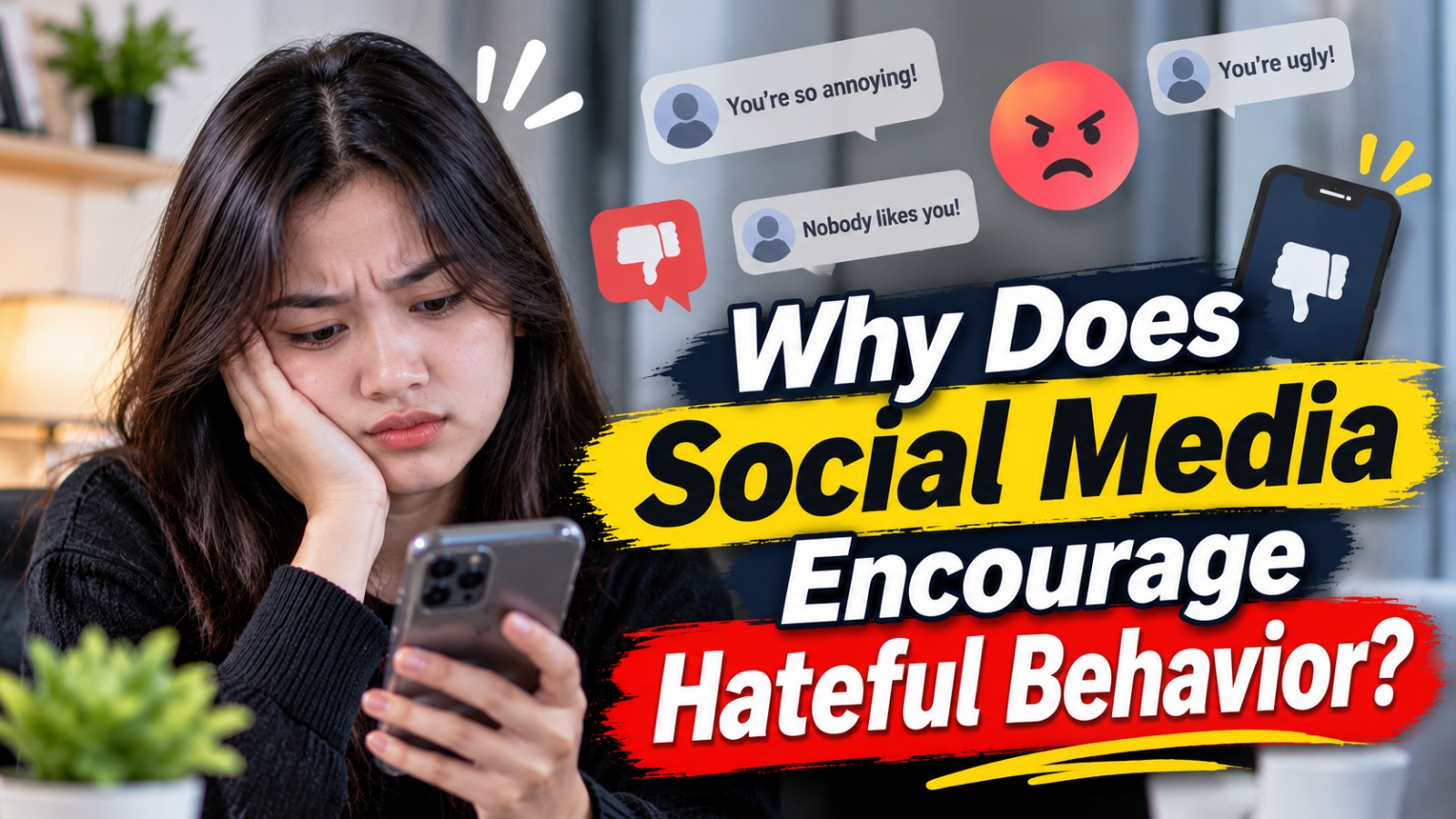
Social media has changed how people communicate, share opinions, and interact with others. Platforms such as Instagram, TikTok, Facebook, and X allow users to express themselves and participate in discussions with people from different backgrounds. However, these platforms can also become spaces where insults, harassment, personal attacks, and hateful comments spread quickly.
Hateful behavior on social media does not have a single cause. Factors such as anonymity, emotional reactions, social comparison, group influence, and the desire for attention can contribute to negative online interactions. Understanding these factors helps users recognize harmful communication patterns and develop healthier digital habits.
ANONYMITY MAKES PEOPLE FEEL LESS RESPONSIBLE
One reason social media can encourage hateful behavior is the possibility of communicating without revealing one's real identity. Some users feel more comfortable making offensive comments when they believe their personal information cannot easily be identified.
The distance between online users can also reduce the immediate social consequences of their words. Unlike face-to-face conversations, digital communication does not always allow people to see how their comments affect others. This can make some individuals less careful about expressing anger or hostility.
NEGATIVE COMMENTS ATTRACT ATTENTION
Controversial posts and aggressive comments can generate reactions from other users. Arguments, disagreements, and emotional responses may increase the visibility of particular content through likes, replies, and shares.
Some individuals may use offensive language because they want to become popular, attract followers, or gain recognition. When negative behavior receives attention, it can encourage similar actions from people seeking the same reactions.
SOCIAL MEDIA MAKES EMOTIONAL REACTIONS EASIER
People often use social media to express their feelings immediately. When they feel angry, disappointed, jealous, or frustrated, they may post comments without considering their consequences.
The absence of face-to-face interaction can make it easier to respond impulsively. A disagreement that could have been handled through a calm conversation may develop into a public argument involving insults and personal attacks.
GROUP INFLUENCE ENCOURAGES HATEFUL COMMENTS
Social media users often interact with communities that share similar interests, opinions, or beliefs. These communities can provide support, but they may also encourage negative behavior when members repeatedly attack people with different perspectives.
When hateful comments receive approval from other group members, individuals may feel encouraged to participate. This can create an environment where hostility becomes normalized and respectful disagreement becomes more difficult.
SOCIAL COMPARISON CREATES JEALOUSY
Social media exposes users to photographs, achievements, lifestyles, and personal milestones from other people's lives. Constant exposure to these updates can encourage comparisons involving appearance, relationships, education, and financial success.
Some individuals may feel dissatisfied when they believe others are living better lives. These feelings can sometimes develop into jealousy, which may appear through sarcastic remarks, negative judgments, or attempts to diminish someone else's achievements.
MISINFORMATION CREATES ONLINE CONFLICT
False information and misleading content can contribute to hateful behavior. Users may form negative opinions about individuals or groups based on information that has not been verified.
When misleading claims spread rapidly, they can create misunderstandings and encourage people to attack others without understanding the complete situation. Checking information before sharing it is important for reducing unnecessary conflict and preventing reputational harm.
ALGORITHMS CAN AMPLIFY CONTROVERSIAL CONTENT
Social media platforms use recommendation systems to select and display content based on different signals, such as user interactions and viewing activity. Depending on the platform and its design, controversial material may receive substantial engagement and become more visible.
However, this does not mean that every algorithm deliberately promotes hate. The relationship between recommendation systems and harmful content is complex. When users repeatedly interact with aggressive posts, they may encounter more similar discussions, potentially increasing their exposure to negative communication.
LACK OF EMPATHY IN DIGITAL INTERACTIONS
Empathy helps people understand how their words and actions affect others. However, communicating through screens can make it harder for users to recognize the emotional consequences of their comments.
Some individuals may forget that there is a real person behind every account. As a result, they may make jokes, insults, or accusations without considering the potential harm. Encouraging empathy is essential for creating more respectful online interactions.
PEER PRESSURE AND ONLINE TRENDS
Online trends can influence how people communicate and behave. When mocking, insulting, or criticizing someone becomes popular within a particular community, other users may imitate the behavior to feel accepted.
Some individuals participate in negative discussions because they do not want to be excluded from a group. This can lead them to repeat harmful comments even when they do not fully understand the situation or agree with the criticism.
HOW TO REDUCE HATEFUL BEHAVIOR ON SOCIAL MEDIA
Reducing hateful behavior requires cooperation between individual users, online communities, and social media platforms. Everyone can contribute by developing responsible communication habits and refusing to encourage harassment.
Several practical steps include:
- Think before posting: Consider whether a comment is respectful, accurate, and necessary.
- Avoid spreading misinformation: Verify information before sharing it with other users.
- Respect different opinions: Disagree with ideas without attacking someone's personal identity.
- Report harmful content: Use platform reporting features when encountering harassment or threats.
- Limit negative interactions: Mute or block accounts that repeatedly engage in abusive behavior.
- Encourage positive discussions: Support conversations that promote understanding and constructive feedback.
- Protect personal information: Avoid sharing sensitive details that could be misused by others.
These habits can help create a digital environment where users feel safer expressing their opinions.
CONCLUSION
Social media can encourage hateful behavior through several factors, including anonymity, attention-seeking, emotional reactions, group influence, social comparison, and the rapid spread of misinformation. Platform recommendation systems and limited empathy in digital interactions can also contribute to the visibility and continuation of negative communication.
Although these challenges cannot be eliminated through individual actions alone, users can help reduce harmful interactions by communicating responsibly and respecting others. Building a healthier digital environment requires awareness, empathy, and accountability from everyone who participates in online communities.
Recent Posts

Bagaimana Sistem SKS pada Program Kuliah... 22.11.2026/27 View

How Does Technology Make Daily Evaluation... 21.11.2026/65 View

Apa Strategi Menghadapi Kesenjangan antara Kompetensi... 21.11.2026/65 View

Mengapa Inventaris Aset Penting bagi Kelancaran... 21.11.2026/62 View

When Should Musicians Join a Record... 21.11.2026/63 View
