

Why Does Teacher Sincerity Matter in Modern Education?
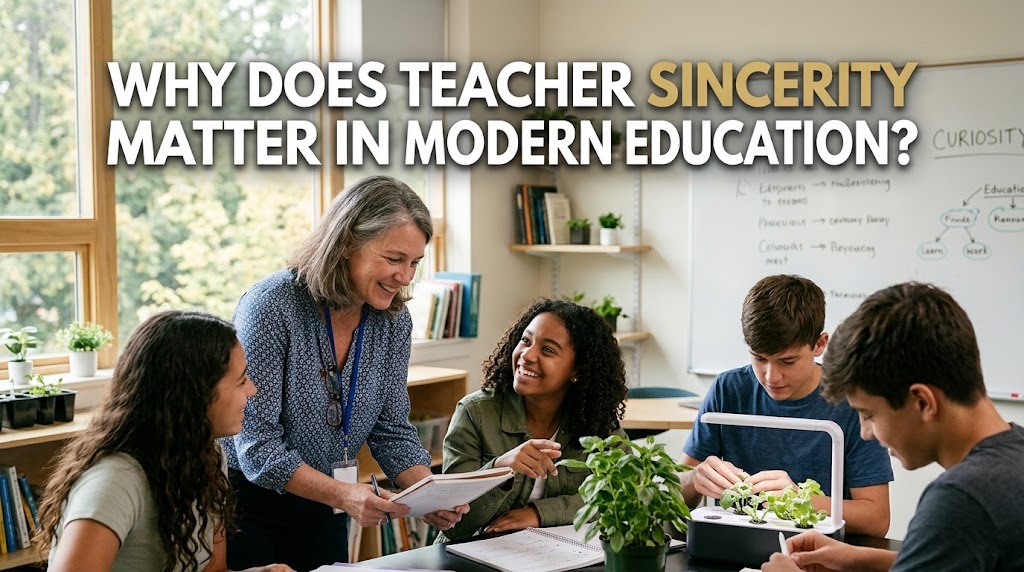
Teacher sincerity is an important part of modern education because it helps build trust, strengthen relationships, and create meaningful learning experiences. Students need more than information from textbooks and digital resources. They also benefit from teachers who genuinely care about their progress, listen to their concerns, and provide guidance when learning becomes difficult. Sincere teaching can make students feel valued and encourage them to participate more confidently in the classroom.
As educational technology continues to develop, teachers have more ways to deliver lessons and share information. However, technology cannot replace every aspect of human interaction. Teachers who combine professional knowledge with genuine concern for their students can create learning environments that support academic achievement, personal growth, and emotional development.
BUILDING TRUST BETWEEN TEACHERS AND STUDENTS
Trust is essential for a productive learning environment. Students are more likely to ask questions, admit confusion, and seek help when they believe their teachers will respond fairly and respectfully. Teacher sincerity helps establish this trust through consistent communication, honest feedback, and a genuine interest in student progress.
Trust develops through everyday actions rather than words alone. Teachers can demonstrate sincerity by keeping their promises, explaining classroom decisions clearly, and acknowledging mistakes when necessary. When students see consistency between what teachers say and what they do, they have stronger reasons to trust their guidance.
SHOWING GENUINE CONCERN FOR STUDENT PROGRESS
Every student has different abilities, interests, and learning challenges. Sincere teachers recognize these differences and make reasonable efforts to understand what their students need. They pay attention to progress, provide additional explanations when appropriate, and encourage students who struggle with difficult material.
Genuine concern does not mean giving every student the same treatment regardless of circumstances. Instead, it involves providing fair opportunities and suitable support based on learning needs. By focusing on improvement rather than grades alone, teachers can help students recognize their strengths and work toward realistic academic goals.
STRENGTHENING STUDENT LEARNING MOTIVATION
Students may lose motivation when lessons feel difficult, repetitive, or disconnected from their goals. Sincere teachers can help by explaining concepts patiently, connecting lessons to real situations, and showing students why their efforts matter. Their encouragement can make challenging tasks feel more manageable.
Students may also become more motivated when they recognize that their teachers care about their development rather than simply completing the syllabus. Constructive feedback and recognition of genuine progress help students understand that learning involves continuous improvement. This support can encourage them to participate more actively and persist through academic challenges.
CREATING A SAFE AND SUPPORTIVE CLASSROOM
A supportive classroom allows students to express ideas, ask questions, and make mistakes without unnecessary fear of humiliation. Teacher sincerity contributes to this atmosphere when educators respond with patience, listen carefully, and treat students with dignity. These behaviors help establish respectful relationships throughout the classroom.
Students have different comfort levels when speaking in front of others or sharing personal opinions. Sincere teachers recognize these differences and offer appropriate opportunities for participation. They can encourage students to contribute through discussions, written reflections, small-group activities, or presentations while maintaining clear expectations for everyone.
DEMONSTRATING HONESTY AND PROFESSIONAL INTEGRITY
Teacher sincerity is closely connected to honesty and professional responsibility. Educators demonstrate integrity by assessing students fairly, providing accurate information, respecting confidentiality, and admitting when they do not know an answer. These actions show students that learning requires honesty and a willingness to improve.
Teachers do not need to appear perfect to earn respect. A teacher who acknowledges an error and corrects it demonstrates accountability in a practical way. Such examples can help students understand that responsible behavior includes recognizing mistakes, learning from them, and making better decisions in the future.
SUPPORTING STUDENTS IN THE DIGITAL LEARNING ERA
Modern education increasingly involves online platforms, digital assignments, artificial intelligence tools, and other technologies. These resources can improve access to information, but students still need guidance to evaluate sources, understand difficult concepts, and use technology responsibly. Sincere teachers help students navigate these opportunities with clear instructions and appropriate support.
For example, teachers can encourage students to verify information from digital sources, acknowledge references, and use artificial intelligence as a learning aid rather than a substitute for independent thinking. They can also provide alternative explanations when students struggle with online materials. Combining technological skills with genuine human guidance helps students develop more responsible learning habits.
PROVIDING FAIRNESS AND EQUAL OPPORTUNITIES
Students notice how teachers distribute attention, evaluate assignments, and respond to different opinions. When teachers demonstrate sincerity through fairness and consistent standards, students are more likely to view classroom rules as reasonable. Fair treatment also helps reduce unnecessary feelings of exclusion or favoritism.
Fairness does not always mean using identical support for every student. Some learners may require additional explanations, accessible materials, or more time to complete certain tasks. Teachers can provide these forms of support while maintaining appropriate learning standards. This approach helps students receive meaningful opportunities to develop their abilities.
ENCOURAGING PERSONAL AND CHARACTER DEVELOPMENT
Education involves developing responsibility, empathy, discipline, and respect alongside academic knowledge. Sincere teachers contribute to character development by demonstrating these values in everyday interactions. Their behavior provides practical examples of how people can communicate respectfully, fulfill responsibilities, and respond constructively to disagreements.
Teachers can also help students reflect on their choices and understand the consequences of their actions. Through group projects, classroom discussions, and personal reflection, students can practice cooperation and accountability. These experiences support the development of skills and attitudes that are valuable in school, the workplace, and everyday life.
BALANCING SINCERITY WITH PROFESSIONAL BOUNDARIES
Being sincere does not mean removing classroom rules or agreeing with every student request. Effective teachers combine genuine concern with clear expectations, consistent standards, and appropriate professional boundaries. They can be compassionate while still correcting mistakes, enforcing reasonable rules, and holding students accountable for their responsibilities.
This balance helps students understand that care and discipline can exist together. A teacher may reject an inappropriate request while explaining the reason respectfully and offering a constructive alternative. Such responses demonstrate that sincerity involves supporting students' long-term development rather than simply making every interaction comfortable.
CONCLUSION
Teacher sincerity matters in modern education because it strengthens trust, supports learning motivation, and creates respectful classroom relationships. Through honest communication, fair treatment, constructive feedback, and genuine concern for student progress, teachers can make education more meaningful. Technology and modern teaching methods remain valuable, but sincere human guidance continues to play an important role in student development. When teachers combine compassion with professional integrity, they help students grow into more confident, responsible, and independent learners.
Recent Posts

Bagaimana Sistem SKS pada Program Kuliah... 22.11.2026/57 View

How Does Technology Make Daily Evaluation... 21.11.2026/86 View

Apa Strategi Menghadapi Kesenjangan antara Kompetensi... 21.11.2026/84 View

Mengapa Inventaris Aset Penting bagi Kelancaran... 21.11.2026/82 View

When Should Musicians Join a Record... 21.11.2026/86 View
