

Why Does the Digital Divide Remain a Major Challenge in Educational Digitalization?
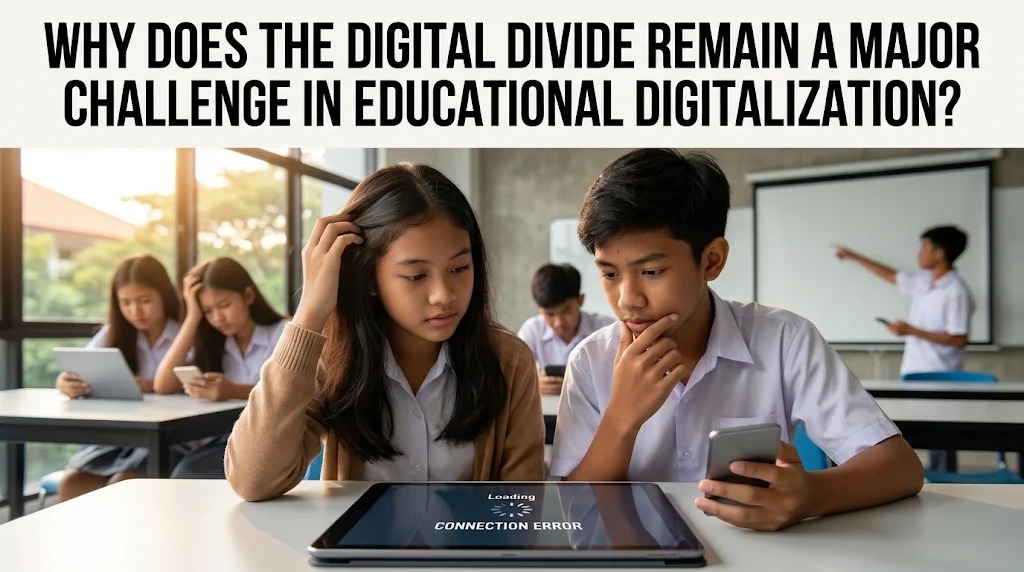
Educational digitalization has created new opportunities to improve the quality and accessibility of education. Through internet connections, digital devices, and online learning platforms, students can access educational materials more easily and participate in various technology-based learning activities. These developments have changed traditional teaching methods and encouraged schools to adopt more flexible educational systems. However, not every student has the same opportunity to benefit from these technological advancements.
One of the biggest obstacles is the digital divide, which refers to differences in access to digital technology, internet connections, and the skills needed to use them effectively. This problem remains a major challenge in educational digitalization, particularly in countries with diverse geographical and economic conditions such as Indonesia. Students in urban areas may have better technological facilities, while those in remote regions often face significant limitations. Understanding the causes and effects of the digital divide is essential to creating a more inclusive and equal education system.
UNEQUAL ACCESS TO INTERNET CONNECTIONS AND DIGITAL DEVICES
Unequal access to internet connections is one of the main reasons the digital divide continues to affect educational development. Students in urban areas generally have better opportunities to access stable internet services, while those in remote regions may experience weak signals, limited network coverage, or unreliable connections. These conditions make it difficult for students to attend online classes, download learning materials, and participate in virtual discussions. As a result, their learning experiences may be significantly different from those of students with better internet access.
The availability of digital devices also influences students' ability to participate in technology-based education. Not every family can afford laptops, tablets, or smartphones that meet educational requirements. Some students must share devices with other family members, making it difficult to complete assignments or follow online learning schedules. Schools and governments need to improve internet accessibility and provide affordable digital devices so that students from different backgrounds can access educational opportunities more equally.
ECONOMIC INEQUALITY AS A BARRIER TO DIGITAL EDUCATION
Economic differences between families also contribute to the digital divide. Students from financially stable households generally have greater opportunities to purchase digital devices, subscribe to reliable internet services, and access additional online educational resources. Meanwhile, families with limited financial resources may struggle to cover the costs of internet data packages, electricity, and technological equipment. These financial limitations can prevent students from participating effectively in digital learning activities.
The problem becomes more complicated when schools require students to use specific applications or online platforms that demand relatively advanced devices. Students who cannot meet these requirements may fall behind academically despite having the motivation to learn. This situation shows that educational digitalization cannot succeed if access to technology depends entirely on individual purchasing power. Providing affordable educational technology and financial assistance is important to reducing economic barriers in digital education.
GEOGRAPHICAL DIFFERENCES IN EDUCATIONAL INFRASTRUCTURE
Indonesia's geographical conditions create additional challenges in distributing digital educational facilities. As an archipelagic country, Indonesia has many islands, mountainous areas, and remote communities that are difficult to reach. Building reliable internet infrastructure in these locations can require significant investment, technical resources, and long-term planning. Consequently, some schools still experience limited access to technological facilities compared with educational institutions in major cities.
Besides internet connections, remote schools may also lack electricity, computers, digital learning equipment, and technical support. These limitations make it difficult for teachers to integrate technology into classroom activities consistently. Students may have fewer opportunities to explore online learning resources or develop technological competencies. Therefore, improving educational infrastructure in underserved regions is essential to ensuring that digital transformation benefits students throughout Indonesia rather than concentrating on well-connected areas.
DIFFERENCES IN DIGITAL LITERACY AMONG STUDENTS AND TEACHERS
Having access to digital devices does not automatically mean that students and teachers can use them effectively. Digital literacy involves the ability to search for information, evaluate online sources, operate applications, protect personal data, and communicate responsibly through technology. Individuals who lack these skills may struggle to benefit from digital educational resources even when internet access and devices are available. This creates another form of inequality within the educational environment.
Teachers also have different levels of technological knowledge and experience. Some educators can confidently use digital learning platforms, create interactive materials, and conduct online assessments, while others may need additional training. Without sufficient guidance, technology may be used only for basic activities rather than improving the overall learning process. Schools should provide continuous digital literacy training for teachers and students to ensure that technological access is accompanied by the ability to use it productively.
THE IMPACT OF THE DIGITAL DIVIDE ON STUDENT LEARNING OPPORTUNITIES
The digital divide can create significant differences in the quality of educational experiences among students. Those with reliable internet connections and modern devices can access online courses, digital libraries, educational videos, and interactive learning applications. They may also have more opportunities to develop skills that are increasingly important in modern workplaces. Meanwhile, students with limited technological access may struggle to obtain the same educational resources.
These differences can influence academic performance, learning motivation, and future career opportunities. Students who frequently experience internet disruptions may miss important explanations, submit assignments late, or have difficulty participating in collaborative projects. Over time, unequal access to educational technology can strengthen existing social and economic inequalities. Addressing the digital education gap is therefore important not only for improving learning experiences but also for supporting long-term educational equality.
GOVERNMENT AND SCHOOL EFFORTS TO REDUCE THE DIGITAL DIVIDE
Reducing the digital divide requires cooperation between governments, schools, communities, and technology providers. Governments need to expand internet infrastructure, improve electricity access, and support the distribution of affordable digital devices, particularly in underserved regions. Educational funding should also prioritize schools that face significant technological limitations. These efforts can help create more equal opportunities for students to participate in digital learning.
Schools also have an important responsibility to provide practical technology training and develop learning methods that accommodate students with different levels of digital access. For example, teachers can combine online resources with printed materials or offline learning activities when internet connections are unavailable. Partnerships with local communities and private organizations can also support the provision of digital facilities. Through inclusive education policies and sustainable investment, educational digitalization can become more accessible and beneficial for all students.
CONCLUSION
The digital divide remains a major challenge in educational digitalization because students and schools do not have equal access to internet connections, digital devices, infrastructure, and technological knowledge. Economic inequality and geographical conditions further increase these differences, particularly in remote areas. As a result, students may experience unequal learning opportunities and differences in educational quality.
Addressing this challenge requires more than introducing digital technology into schools. Governments must improve infrastructure, provide affordable devices, strengthen digital literacy, and ensure that educational programs reach underserved communities. Schools, teachers, and parents must also work together to support responsible technology use. With consistent efforts and inclusive policies, digital education can become a more equitable system that provides opportunities for students regardless of their economic background or geographical location.
Recent Posts

Bagaimana Sistem SKS pada Program Kuliah... 22.11.2026/31 View

How Does Technology Make Daily Evaluation... 21.11.2026/67 View

Apa Strategi Menghadapi Kesenjangan antara Kompetensi... 21.11.2026/66 View

Mengapa Inventaris Aset Penting bagi Kelancaran... 21.11.2026/64 View

When Should Musicians Join a Record... 21.11.2026/65 View
