

Why Does the Government Provide Subsidies to the Public?
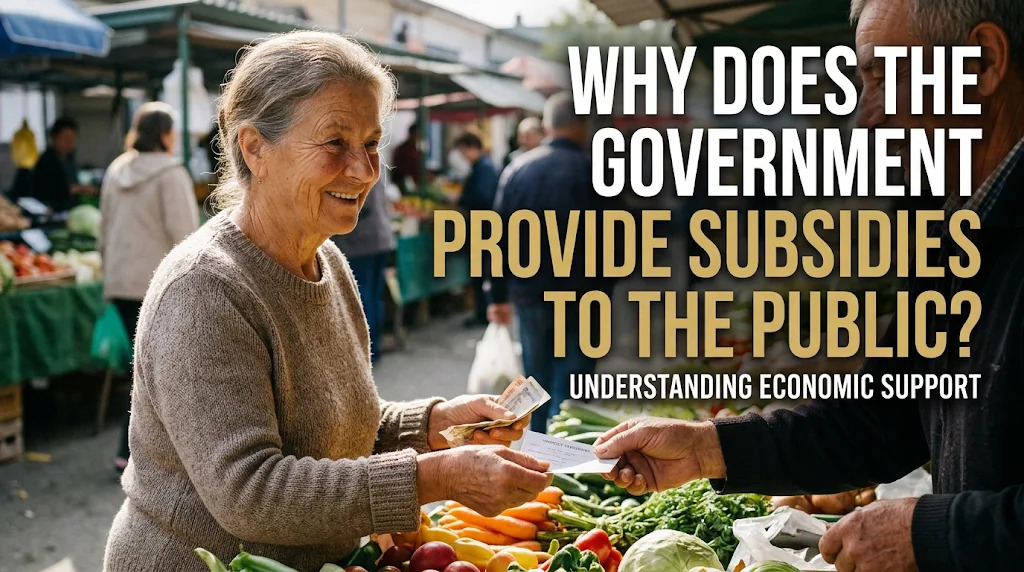
Government subsidies are an important part of public policy because they help people access essential goods and services at more affordable prices. Governments provide subsidies to reduce financial pressure, support economic activities, and improve the overall welfare of society. These programs are particularly important for low-income households that may struggle to afford basic necessities such as electricity, fuel, food, education, and healthcare. Through financial assistance and price support, governments can help create better economic opportunities for different groups of people. Understanding why subsidies are provided can explain how government spending contributes to social protection and national development.
REDUCING THE FINANCIAL BURDEN ON HOUSEHOLDS
One of the main reasons governments provide subsidies is to reduce the financial burden experienced by households. Rising prices of essential goods and services can make it difficult for families to manage their daily expenses. This situation is particularly challenging for low-income households because a large portion of their income is usually spent on basic necessities. Subsidies can help reduce these expenses and allow families to use their remaining income for other important needs.
For example, fuel and electricity subsidies can help households manage transportation and energy costs. Food-related assistance can also support families when the prices of essential commodities increase. By making certain goods and services more affordable, the government helps protect people's purchasing power. Reducing household expenses is therefore one of the most important objectives of public subsidy programs.
IMPROVING ACCESS TO ESSENTIAL GOODS AND SERVICES
Governments also provide subsidies to ensure that people can access essential goods and services regardless of their financial circumstances. Without public support, some individuals may struggle to afford education, healthcare, transportation, and other basic services. This can create barriers that limit their opportunities to improve their living conditions. Subsidies help reduce these barriers by lowering costs or providing financial assistance to eligible beneficiaries.
Education subsidies, for instance, can help students continue their studies without facing excessive financial pressure. Healthcare subsidies can make medical treatment and essential health services more accessible to people who need them. Meanwhile, agricultural subsidies can support the availability of important food products by helping farmers manage production costs. Affordable access to essential services contributes to a more inclusive society and gives people greater opportunities to improve their future.
SUPPORTING LOW-INCOME AND VULNERABLE COMMUNITIES
Another important reason for providing subsidies is to protect low-income households and vulnerable communities from economic difficulties. People with limited financial resources are often more affected by inflation, unemployment, and increases in the prices of essential products. When living costs rise, these households may have fewer options for adjusting their spending. Government subsidies can provide additional protection and help them meet their basic needs.
Subsidy programs can also support groups that require particular attention, including small-scale farmers, students from disadvantaged backgrounds, and people with limited access to public services. However, assistance needs to be distributed according to clear eligibility criteria so that the intended beneficiaries receive the support. Targeted subsidies can make government spending more effective because assistance is directed toward people who need it most. This approach also helps reduce the possibility of public resources being used inefficiently.
MAINTAINING ECONOMIC STABILITY AND CONTROLLING PRICES
Subsidies can help governments manage economic pressures caused by changes in domestic and international markets. Increases in global energy prices, for example, may affect transportation expenses, production costs, and the prices of other goods. When these costs rise significantly, households and businesses may experience financial difficulties. Certain subsidy programs can help reduce the impact of these changes on domestic economic activities.
Price subsidies may also help prevent sudden increases in the cost of essential products and services. By supporting selected sectors, the government can help maintain economic activity and protect consumer purchasing power. Nevertheless, subsidies are not a permanent solution to inflation because they cannot address every underlying cause of rising prices. Responsible subsidy policies should therefore be combined with effective economic management, stable supply chains, and appropriate fiscal planning.
ENCOURAGING BUSINESS ACTIVITIES AND NATIONAL DEVELOPMENT
Governments also provide subsidies to support businesses and industries that contribute to economic growth. Small and medium-sized enterprises, agricultural producers, and other strategic sectors may face high production costs or limited access to financing. Financial support can help these businesses maintain operations, improve productivity, and expand their activities. As businesses become more capable of operating efficiently, they may also create additional employment opportunities.
In the agricultural sector, subsidies for fertilizers and other production resources can help farmers manage operational expenses. Support for education, technology, and renewable energy can also encourage long-term development in important areas. However, subsidy programs should be evaluated regularly to ensure that they create real benefits rather than unnecessary dependence on government assistance. Supporting productive economic sectors allows subsidies to contribute not only to immediate public needs but also to broader national development.
CONCLUSION
The government provides subsidies to reduce household expenses, improve access to essential services, protect vulnerable communities, maintain economic stability, and support business activities. These programs help people manage financial challenges while creating opportunities for broader economic development. However, subsidies must be distributed accurately and managed responsibly to prevent wasteful spending and ensure long-term sustainability. When properly designed, government subsidies can become an effective policy instrument for improving public welfare and strengthening the national economy.
Recent Posts

Bagaimana Sistem SKS pada Program Kuliah... 22.11.2026/27 View

How Does Technology Make Daily Evaluation... 21.11.2026/65 View

Apa Strategi Menghadapi Kesenjangan antara Kompetensi... 21.11.2026/65 View

Mengapa Inventaris Aset Penting bagi Kelancaran... 21.11.2026/62 View

When Should Musicians Join a Record... 21.11.2026/63 View
