

Why Does the Student Senate Play an Important Role in Protecting Student Welfare?
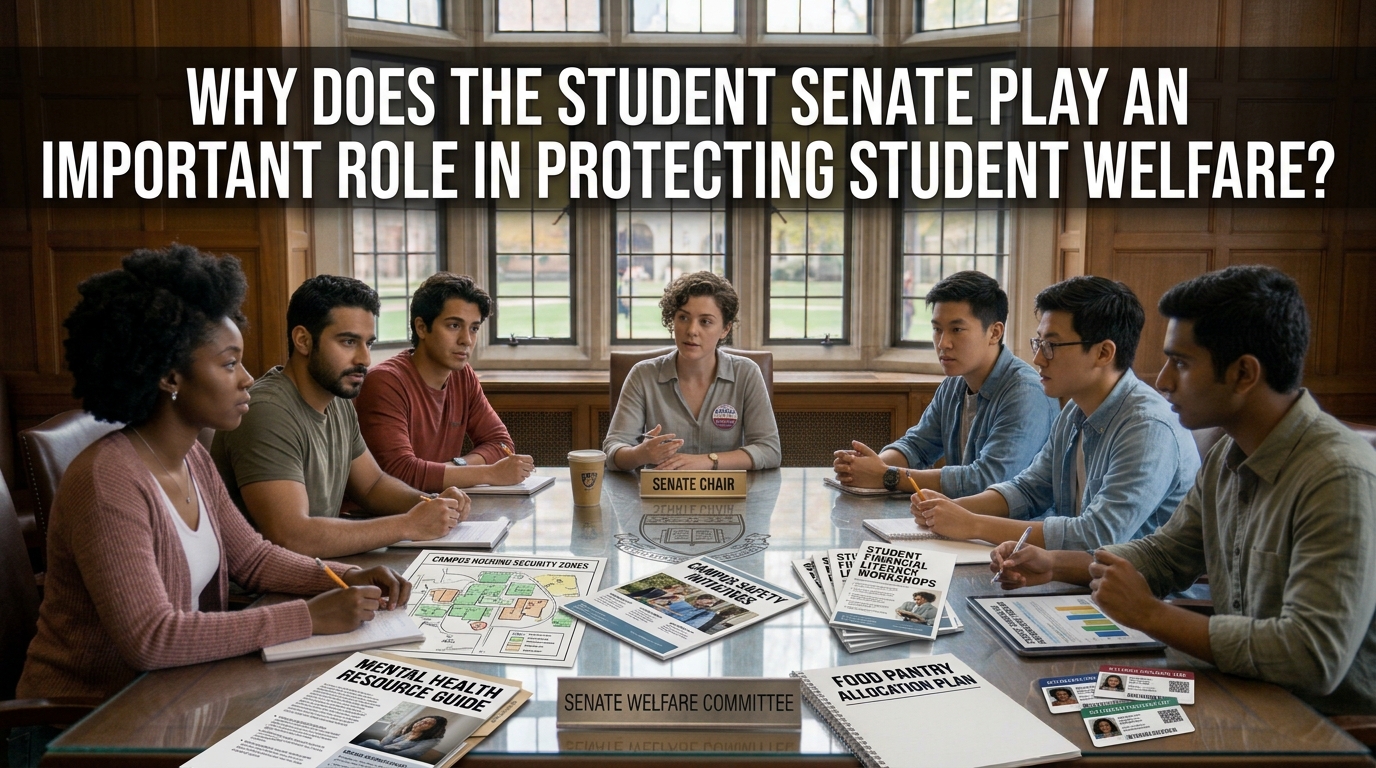
Student welfare is one of the most important aspects of creating a positive and supportive university environment. Students need more than quality education to succeed in higher education. They also require fair academic policies, adequate campus facilities, financial assistance, mental health support, and equal opportunities to develop their potential. In this context, the student senate plays an important role in representing student interests and ensuring that their needs receive proper attention from university management.
As a student representative organization, the student senate acts as a bridge between students and university administrators. It helps collect student concerns, communicate important issues, and advocate for improvements in campus policies and services. Through these responsibilities, the student senate can contribute to creating a safer, fairer, and more comfortable learning environment. Its involvement also encourages students to become more aware of their rights and actively participate in improving university life.
REPRESENTING STUDENT INTERESTS AND ASPIRATIONS
One of the main responsibilities of the student senate is to represent student interests and aspirations in university decision-making. Students often experience various challenges involving academic regulations, administrative services, campus facilities, and student activities. However, not every student has direct access to university administrators to communicate these concerns. The student senate provides an organized channel for students to express their opinions, complaints, and suggestions.
To carry out this responsibility effectively, student representatives need to listen to different groups and understand their actual needs. They can organize public discussions, distribute online surveys, and provide accessible complaint channels. The information collected can then be discussed and presented to university management as recommendations. Through this process, the student senate helps ensure that student voices are considered when universities develop policies and improve campus services.
PROTECTING STUDENT RIGHTS AND ENSURING FAIR TREATMENT
The student senate also contributes to protecting student rights by advocating for fair treatment within the university environment. Every student deserves equal access to educational opportunities, transparent academic procedures, and appropriate institutional services. Problems may arise when students experience unfair academic treatment, unclear regulations, or difficulties accessing university facilities. The student senate can help communicate these concerns and encourage the university to address them appropriately.
In addition, student representatives can advocate for clear complaint procedures and fair administrative processes. They can also encourage universities to provide accurate information about academic regulations and student responsibilities. Although the student senate does not replace university authorities or formal complaint mechanisms, it can help students understand available procedures and communicate their concerns. This role is important for promoting fairness, transparency, and accountability in higher education.
ADVOCATING FOR BETTER CAMPUS FACILITIES
Adequate campus facilities are essential for supporting student comfort, safety, and academic activities. Poorly maintained classrooms, limited study spaces, insufficient internet access, and inadequate sanitation facilities can interfere with the learning process. Students with disabilities may also experience difficulties when campus infrastructure does not provide sufficient accessibility. These conditions can negatively affect the overall university experience.
The student senate can help identify these problems by collecting student feedback and evaluating campus conditions. After identifying important issues, representatives can submit recommendations for facility improvements to the relevant university departments. They can also encourage regular maintenance, better accessibility, and improvements to shared student spaces. Through consistent advocacy, the student senate helps promote a campus environment that supports the needs of the entire student community.
SUPPORTING STUDENT MENTAL HEALTH AND WELL-BEING
Student welfare includes both physical and psychological well-being. University students may experience academic pressure, financial difficulties, social challenges, and uncertainty about their future careers. These situations can affect concentration, motivation, and academic performance. Therefore, the student senate has an important role in encouraging greater awareness of mental health and emotional well-being.
The organization can collaborate with university counseling services to promote mental health education and share information about available support. It can also advocate for accessible counseling facilities, stress management programs, and activities that encourage positive social relationships. Student representatives should approach sensitive concerns with empathy and respect individual privacy. These initiatives can help create a campus culture where students feel supported and comfortable seeking assistance when needed.
PROMOTING FINANCIAL SUPPORT AND STUDENT ACCESSIBILITY
Financial difficulties can prevent students from fully participating in university activities and completing their education. Expenses such as tuition fees, accommodation, transportation, textbooks, and daily necessities can create significant pressure. Students from financially disadvantaged backgrounds may face additional challenges in accessing educational opportunities. The student senate can help bring these concerns to the attention of university management.
One way to address this issue is by advocating for scholarships, tuition assistance, and financial aid programs. The student senate can collect information about financial barriers, communicate student needs, and encourage transparent scholarship selection procedures. It can also help distribute information about available financial assistance so that eligible students understand how to apply. Although the organization does not directly control university funding, it can encourage fairer access to available support.
CREATING AN INCLUSIVE AND SAFE CAMPUS ENVIRONMENT
A supportive university environment should provide every student with equal opportunities to learn and participate. However, discrimination, bullying, harassment, and unequal access to campus resources can threaten student welfare. These problems may make students feel uncomfortable, excluded, or unsafe during their university experience. The student senate can help address these concerns by promoting awareness and advocating for stronger student protection policies.
The organization can collaborate with relevant university departments to support campus safety and inclusion programs. Activities may include educational campaigns, discussions about mutual respect, and information about reporting procedures. Student representatives can also encourage accessible facilities and fair treatment for students with different needs and backgrounds. These efforts help build a campus culture based on respect, equality, and shared responsibility.
IMPROVING COMMUNICATION BETWEEN STUDENTS AND UNIVERSITY MANAGEMENT
Effective communication is necessary to ensure that student welfare concerns receive appropriate attention. Students sometimes struggle to understand university policies, available services, or the progress of proposed improvements. At the same time, university administrators may not always have complete information about the challenges students experience in their daily academic lives. The student senate helps connect these two groups through organized communication.
By arranging regular meetings, public discussions, and consultation sessions, student representatives can communicate student concerns directly to university management. They can also share important policy updates, meeting outcomes, and institutional announcements with the wider student community. This two-way communication helps reduce misunderstandings and encourages constructive cooperation. As a result, university management can gain a better understanding of student needs when considering institutional decisions.
MONITORING UNIVERSITY POLICIES AND STUDENT SERVICES
Another important responsibility of the student senate is to encourage the continuous evaluation of university policies and student services. Academic regulations, administrative procedures, scholarship programs, and campus facilities may need improvements as student needs change. Without regular evaluation, certain problems may remain unresolved and affect the quality of the university experience. Student feedback can provide valuable information about whether existing policies are working effectively.
The student senate can conduct surveys, organize discussions, and collect feedback about institutional services. Based on the findings, representatives can develop evidence-based recommendations and present them to university management. They should also monitor the progress of proposed improvements and communicate relevant updates to students. This process promotes accountability and helps ensure that university policies remain responsive to student welfare needs.
CONCLUSION
The student senate plays an important role in protecting student welfare by representing student interests, advocating for student rights, and encouraging improvements in university policies and services. Its contributions include supporting better campus facilities, promoting mental health awareness, advocating for financial assistance, and creating a safer and more inclusive learning environment. Through effective communication and policy evaluation, the organization helps ensure that student concerns receive proper attention.
Ultimately, student welfare is a shared responsibility between students, student representatives, and university management. The student senate cannot solve every problem independently, but it can become an effective bridge between student needs and institutional action. With responsible leadership, transparency, and continuous cooperation, the student senate can contribute to a healthier, safer, and more supportive university environment.
Recent Posts

Bagaimana Sistem SKS pada Program Kuliah... 22.11.2026/35 View

How Does Technology Make Daily Evaluation... 21.11.2026/69 View

Apa Strategi Menghadapi Kesenjangan antara Kompetensi... 21.11.2026/69 View

Mengapa Inventaris Aset Penting bagi Kelancaran... 21.11.2026/67 View

When Should Musicians Join a Record... 21.11.2026/68 View
