

Why Does Urban Traffic Congestion Cause Economic Losses for Communities?
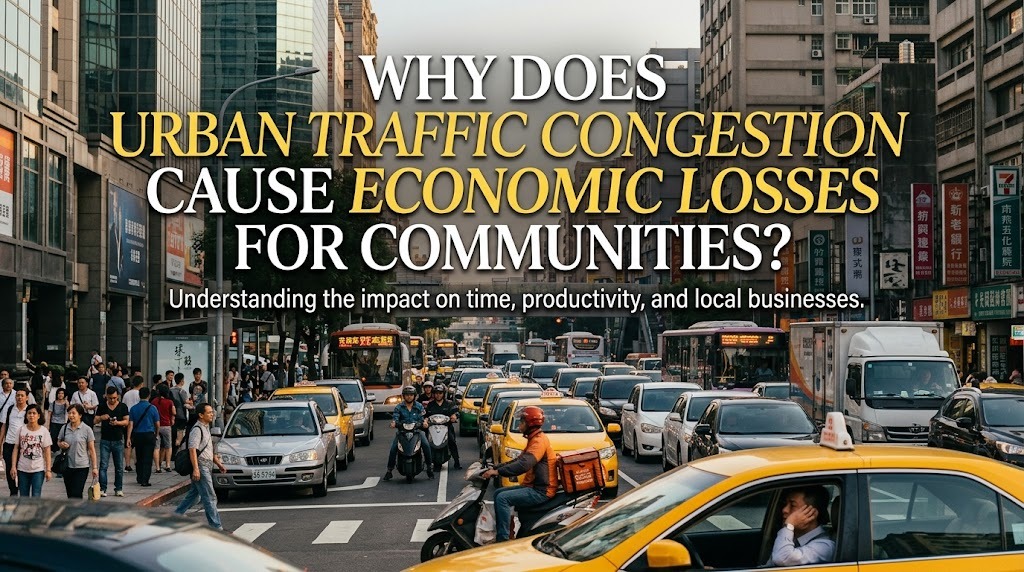
Urban traffic congestion is more than a transportation problem because it can create significant economic losses for individuals, businesses, and entire communities. When roads become overcrowded, people spend more time traveling, vehicles consume additional fuel, and goods take longer to reach their destinations. These delays can reduce productivity, increase operating expenses, and make economic activities less efficient. Understanding the economic consequences of traffic congestion can help cities develop better transportation policies and support sustainable economic growth.
WASTED TIME AND REDUCED PRODUCTIVITY
One of the main economic costs of traffic congestion is the loss of valuable time. Workers may spend hours commuting instead of using that time for productive activities, education, rest, or family responsibilities. Long and unpredictable journeys can also cause employees to arrive late, miss meetings, or experience fatigue that affects their performance. When these problems occur across thousands of workers, the combined impact can become substantial.
Businesses may also lose productivity when employees, customers, and service providers cannot reach their destinations on time. Meetings may be delayed, appointments may need to be rescheduled, and daily operations can become less efficient. In industries that depend on timely transportation, even short delays may disrupt work schedules and reduce the number of tasks completed each day. Improving traffic management and providing reliable public transportation can help reduce wasted time and support economic productivity.
HIGHER FUEL CONSUMPTION AND TRANSPORTATION COSTS
Traffic congestion can increase transportation expenses because vehicles may spend more time idling, accelerating, and braking. These driving conditions can reduce fuel efficiency, although the exact effect depends on vehicle type, engine technology, and traffic patterns. Drivers may need to purchase more fuel to complete journeys that would normally take less time. Frequent stop-and-go driving can also contribute to vehicle wear and maintenance costs.
For households, these additional expenses can reduce the money available for food, education, healthcare, and other essential needs. Businesses that operate cars, motorcycles, delivery vans, and trucks may face higher fuel and maintenance bills as well. Over time, increased transportation costs can affect prices and reduce the profitability of companies that rely heavily on road travel. Efficient transportation systems can help limit these costs by reducing delays and encouraging more economical travel options.
DELAYS IN GOODS DELIVERY AND BUSINESS OPERATIONS
Many businesses depend on reliable transportation to receive raw materials, move products, and serve customers. When traffic congestion delays delivery vehicles, businesses may struggle to maintain inventory levels or meet customer expectations. Restaurants, retailers, manufacturers, and online sellers can experience disruptions when supplies arrive later than scheduled. These delays may require companies to adjust production plans, reschedule deliveries, or pay for additional logistical support.
Traffic congestion can also make delivery times less predictable, creating challenges for businesses that operate with strict schedules. Trucks may spend more time on the road, reducing the number of deliveries they can complete during a working day. In some cases, companies may need additional vehicles or employees to maintain the same service level. Better freight planning, designated loading areas, and improved access to commercial districts can help reduce these economic pressures.
LOWER BUSINESS COMPETITIVENESS AND INVESTMENT
Severe traffic congestion can make a city less attractive to businesses and investors. Companies often consider transportation reliability when deciding where to establish offices, factories, warehouses, and distribution centers. If employees regularly experience long commutes and goods frequently arrive late, operating a business in that location may become more expensive. This can reduce the efficiency of local industries and affect a city's ability to compete with other economic centers.
Small businesses may be particularly vulnerable because they often have limited budgets and fewer resources to absorb unexpected costs. Customers may avoid shops located in congested areas if reaching them is difficult, while service providers may struggle to visit multiple clients in one day. Over time, these challenges can affect revenue, employment opportunities, and business expansion. Investing in sustainable urban transportation can help create a more accessible business environment and strengthen local economic development.
ENVIRONMENTAL AND PUBLIC HEALTH COSTS
Traffic congestion can contribute to air pollution when vehicles release exhaust emissions during idling and inefficient driving. Vehicle-related pollutants can affect respiratory and cardiovascular health, while greenhouse gas emissions contribute to climate change. Poor air quality may increase healthcare needs and create additional burdens for families and public health systems. The overall impact depends on local pollution sources, vehicle technology, fuel type, and population exposure.
Communities may also experience economic losses when traffic-related health problems affect attendance at work or school. Noise pollution and long commuting times can reduce well-being, while congested roads may complicate travel for emergency services. These indirect costs are not always reflected in the price of fuel or vehicle ownership, but they can affect the wider community. Expanding public transportation, supporting walking and cycling, and encouraging cleaner vehicles can help reduce these burdens while improving urban living conditions.
CONCLUSION
Urban traffic congestion causes economic losses by wasting time, increasing fuel and maintenance expenses, delaying deliveries, reducing business efficiency, and contributing to environmental and health costs. These effects can influence household budgets, business competitiveness, employment, and the overall economic development of a city. The longer congestion persists, the more difficult it may become for communities to manage the combined costs.
Cities can reduce these losses by improving public transportation, coordinating traffic signals, supporting efficient freight movement, and developing well-connected neighborhoods. Governments and businesses should also encourage shared transportation and flexible work arrangements where practical. Through sustainable transportation planning, communities can improve mobility, protect public health, and create stronger conditions for long-term economic growth.
Recent Posts

Bagaimana Sistem SKS pada Program Kuliah... 22.11.2026/54 View

How Does Technology Make Daily Evaluation... 21.11.2026/83 View

Apa Strategi Menghadapi Kesenjangan antara Kompetensi... 21.11.2026/82 View

Mengapa Inventaris Aset Penting bagi Kelancaran... 21.11.2026/78 View

When Should Musicians Join a Record... 21.11.2026/84 View
