

Why Does Urban Traffic Congestion Increase Air Pollution and Carbon Emissions?
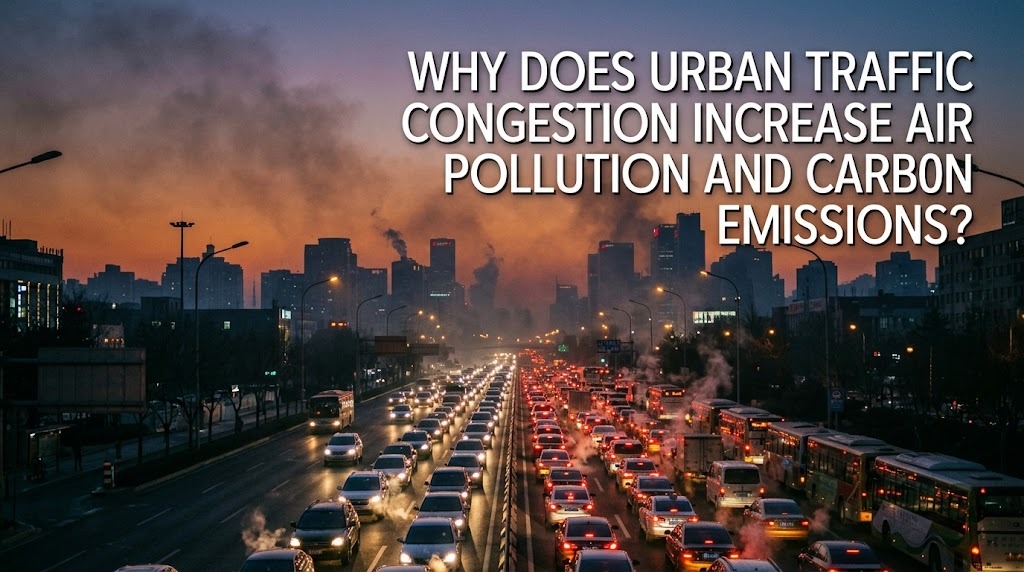
Urban traffic congestion is a major environmental challenge in many growing cities. As the number of vehicles increases, roads become crowded, travel speeds fluctuate, and vehicles may spend more time idling or accelerating repeatedly. These conditions can contribute to higher emissions of air pollutants and greenhouse gases, depending on vehicle types, fuel efficiency, and traffic conditions. Understanding the connection between traffic congestion, air pollution, and carbon emissions is essential for developing cleaner and more sustainable urban transportation systems.
VEHICLE EMISSIONS AND AIR POLLUTION
Motor vehicles release several substances that can reduce air quality, particularly when they burn petrol or diesel. These include nitrogen oxides, particulate matter, and other pollutants that can contribute to respiratory and cardiovascular health problems. In congested traffic, vehicles frequently stop, accelerate, and move at low speeds, which can increase emissions per distance traveled under certain conditions. The overall impact depends on engine technology, fuel type, vehicle maintenance, and how long vehicles remain on the road.
Air pollution can become especially concerning in densely populated areas where busy roads are close to homes, schools, offices, and public spaces. People living or working near major traffic corridors may experience greater exposure to vehicle-related pollutants. Long-term exposure to polluted air is associated with health risks, including asthma and cardiovascular disease. Reducing unnecessary vehicle trips and encouraging cleaner transportation can help improve urban air quality.
IDLING VEHICLES AND FUEL CONSUMPTION
One reason congestion can increase emissions is that vehicles may continue running while moving very slowly or waiting in traffic queues. During idling, engines can consume fuel without transporting passengers or goods toward their destinations. Although an idling vehicle generally produces fewer emissions per minute than a vehicle under heavy acceleration, prolonged idling adds unnecessary fuel consumption and emissions over time. Repeated acceleration and braking can further reduce fuel efficiency in many driving conditions.
These effects can become significant when thousands of vehicles experience similar delays every day. Drivers may spend additional time traveling short distances, increasing the total duration of their journeys. Poorly coordinated traffic signals, road incidents, and bottlenecks can make the situation worse by causing long queues. Efficient traffic management, improved intersection design, and reduced unnecessary idling can help lower fuel waste and emissions.
CARBON DIOXIDE AND CLIMATE CHANGE
Carbon dioxide (CO₂) is a greenhouse gas released when petrol, diesel, and other carbon-based fuels are burned. It contributes to global warming by trapping heat in the atmosphere. When congestion increases fuel consumption across a large number of vehicles, total CO₂ emissions can also rise. However, the precise effect depends on traffic patterns, vehicle efficiency, fuel composition, and whether congestion changes the total distance traveled.
Reducing carbon emissions requires more than improving traffic speed. If wider roads encourage additional driving, total fuel use and emissions may eventually increase despite shorter journeys at first. Cities can achieve more sustainable results by combining traffic improvements with public transportation, walking, cycling, and cleaner vehicle technologies. These measures can reduce dependence on fossil fuels while helping people reach their destinations efficiently.
HEALTH EFFECTS OF TRAFFIC-RELATED POLLUTION
Air pollution from road traffic can affect the health of people who live, work, or travel in urban areas. Fine particulate matter can penetrate deep into the lungs, while certain gaseous pollutants can irritate the respiratory system. Long-term exposure to traffic-related pollution is associated with an increased risk of respiratory illnesses and cardiovascular disease. Children, older adults, and people with existing health conditions may be particularly vulnerable.
Traffic pollution can also affect daily comfort through unpleasant exhaust odors and the accumulation of pollutants near busy roads. In areas with limited ventilation or heavy vehicle activity, exposure may become a concern for pedestrians and outdoor workers. Although traffic is not the only source of urban air pollution, it can be an important contributor in areas with intensive road use. Monitoring air quality and reducing vehicle emissions can help protect public health.
SUSTAINABLE SOLUTIONS TO REDUCE EMISSIONS
Cities can reduce traffic-related pollution by making public transportation reliable, affordable, and convenient. Well-connected bus and rail networks allow more people to travel without using separate private vehicles. Dedicated bus lanes and integrated ticketing can make public transport more attractive, while safe sidewalks and protected bicycle lanes support low-emission travel for shorter journeys. These options can reduce vehicle demand when they provide practical alternatives to driving.
Governments can also encourage cleaner vehicles, enforce emissions standards, improve fuel quality, and maintain roads and traffic signals. Intelligent traffic systems can coordinate intersections and provide information about road conditions, although smoother traffic flow alone does not guarantee lower total emissions. Urban planning that places housing, workplaces, schools, and essential services closer together can reduce unnecessary travel distances. Combining these measures offers a stronger long-term strategy for lowering air pollution and carbon emissions.
KESIMPULAN
Urban traffic congestion can increase air pollution and carbon emissions by causing additional fuel consumption, prolonged idling, and inefficient driving conditions. Vehicle exhaust contributes to pollutants that threaten public health, while carbon dioxide emissions contribute to climate change. The severity of these effects depends on vehicle technology, fuel type, traffic patterns, and the overall transportation system.
To address the problem, cities should improve public transportation, promote walking and cycling, support cleaner vehicles, and apply effective traffic management. Sustainable urban planning can also reduce unnecessary journeys and dependence on private vehicles. Through coordinated policies and responsible travel choices, cities can improve air quality, reduce greenhouse gas emissions, and create healthier environments for their residents.
Recent Posts

Bagaimana Sistem SKS pada Program Kuliah... 22.11.2026/54 View

How Does Technology Make Daily Evaluation... 21.11.2026/83 View

Apa Strategi Menghadapi Kesenjangan antara Kompetensi... 21.11.2026/81 View

Mengapa Inventaris Aset Penting bagi Kelancaran... 21.11.2026/78 View

When Should Musicians Join a Record... 21.11.2026/82 View
