

Why Does Urban Traffic Congestion Peak During Morning and Evening Rush Hours?
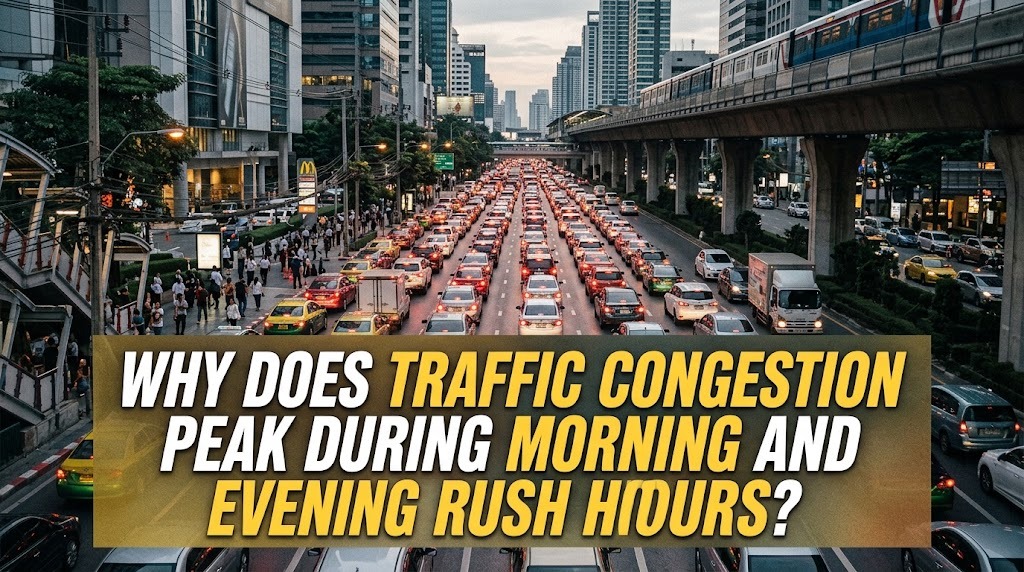
Urban traffic congestion often becomes most severe during morning and evening rush hours because large numbers of people travel at similar times. Employees commute to offices, students travel to schools and universities, and businesses move goods and services across the city. When these journeys occur simultaneously, the demand for road space can exceed the available capacity. Understanding why rush-hour traffic occurs can help cities develop better transportation systems and reduce daily travel delays.
SIMILAR WORK AND SCHOOL SCHEDULES
One of the main reasons traffic congestion peaks during rush hours is that many people follow similar daily schedules. Office workers often need to arrive before the working day begins, while students must reach schools and universities at specific times. As a result, thousands of commuters may enter the road network within a relatively short period. This concentration of travel creates heavy traffic on major roads, intersections, and routes leading to business districts.
The evening rush hour develops when workers and students return home around similar times. In many cities, this creates two daily periods when transportation demand is especially high. Even roads that operate smoothly during midday can become overcrowded when traffic volumes increase sharply. Flexible working hours, staggered school schedules, and remote work where appropriate can help spread travel demand across a longer period.
HIGH DEPENDENCE ON PRIVATE VEHICLES
The widespread use of private vehicles is another important factor behind rush-hour congestion. Many commuters prefer cars and motorcycles because they offer flexibility and direct travel to their destinations. However, when a large proportion of residents travel separately, the number of vehicles on the road increases significantly. This can overwhelm road capacity, particularly in densely populated cities with limited alternative routes.
Private cars can be especially inefficient when they carry only one person during peak hours. Although motorcycles occupy less space individually, large numbers of them can still contribute to crowded intersections and complicated traffic movements. Congestion becomes more severe when public transportation is unreliable or does not connect residential areas with workplaces effectively. Improving bus and rail services, encouraging carpooling, and developing safe cycling routes can reduce dependence on individual vehicles.
LIMITED ROAD CAPACITY AND BOTTLENECKS
Rush-hour congestion often occurs because the number of vehicles exceeds the amount of traffic a road can accommodate efficiently. Narrow roads, poorly designed intersections, construction zones, and limited bridge or highway connections can restrict traffic flow. When many vehicles reach these locations at the same time, queues form and can extend to nearby streets. These areas are known as traffic bottlenecks.
Small disruptions can make these bottlenecks worse during peak periods. A minor collision, a broken-down vehicle, or a vehicle stopping in an inappropriate location may reduce the usable road space and cause long delays. Poorly coordinated traffic signals can also create unnecessary waiting times at busy intersections. Better intersection design, rapid incident response, and effective traffic signal coordination can help improve traffic flow without always requiring new roads.
CONCENTRATION OF JOBS AND EDUCATIONAL FACILITIES
Many cities concentrate offices, schools, universities, shopping centers, and government buildings in specific districts. This arrangement creates large numbers of journeys toward the same destinations in the morning and away from them in the evening. When residential neighborhoods are located far from these destinations, people may need to travel long distances using the same main roads. Consequently, urban land-use patterns can influence both the intensity and duration of rush-hour congestion.
Limited housing near employment centers can make the problem more difficult. Workers who cannot afford to live near their workplaces may settle in distant neighborhoods and depend on daily commuting. Similarly, schools that attract students from widely separated areas can generate concentrated traffic around arrival and dismissal times. Integrated urban planning, mixed-use neighborhoods, and affordable housing near public transportation can help reduce unnecessary travel distances and distribute traffic more evenly.
PUBLIC TRANSPORTATION AND TRAVEL DEMAND
The availability and quality of public transportation strongly influence how many private vehicles use urban roads during rush hours. When buses and trains are frequent, reliable, affordable, and conveniently connected, more people may choose them instead of driving. However, limited routes, overcrowded services, inconvenient transfers, or unreliable schedules can discourage public transportation use. This leaves more commuters dependent on cars and motorcycles, increasing pressure on road networks.
Cities can reduce peak-hour congestion by improving the capacity and convenience of public transportation. Dedicated bus lanes, integrated ticketing, reliable timetables, and safe access to stations can make shared transportation more attractive. Traffic management systems can also monitor road conditions and adjust traffic signals to respond to changing demand. Combining these measures with sustainable transportation planning can help cities manage rush-hour traffic more effectively.
CONCLUTION
Urban traffic congestion peaks during morning and evening rush hours because workers and students travel at similar times, private vehicle use is widespread, road capacity is limited, and important destinations are often concentrated in specific areas. When transportation demand rises above the capacity of the road network, traffic slows and queues develop. Poor public transportation and unexpected road disruptions can make the situation worse.
To reduce rush-hour congestion, cities should improve public transportation, encourage carpooling, introduce flexible schedules, and coordinate traffic signals more effectively. Better urban planning can also bring homes, workplaces, schools, and essential services closer together. Through these combined efforts, cities can reduce commuting delays and create a more efficient and sustainable transportation system.
Recent Posts

Bagaimana Sistem SKS pada Program Kuliah... 22.11.2026/54 View

How Does Technology Make Daily Evaluation... 21.11.2026/83 View

Apa Strategi Menghadapi Kesenjangan antara Kompetensi... 21.11.2026/82 View

Mengapa Inventaris Aset Penting bagi Kelancaran... 21.11.2026/78 View

When Should Musicians Join a Record... 21.11.2026/84 View
