

Why Does Urbanization Increase Population Density in Cities?
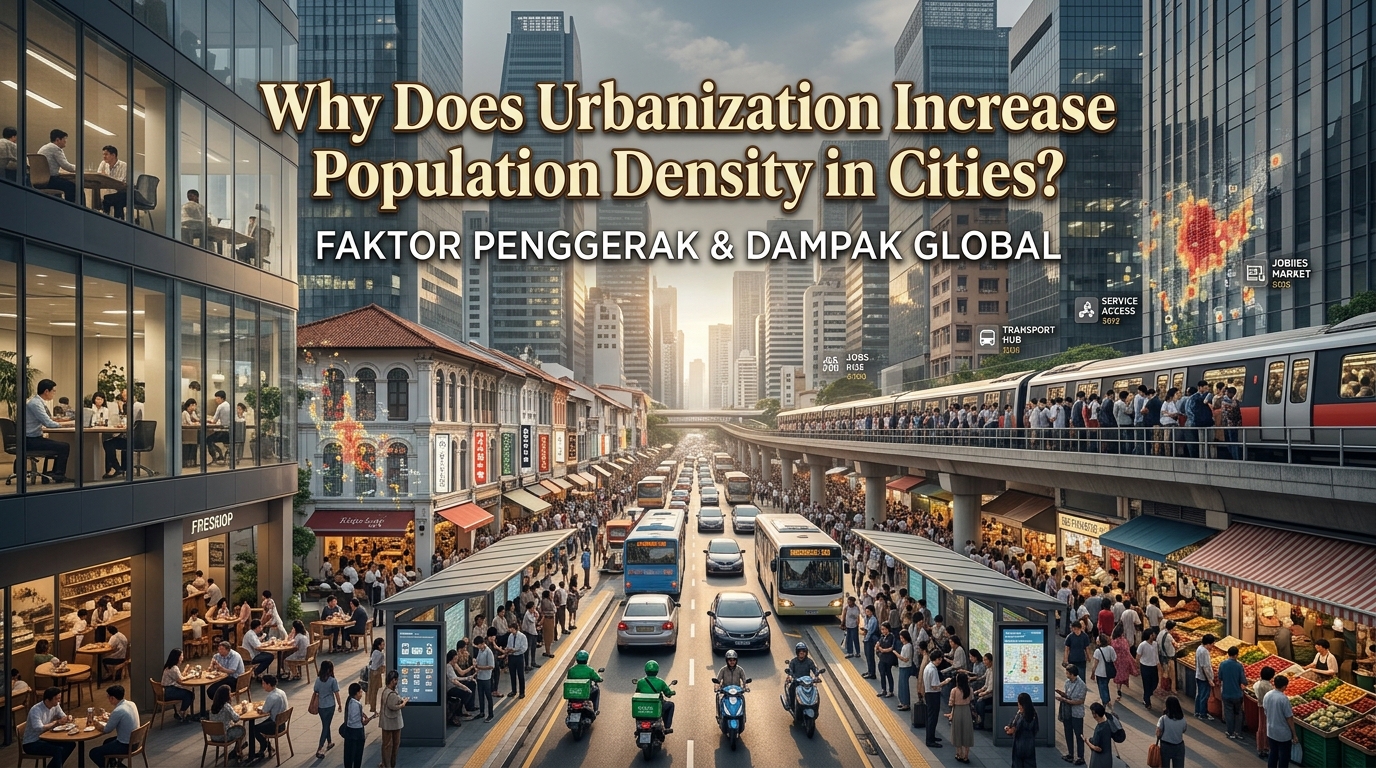
Urbanization is one of the main factors that influence population growth in cities. It occurs when more people move from rural areas to urban areas to find better opportunities, such as employment, education, healthcare, and access to public services. As the number of people living in cities increases, the concentration of residents within a particular area also becomes higher. This situation leads to increased urban population density, especially in major cities with limited land availability. Understanding the relationship between urbanization and population density is important for creating better urban planning and sustainable development.
WHAT IS URBANIZATION?
Urbanization is the process in which a growing proportion of a country's population lives in urban areas. This process often happens because people move from villages and smaller towns to cities in search of better living conditions. Cities usually offer more employment opportunities, educational institutions, healthcare facilities, and transportation services. These advantages attract people who want to improve their economic and social circumstances. Urbanization can also occur naturally when the population of an existing city increases over time.
Urbanization is closely connected to economic development and social change. As industries, businesses, and public facilities grow, cities become important centers of economic activity. More people are attracted to these areas because they provide opportunities that may be limited in rural communities. However, rapid urbanization can create challenges when the growth of the population is faster than the development of infrastructure and housing. Therefore, urbanization needs to be managed through effective planning and public policies.
WHY DOES URBANIZATION INCREASE POPULATION DENSITY?
Urbanization increases population density because more people settle in cities, often within areas that have limited land. When residents move from rural regions to urban centers, the total number of people living in those cities rises. If the size of the urban area does not expand at the same rate, more people must share the available space. This results in higher population density, meaning that more individuals live within each square kilometer. The effect is especially noticeable in major cities where land is expensive and development space is limited.
Another important reason is that cities provide concentrated economic and social opportunities. Factories, offices, universities, hospitals, shopping centers, and government institutions are often located close to one another. This encourages people to live near workplaces and essential services to reduce travel time and transportation costs. As a result, residential areas become increasingly crowded, particularly around business districts and public transportation routes. These conditions make urbanization a major contributor to population concentration.
WHAT FACTORS ATTRACT PEOPLE TO CITIES?
One of the strongest factors attracting people to cities is employment availability. Urban areas generally have more job opportunities in industries, technology, trade, education, healthcare, and services. People from rural communities may move to cities to find higher incomes or more stable employment. Better access to schools and universities is another important reason, especially for young people who want to continue their education. These opportunities encourage migration and contribute to the growth of urban populations.
Cities also attract residents through better access to public facilities and services. Hospitals, transportation networks, communication systems, entertainment centers, and government services are often more developed in urban areas. Some people move because they want easier access to healthcare, education, and other essential needs. In addition, family connections and established communities can influence migration decisions. When these factors attract large numbers of people, urban population density can increase significantly.
HOW DOES RURAL TO URBAN MIGRATION AFFECT CITY POPULATION DENSITY?
Rural to urban migration occurs when people leave villages or rural communities and move to cities. This movement can increase the population of urban areas within a relatively short period. Migrants may settle in existing residential neighborhoods, apartment buildings, or informal settlements near their workplaces. When many people arrive in the same city, the demand for housing, transportation, water, and electricity increases. If the available infrastructure cannot keep up, residential areas may become overcrowded.
Migration also changes the distribution of the population within cities. Areas near industrial zones, commercial centers, and transportation facilities often experience faster population growth because they provide convenient access to employment and services. This can create uneven population distribution, with some neighborhoods becoming much more crowded than others. Local governments must respond by improving housing availability and expanding public infrastructure. Without proper planning, rapid migration can increase pressure on urban communities and reduce residents' quality of life.
WHAT ARE THE EFFECTS OF HIGH POPULATION DENSITY IN CITIES?
High population density can provide several economic and social benefits. A large urban population creates a bigger workforce and increases demand for goods and services. This can encourage business growth, investment, innovation, and the development of public transportation. Densely populated areas can also make it more efficient to provide certain public services because many residents live relatively close together. When properly managed, high urban density can support economic productivity and efficient land use.
However, excessive population density can also create serious problems. Housing shortages may force residents to live in small or overcrowded homes, while heavy traffic can increase travel times and air pollution. Public facilities such as schools, hospitals, drainage systems, and clean water supplies may become overloaded. High demand for land can also increase property prices and make housing less affordable for low-income families. Therefore, urban population growth must be balanced with infrastructure development and environmental protection.
HOW CAN CITIES MANAGE INCREASING POPULATION DENSITY?
Cities can manage increasing population density through effective urban planning and sustainable development. Governments need to ensure that housing, roads, public transportation, water supplies, sanitation, and healthcare facilities develop alongside population growth. Affordable housing programs can help residents find safe and suitable places to live. Improving public transportation can also reduce traffic congestion and make daily travel more efficient. These efforts help cities accommodate more people without allowing infrastructure problems to become severe.
Another important strategy is developing smaller cities and rural economic centers. When employment, education, and public services become more widely available, people may have more reasons to remain in their local communities instead of moving to major cities. Governments can also encourage the development of green spaces and environmentally friendly infrastructure to maintain a healthy urban environment. Proper land-use regulations can prevent uncontrolled construction and protect important natural areas. Through coordinated planning, cities can manage population growth while improving residents' living conditions.
CONCLUSION
Urbanization increases population density because more people move to cities to access employment, education, healthcare, and better public services. When the number of residents grows faster than the available land and infrastructure, urban areas become increasingly crowded. This process can create economic benefits, including a larger workforce, stronger business activity, and more efficient public services. However, it can also lead to housing shortages, traffic congestion, pollution, and pressure on public facilities. Sustainable urban planning, affordable housing, and balanced regional development are essential to managing population density and creating cities that are comfortable and productive places to live.
Recent Posts

Bagaimana Sistem SKS pada Program Kuliah... 22.11.2026/33 View

How Does Technology Make Daily Evaluation... 21.11.2026/67 View

Apa Strategi Menghadapi Kesenjangan antara Kompetensi... 21.11.2026/67 View

Mengapa Inventaris Aset Penting bagi Kelancaran... 21.11.2026/65 View

When Should Musicians Join a Record... 21.11.2026/66 View
