

Why Is an Academic Transcript Required for Further Education Applications?
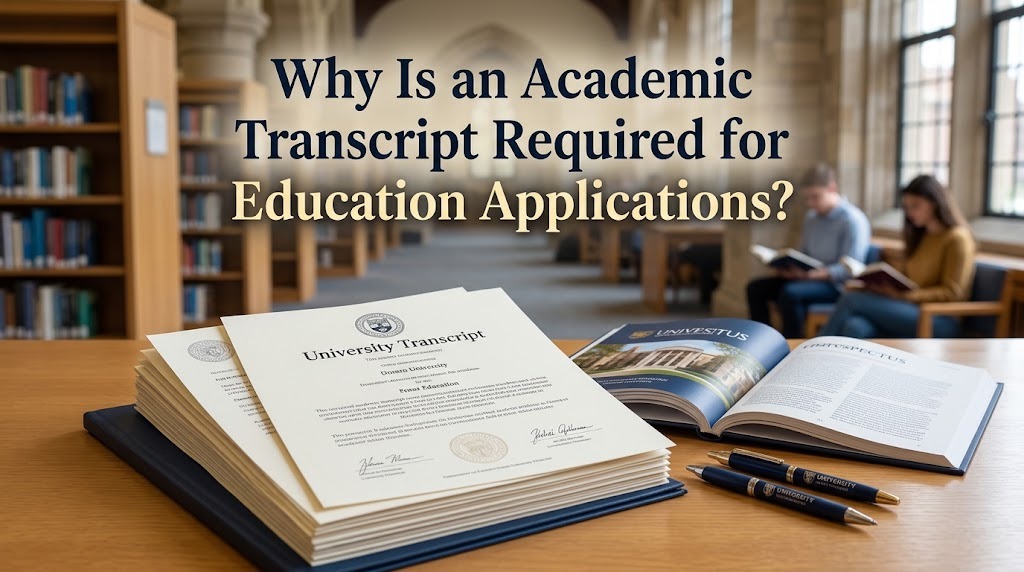
Continuing education is an important step for graduates who want to improve their knowledge, develop specialized skills, and achieve higher academic qualifications. Many universities offer postgraduate programs, professional courses, and advanced educational opportunities for applicants from different academic backgrounds. However, applying for further education usually requires several supporting documents, including an academic transcript. This document provides an official record of a student's academic achievements and helps educational institutions evaluate their previous studies. Understanding why academic transcripts are required can help applicants prepare their documents and complete the admission process more effectively.
VERIFYING PREVIOUS EDUCATIONAL QUALIFICATIONS
One of the main reasons universities require academic transcripts is to verify applicants' previous educational qualifications. The document contains information about the institution attended, study program, completed courses, academic grades, and accumulated credit hours. These details help admission officers confirm that applicants have completed the educational requirements necessary for entering a higher-level program.
For example, universities generally require applicants to provide their undergraduate academic transcripts when applying for master's degree programs. The document helps institutions confirm that candidates have completed an appropriate bachelor's degree and possess the academic background needed for further study. Official transcripts also provide more reliable information than personal statements because they are issued and authenticated by the previous educational institution.
EVALUATING ACADEMIC PERFORMANCE AND GPA
Academic transcripts allow universities to evaluate how well applicants performed during their previous studies. One important element is the Grade Point Average (GPA), which provides an overview of a student's academic achievements. Some postgraduate programs establish minimum GPA requirements to ensure that applicants have sufficient academic preparation for advanced coursework.
Admission officers may also examine individual course grades to understand applicants' strengths in relevant subjects. For instance, a student applying for a master's program in finance may be evaluated based on previous academic performance in accounting, economics, and financial management. However, GPA is not always the only admission criterion. Universities may also consider professional experience, research potential, entrance examinations, interviews, and other supporting qualifications.
ASSESSING THE RELEVANCE OF PREVIOUS ACADEMIC STUDIES
Another important purpose of academic transcripts is to determine whether applicants' previous educational backgrounds are relevant to their intended programs. Universities need to understand what subjects candidates have studied and whether they have developed the necessary foundational knowledge. This is particularly important for specialized postgraduate programs that require specific academic preparation.
For example, applicants interested in computer science may need previous knowledge of programming, mathematics, or information technology. Meanwhile, students applying for public health programs may be evaluated based on their previous studies in health sciences, biology, or related disciplines. By reviewing academic transcripts, universities can identify whether applicants meet the academic prerequisites and determine whether additional courses or preparation may be necessary.
SUPPORTING ADMISSION DECISIONS AND STUDENT SELECTION
Academic transcripts are useful tools for comparing applicants during competitive admission processes. Universities often receive applications from candidates with different educational backgrounds, academic achievements, and professional experiences. Official academic records provide standardized information that admission committees can use when reviewing qualifications and selecting suitable students.
In addition, universities may use transcripts to determine whether applicants qualify for specific admission categories, academic programs, or advanced study opportunities. Some institutions also consider academic consistency and performance in relevant courses when evaluating candidates. Nevertheless, responsible admission decisions generally involve multiple assessment criteria rather than relying entirely on transcript results. This approach allows universities to consider applicants' overall potential and readiness for further education.
DETERMINING CREDIT TRANSFER AND COURSE EQUIVALENCY
Academic transcripts are also important when students apply to transfer between universities or seek recognition of previously completed courses. The document provides detailed information about course names, credit hours, grades, and academic content when available. Universities use this information to determine whether previous coursework can be recognized within a new educational program.
For example, students transferring to another institution may request credit transfer for subjects they have already completed. The receiving university can review their academic transcripts and compare previous courses with its own curriculum. If the subjects meet the institution's equivalency requirements, some credits may be accepted, reducing the number of courses students need to complete. However, credit recognition policies differ between universities and are not automatically guaranteed.
MEETING OFFICIAL ADMISSION AND DOCUMENTATION REQUIREMENTS
Besides academic evaluation, transcripts are required to complete the administrative stages of further education applications. Universities generally request official documents to ensure that all submitted educational information can be verified. Depending on institutional policies, applicants may need to provide original transcripts, certified copies, or digitally authenticated academic records.
Applicants who apply to international universities may also need official translations, notarization, or additional document verification. Some institutions require academic transcripts to be sent directly by the previous university rather than submitted personally by the applicant. Therefore, prospective students should carefully review admission guidelines and prepare their documents before application deadlines. Having accurate and complete academic records can help prevent administrative delays and improve the overall application process.
CONCLUSION
An academic transcript is an essential document for further education applications because it provides official evidence of previous educational qualifications and academic achievements. Universities use it to evaluate GPA, review relevant coursework, assess academic readiness, and make informed admission decisions. It can also support credit transfer processes and fulfill official documentation requirements. However, academic transcripts are generally considered alongside other admission criteria, such as professional experience, research interests, entrance examinations, and personal statements. By preparing accurate and officially verified transcripts, applicants can improve their readiness and pursue further educational opportunities with greater confidence.
Recent Posts

Bagaimana Sistem SKS pada Program Kuliah... 22.11.2026/40 View

How Does Technology Make Daily Evaluation... 21.11.2026/71 View

Apa Strategi Menghadapi Kesenjangan antara Kompetensi... 21.11.2026/73 View

Mengapa Inventaris Aset Penting bagi Kelancaran... 21.11.2026/69 View

When Should Musicians Join a Record... 21.11.2026/73 View
