

Why Is Applied Research Important For Driving Technological Innovation?
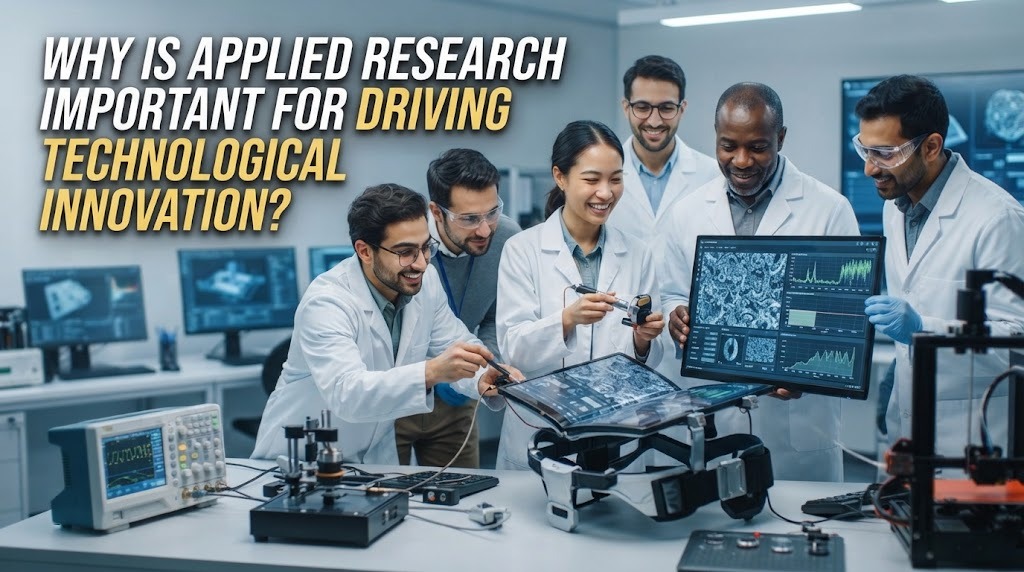
Technological innovation plays an important role in improving how people live, work, communicate, and solve everyday problems. From smartphones and artificial intelligence to renewable energy systems, new technologies are developed to meet changing human needs. However, creating useful technology requires more than creative ideas. Applied research helps researchers and developers test ideas, understand real-world problems, and create solutions that work effectively. By connecting scientific knowledge with practical needs, applied research becomes an important foundation for technological innovation and sustainable progress.
UNDERSTANDING APPLIED RESEARCH IN TECHNOLOGICAL INNOVATION
Applied research is a systematic investigation designed to solve specific practical problems. In technology, it helps researchers use existing knowledge to develop, improve, or evaluate products, systems, and processes. The process often involves identifying a problem, collecting data, testing possible solutions, and analyzing the results. For example, engineers may investigate why a device consumes too much electricity and experiment with ways to improve its energy efficiency. This approach ensures that technological development is guided by evidence, testing, and practical needs rather than ideas alone.
Applied research also helps transform scientific discoveries into technologies that people can actually use. Researchers may work with engineers, software developers, businesses, and other specialists to turn concepts into working products. They evaluate whether a technology performs as expected and identify improvements before it reaches the market. This process can reduce uncertainty and help developers understand the limitations of their designs. As a result, applied research connects scientific knowledge with real-world technological applications.
IMPROVING PRODUCT QUALITY AND PERFORMANCE
One important benefit of applied research is its ability to improve the quality and performance of technological products. Researchers can test different materials, designs, software features, and production methods to determine which options work best. For example, smartphone manufacturers may investigate battery performance, screen durability, and processing efficiency to create more reliable devices. Software developers can also conduct usability tests to identify confusing features and improve the user experience. Through these activities, research helps create technology that is more reliable, efficient, and convenient.
Product improvement does not stop when a device or application is launched. Developers can continue collecting feedback, monitoring performance, and investigating technical problems. This information helps them identify weaknesses and make updates that respond to users' needs. For example, research may reveal that an application uses too much mobile data, leading developers to improve its data-saving features. Continuous testing and evaluation support product improvement and long-term customer satisfaction.
SUPPORTING THE DEVELOPMENT OF NEW TECHNOLOGIES
Applied research encourages innovation by helping developers explore new ways to solve existing problems. It provides a structured method for testing ideas and determining whether they can become practical solutions. In artificial intelligence, researchers may investigate how to improve the accuracy of systems that recognize speech or analyze information. In renewable energy, they may test materials and equipment that could improve solar panel performance. These efforts demonstrate how applied research supports the development of new technological solutions across different industries.
Research can also help developers adapt existing technologies for new purposes. A system originally designed for industrial use, for example, may be modified to support agriculture, healthcare, or education. Before making such changes, researchers must evaluate whether the technology is suitable for its new environment. They may need to adjust its design, test its safety, and measure its effectiveness under different conditions. This process allows existing innovations to become more useful and accessible to a wider range of users.
REDUCING RISKS AND DEVELOPMENT COSTS
Developing new technology can involve significant costs, time, and uncertainty. Applied research helps reduce these risks by identifying technical weaknesses before a product is produced or introduced on a large scale. Researchers can use prototypes, simulations, and controlled experiments to evaluate performance under different conditions. For example, testing an electronic component before mass production may reveal overheating problems that could otherwise lead to expensive repairs or product recalls. Therefore, early testing and evidence-based evaluation can help prevent costly mistakes.
Applied research also helps organizations decide whether a technological project is worth continuing. Researchers can compare the expected benefits, production costs, maintenance requirements, and possible risks of different solutions. If an approach performs poorly, developers can modify it or explore another option before investing additional resources. However, research cannot eliminate every risk or guarantee commercial success. Its main advantage is that better information supports more responsible investment and development decisions.
ENCOURAGING BUSINESS COMPETITIVENESS AND ECONOMIC GROWTH
Businesses use technological innovation to improve productivity, respond to customer needs, and remain competitive. Applied research helps companies understand market demands and identify technologies that can improve their operations. For instance, a manufacturing company may investigate automation systems that reduce repetitive tasks and improve product consistency. An online business may test website designs and payment systems to make shopping easier for customers. By using research findings, businesses can make informed decisions about technology adoption and product development.
Technological innovation can also create opportunities for economic growth. New products and services may lead to new businesses, specialized jobs, and demand for technical skills. Applied research can help companies develop solutions for emerging markets and improve the efficiency of existing industries. However, these benefits depend on factors such as investment, workforce training, infrastructure, and access to technology. When research is supported by effective business strategies, it can contribute to greater productivity, new employment opportunities, and economic development.
PROMOTING SUSTAINABLE AND RESPONSIBLE TECHNOLOGY
Applied research is essential for developing technologies that reduce environmental harm and use resources more efficiently. Researchers can investigate renewable energy systems, energy-saving equipment, recyclable materials, and cleaner manufacturing processes. For example, they may test ways to extend battery life or improve the efficiency of electric vehicles. These improvements can help reduce resource consumption and support efforts to lower environmental impacts. In this way, applied research contributes to sustainable technological innovation.
Responsible technology development also requires attention to safety, privacy, fairness, and ethical concerns. Researchers must consider how a technology may affect users and communities, particularly when it involves personal information or automated decision-making. For example, developers of artificial intelligence systems can evaluate whether their tools produce inaccurate or unfair results for certain groups. Appropriate testing, transparent practices, and regular monitoring can help identify potential problems. By addressing these concerns, research supports safer, more ethical, and more trustworthy technologies.
CHALLENGES IN APPLIED RESEARCH AND TECHNOLOGICAL DEVELOPMENT
Although applied research offers many advantages, it can present several challenges. Research projects may require expensive equipment, specialized expertise, reliable data, and considerable time. Rapid technological changes can also make some findings outdated before a product reaches the market. In addition, research results do not always translate directly into successful commercial products because real-world conditions may differ from testing environments. These challenges show why careful planning, sufficient resources, and continuous evaluation are important throughout the development process.
Another challenge is ensuring that innovative technologies benefit a wide range of people. Some solutions may be too expensive or difficult to access, especially in communities with limited digital infrastructure. Researchers and developers should therefore consider affordability, accessibility, user needs, and potential social effects from the beginning. Collaboration between universities, businesses, governments, and technology users can help identify practical solutions. By addressing these barriers, applied research can make technological progress more inclusive and beneficial to society.
CONCLUSION
Applied research is important for driving technological innovation because it turns scientific knowledge into practical solutions that address real-world needs. It improves product quality, supports the development of new technologies, reduces development risks, and helps businesses become more competitive. It also encourages sustainable and responsible innovation by evaluating environmental impacts, safety, privacy, and accessibility. Although research requires time, funding, and specialized knowledge, its findings can help organizations make better decisions and use resources more effectively. Ultimately, applied research provides a strong foundation for technological progress that can improve people's lives and support long-term development.
Recent Posts

Bagaimana Sistem SKS pada Program Kuliah... 22.11.2026/43 View

How Does Technology Make Daily Evaluation... 21.11.2026/72 View

Apa Strategi Menghadapi Kesenjangan antara Kompetensi... 21.11.2026/74 View

Mengapa Inventaris Aset Penting bagi Kelancaran... 21.11.2026/70 View

When Should Musicians Join a Record... 21.11.2026/74 View
