

Why Is Basic Research Important in Addressing Global Changes?
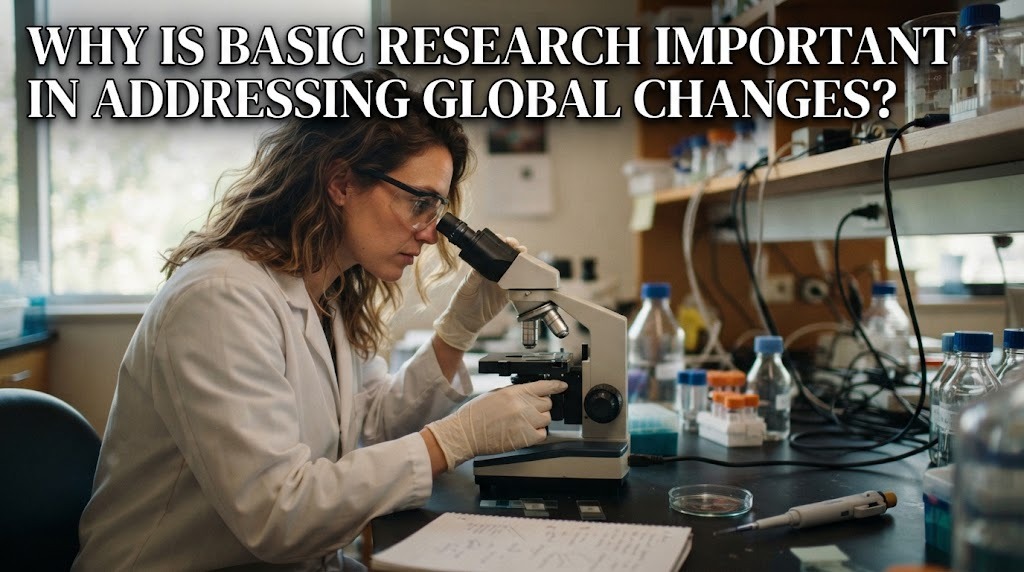
Basic research plays an important role in helping society understand and respond to global changes. The world continues to experience major transformations, including climate change, technological development, population growth, and environmental challenges. These changes affect ecosystems, economies, public health, and human life in many ways. Basic research helps scientists investigate the fundamental processes behind these developments and discover new knowledge that can support future solutions. Although it does not always provide immediate answers to practical problems, it creates a scientific foundation for understanding global challenges and preparing for long-term change.
UNDERSTANDING THE ROOT CAUSES OF GLOBAL CHANGES
Basic research helps scientists identify the fundamental causes of global changes by examining natural processes, human behavior, and interactions within complex systems. Researchers investigate how the atmosphere works, how ecosystems respond to environmental pressures, and how human activities influence natural resources. This knowledge allows scientists to distinguish between established evidence, possible explanations, and unanswered questions. For example, climate science research examines the physical and chemical processes that influence global temperatures. Understanding these mechanisms is essential for developing reliable explanations of environmental changes.
Research into the causes of global change also helps scientists recognize connections between different problems. Changes in temperature can influence water availability, agricultural productivity, and biodiversity. Similarly, population growth and urban development can increase pressure on energy supplies and natural resources. Basic research helps explain these relationships and identifies areas that require further investigation. By understanding the underlying causes, society can make better-informed decisions about future responses.
SUPPORTING CLIMATE CHANGE RESEARCH
Climate change is one of the most significant global challenges, and basic research helps scientists understand the processes that drive it. Researchers investigate greenhouse gases, ocean circulation, atmospheric chemistry, ice formation, and interactions between the atmosphere and Earth's surface. These studies improve scientific knowledge of how the climate system operates and why temperatures and weather patterns change over time. They also help researchers understand feedback mechanisms that may accelerate or reduce certain environmental changes. This fundamental knowledge supports the development of more reliable climate models.
Basic research also helps scientists investigate how climate systems may respond to different environmental conditions. For example, researchers study how oceans absorb heat and carbon dioxide and how these processes affect global temperatures. Such findings can contribute to long-term climate projections and inform future applied research. Governments and communities can use the broader scientific evidence when planning climate adaptation and emissions reduction strategies. Although basic research alone cannot solve climate change, it provides essential knowledge for understanding the problem and evaluating possible responses.
ADVANCING SCIENTIFIC AND TECHNOLOGICAL INNOVATION
Global changes often create new demands for scientific and technological innovation. Basic research helps scientists discover fundamental principles that can later support new materials, energy systems, communication technologies, and industrial processes. For example, research into the properties of materials can contribute to the development of more efficient batteries and renewable energy technologies. Research in physics and chemistry can also reveal new ways to store, transfer, or use energy. These discoveries may take years to become practical applications, but they can create important opportunities for future innovation.
Technological progress depends on more than improving existing products. It also requires a deeper understanding of scientific principles that may lead to entirely new approaches. Basic research provides opportunities to explore ideas without requiring immediate commercial results. This freedom can help researchers investigate unexpected discoveries and challenge existing assumptions. Over time, these findings can support industries, strengthen scientific capabilities, and help societies adapt to changing global needs.
PROTECTING ECOSYSTEMS AND BIODIVERSITY
Environmental changes can threaten biodiversity, disrupt ecosystems, and reduce the availability of essential natural resources. Basic research helps scientists understand how organisms interact with one another and respond to changes in their surroundings. Researchers investigate species behavior, genetic diversity, population dynamics, and ecological relationships. This knowledge helps explain why certain species are vulnerable to environmental pressures and how ecosystems maintain their balance. It also provides a scientific foundation for future conservation research.
For example, studies of plant adaptation can reveal how some species survive drought or high temperatures. Research into marine ecosystems can improve understanding of how ocean warming and acidification affect aquatic organisms. These findings can help conservation specialists identify important questions and develop appropriate strategies for further testing. Protecting biodiversity requires practical action as well as scientific knowledge. Basic research supports these efforts by explaining the natural processes that conservation programs aim to protect.
IMPROVING GLOBAL HEALTH AND DISEASE PREVENTION
Global changes can influence public health through emerging infectious diseases, environmental pollution, changing living conditions, and population movement. Basic research helps scientists understand biological processes, disease mechanisms, immune responses, and interactions between pathogens and human cells. These investigations can reveal how diseases develop and how biological systems respond to different conditions. Such knowledge provides a foundation for future medical research and the development of preventive measures. It is especially important when scientists encounter unfamiliar health threats.
Basic research can also contribute to understanding how environmental conditions affect human health. Researchers may investigate the biological effects of air pollution, extreme heat, or exposure to certain chemicals. Their findings can help identify mechanisms that require further study and support the development of evidence-based public health interventions. However, translating discoveries into treatments or health policies usually requires additional clinical, epidemiological, and applied research. By expanding fundamental scientific knowledge, basic research strengthens society's ability to investigate and respond to global health challenges.
SUPPORTING FOOD SECURITY AND AGRICULTURAL DEVELOPMENT
Population growth, changing weather patterns, and environmental pressures can affect global food security. Basic research helps scientists understand plant biology, soil processes, genetics, and the relationships between crops and their environments. Researchers investigate how plants absorb nutrients, respond to environmental stress, and develop resistance to certain biological threats. These discoveries improve fundamental knowledge about crop growth and agricultural ecosystems. They can later support applied research aimed at improving agricultural productivity.
For instance, research into plant genetics may reveal biological mechanisms associated with drought tolerance or disease resistance. Studies of soil microorganisms can also explain how living organisms influence nutrient availability and plant development. Such findings can guide future experiments into crop improvement and sustainable farming methods. Addressing food insecurity requires many approaches, including effective distribution, responsible resource management, and agricultural innovation. Basic research contributes by providing scientific knowledge that can help researchers develop more resilient food systems.
HELPING SOCIETY PREPARE FOR FUTURE UNCERTAINTIES
Global changes are often complex because multiple factors interact in unpredictable ways. Basic research helps scientists identify patterns, test explanations, and improve their understanding of systems that may change over time. Research into climate processes, human behavior, and technological development can reveal important relationships that deserve further investigation. This knowledge helps researchers formulate better questions and explore possible future scenarios. Although basic research cannot predict every event, it can reduce uncertainty by strengthening scientific understanding.
Preparing for future challenges also requires continued investment in research and education. Scientific discoveries may take considerable time to produce practical benefits, so societies need to support research even when immediate applications are unclear. Universities, research institutions, governments, and international organizations can contribute by encouraging scientific collaboration and sharing reliable findings. International cooperation is especially important because many global challenges cross national borders. By building a stronger foundation of knowledge, basic research helps society prepare for change with greater understanding and flexibility.
STRENGTHENING INTERNATIONAL SCIENTIFIC COLLABORATION
Global challenges often affect several countries simultaneously, making scientific cooperation essential. Basic research encourages scientists from different backgrounds and institutions to investigate common questions and compare their findings. Collaboration can improve the quality of scientific knowledge by allowing researchers to examine problems from different perspectives. It can also help identify differences between environments, populations, and natural systems. Sharing research findings enables the international scientific community to build a more complete understanding of global changes.
International collaboration is particularly valuable when studying complex issues such as climate systems, biodiversity loss, and infectious diseases. No single research institution has all the resources or expertise required to investigate every aspect of these challenges. By combining specialized knowledge, researchers can identify new questions and develop more comprehensive explanations. Responsible data sharing and transparent research practices also help improve the reliability of scientific findings. Through these efforts, basic research contributes to a stronger global foundation for addressing shared challenges.
CONCLUSION
Basic research is important in addressing global changes because it helps scientists understand fundamental processes behind environmental, technological, health, and social transformations. It supports climate science, biodiversity conservation, medical discoveries, agricultural development, and future technological innovation. Its findings also help researchers identify knowledge gaps, reduce uncertainty, and develop questions for further investigation. Although basic research does not always offer immediate practical solutions, it provides essential scientific foundations for applied research and informed decision-making. By supporting long-term research, education, and international collaboration, society can improve its ability to understand global changes and respond to them responsibly.
Recent Posts

Bagaimana Sistem SKS pada Program Kuliah... 22.11.2026/44 View

How Does Technology Make Daily Evaluation... 21.11.2026/73 View

Apa Strategi Menghadapi Kesenjangan antara Kompetensi... 21.11.2026/75 View

Mengapa Inventaris Aset Penting bagi Kelancaran... 21.11.2026/70 View

When Should Musicians Join a Record... 21.11.2026/74 View
