

Why Is Body Language Important in Daily Communication?
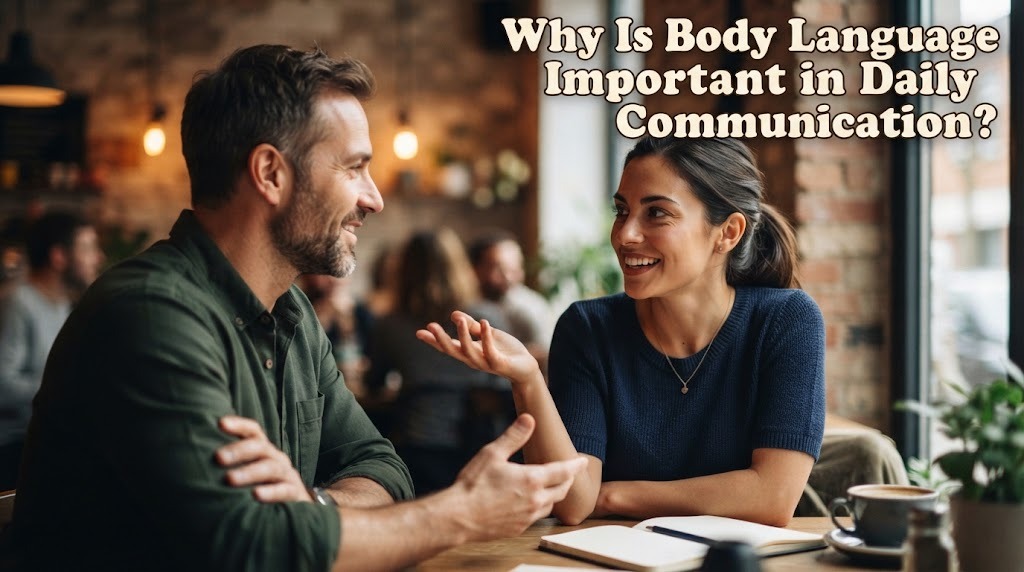
Body language is an important part of daily communication because people do not communicate through words alone. Facial expressions, gestures, eye contact, posture, and body movements can provide additional meaning during an interaction. These signals can show emotions, attitudes, attention, and reactions even when a person does not express them verbally. As a result, understanding body language can help people communicate more effectively in everyday situations.
Body language appears in almost every social interaction, whether someone is talking with family, meeting friends, studying at school, or interacting in a professional environment. A person's body language can support their spoken message or sometimes communicate something different from their words. Learning to recognize these signals can help reduce misunderstandings and make interactions more comfortable and meaningful.
HELPS EXPRESS EMOTIONS
One of the most important functions of body language is expressing emotions. People may smile when they feel happy, maintain a relaxed posture when they feel comfortable, or show a tense expression when they are worried. These physical signals can provide clues about how someone is feeling even when they do not directly explain their emotions. This can be particularly useful during conversations where emotional reactions are important.
Body language can also help people respond more appropriately to others. For example, if someone appears uncomfortable during a conversation, the other person may recognize the signal and change the topic or give them more space. However, body language should not be treated as a perfect indicator of someone's feelings. A particular gesture can have several meanings depending on the person's personality and the situation. Therefore, people should consider body language together with verbal communication and context.
SUPPORTS VERBAL COMMUNICATION
Body language often reinforces what people say. A person who says "thank you" while smiling and making appropriate eye contact may communicate genuine appreciation more clearly. Similarly, a teacher using hand gestures while explaining a concept can make the explanation easier for students to follow. Nonverbal signals can add emphasis, emotion, and clarity to spoken messages.
Body language can also help organize conversations. Nodding can show that someone is listening, while an appropriate facial expression can indicate understanding or concern. During presentations, confident posture and natural gestures can help speakers appear prepared and engaged. When verbal and nonverbal messages support each other, communication tends to feel more natural and easier to understand.
BUILDS TRUST AND POSITIVE RELATIONSHIPS
Appropriate body language can influence how people perceive one another. Open posture, attentive eye contact, and a friendly facial expression can help create an impression of openness and respect. These signals can be especially important when people are meeting for the first time because they contribute to the initial impression of a person.
Positive body language can also support relationships over time. Showing attention when someone is speaking can make them feel valued and respected. Similarly, maintaining an appropriate distance and respecting personal space can help people feel comfortable. These small behaviors may seem simple, but they can influence the quality of everyday interactions and contribute to stronger social connections.
IMPROVES LISTENING AND UNDERSTANDING
Body language is useful not only for speaking but also for listening. When people face the speaker, maintain appropriate eye contact, nod naturally, and use responsive facial expressions, they can demonstrate that they are paying attention. These signals can encourage the speaker to continue explaining their thoughts and can make the conversation more engaging.
Observing the other person's body language can also provide additional information about their response. For example, a confused facial expression may indicate that an explanation needs to be clarified. A relaxed expression and positive gestures may suggest that the person understands the discussion. However, listeners should avoid making immediate conclusions based on one signal. Combining body language with the person's actual words provides a more accurate understanding of the conversation.
HELPS IN SCHOOL AND WORKPLACE COMMUNICATION
Body language has an important role in educational and professional environments. Students may use posture, eye contact, and facial expressions when participating in classroom discussions or giving presentations. Confident and appropriate body language can help students communicate their ideas more effectively and appear prepared. Teachers can also use gestures and facial expressions to maintain attention and provide feedback during lessons.
In the workplace, body language can influence professional interactions. During meetings, interviews, presentations, or conversations with colleagues, appropriate posture and eye contact can contribute to a professional impression. However, effective professional body language should remain natural rather than exaggerated. The goal is to communicate confidence and respect while remaining attentive to the situation and the people involved.
REDUCES MISUNDERSTANDINGS
Body language can sometimes help clarify messages that are difficult to understand through words alone. A person's facial expression or tone may indicate whether a statement is serious, humorous, uncertain, or emotional. Paying attention to these signals can provide additional context and help people interpret messages more accurately.
At the same time, body language can sometimes create misunderstandings when people interpret signals based on assumptions. Cultural differences, personal habits, nervousness, or physical conditions can affect how someone behaves. For this reason, people should avoid assuming that one gesture has a universal meaning. When a message seems unclear, asking a respectful question is often better than relying entirely on interpretation.
CONCLUSION
Body language is important in daily communication because it expresses emotions, supports spoken messages, builds trust, improves listening, strengthens school and workplace interactions, and can reduce misunderstandings. Facial expressions, gestures, posture, eye contact, and other physical signals can provide valuable information during conversations. However, body language should always be understood in context because the same behavior can have different meanings in different situations. By becoming more aware of both their own body language and the signals of others, people can communicate more clearly and build healthier everyday relationships.
Recent Posts

Bagaimana Sistem SKS pada Program Kuliah... 22.11.2026/38 View

How Does Technology Make Daily Evaluation... 21.11.2026/71 View

Apa Strategi Menghadapi Kesenjangan antara Kompetensi... 21.11.2026/73 View

Mengapa Inventaris Aset Penting bagi Kelancaran... 21.11.2026/69 View

When Should Musicians Join a Record... 21.11.2026/73 View
