

Why Is Borobudur Temple a World Famous Historic Landmark?
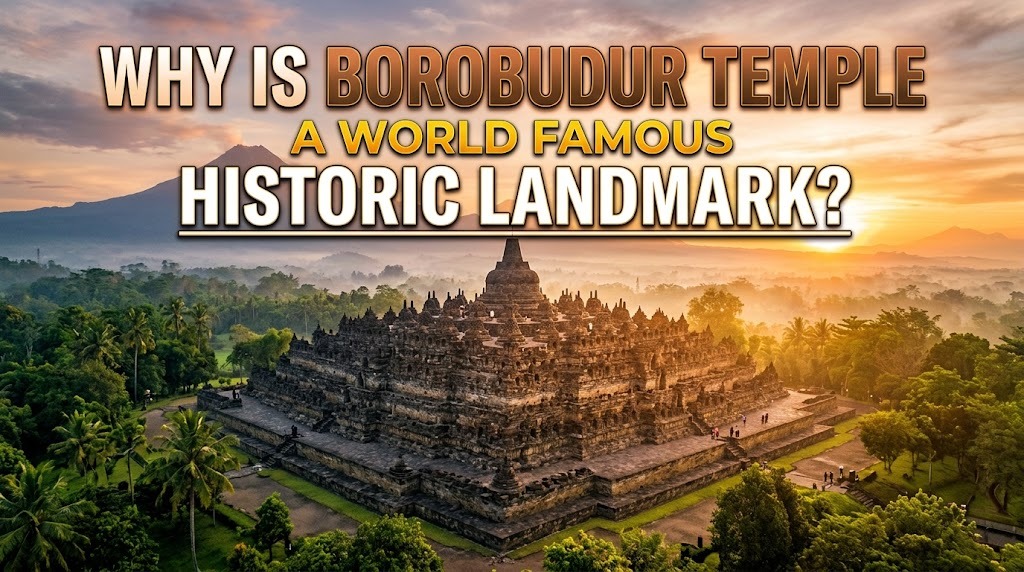
Borobudur Temple is one of Indonesia's most remarkable historical monuments and a major symbol of the country's cultural heritage. Located in Magelang, Central Java, this Buddhist monument is known for its impressive stone architecture, intricate relief panels, and distinctive arrangement of stupas. Built around the eighth and ninth centuries, Borobudur reflects the artistic achievements, religious traditions, and engineering knowledge of the ancient Javanese civilization. Its historical and cultural importance has made Borobudur Temple a world-famous historic landmark.
Today, Borobudur attracts visitors, researchers, historians, and Buddhist pilgrims from different parts of the world. Its significance extends beyond its physical size because the monument contains valuable evidence of Buddhist teachings and historical life in Java. Recognized as a UNESCO World Heritage Site, Borobudur also represents Indonesia's contribution to global cultural heritage. Understanding its history and architectural features helps explain why Borobudur Temple remains an important landmark internationally.
A REMARKABLE MONUMENT FROM ANCIENT JAVA
Borobudur was constructed during the Sailendra dynasty, a period associated with the development of Buddhist art and architecture in Java. Although the exact construction history is not fully documented, the monument is generally dated to the eighth and ninth centuries. Its creation required extensive planning, skilled stonework, and the organization of labor and materials on a large scale.
The temple's design consists of a massive structure with multiple terraces arranged around a central axis. Its upper levels contain circular platforms with perforated stupas, while the lower levels feature extensive stone reliefs. This carefully organized layout distinguishes Borobudur from many other religious monuments. As a result, Borobudur's ancient architecture provides valuable evidence of the technical and artistic capabilities of the society that built it.
UNIQUE BUDDHIST ARCHITECTURE AND STONE CARVINGS
One of the main reasons Borobudur Temple is famous worldwide is its distinctive architectural design. The monument is constructed primarily from andesite stone and features a series of terraces that guide visitors through different levels of the structure. Its upper circular platforms and central stupa create a striking silhouette that has become widely recognized.
The temple also contains thousands of relief panels and hundreds of stupas. The carved reliefs depict Buddhist teachings, moral lessons, and scenes associated with the lives and experiences represented in Buddhist literature. These artistic details demonstrate the skill of the craftspeople who worked on the monument. Together, the structure and its carvings make Borobudur an outstanding example of Buddhist stone architecture and historical craftsmanship.
RELIGIOUS AND SPIRITUAL SIGNIFICANCE
Borobudur is more than an architectural monument; it is also a significant Buddhist site. Its layout is commonly interpreted as representing a spiritual journey, with the different levels associated with stages of Buddhist understanding. The arrangement encourages visitors to move upward through the monument while observing the reliefs and architectural features along the way.
The temple continues to hold religious significance for Buddhists, particularly during important celebrations such as Vesak. During this occasion, Buddhist communities gather for religious activities and reflection. Visitors who are not Buddhist can also learn about Buddhist philosophy, symbolism, and artistic traditions through guided interpretation and educational resources. This combination of religious meaning and cultural value strengthens Borobudur's spiritual and historical importance.
UNESCO RECOGNITION AND INTERNATIONAL TOURISM
Borobudur was inscribed on the UNESCO World Heritage List in 1991 as part of the Borobudur Temple Compounds. This recognition reflects its outstanding cultural significance and the importance of protecting it for future generations. International recognition has also helped increase awareness of Indonesia's historical monuments and conservation efforts.
The site attracts visitors interested in history, religion, architecture, photography, and cultural tourism. Tourism can create economic opportunities for local communities through guiding services, transportation, accommodation, and local businesses. However, visitor activities must be managed carefully because large numbers of people and unsuitable behavior can contribute to wear and damage. Responsible tourism helps ensure that Borobudur Temple's cultural heritage remains protected while visitors continue to learn from the site.
PRESERVATION AND PROTECTION FOR FUTURE GENERATIONS
Despite its importance, Borobudur faces conservation challenges related to weathering, moisture, biological growth, environmental conditions, and visitor pressure. Stone surfaces and carved reliefs can gradually deteriorate when exposed to environmental changes or inappropriate handling. Natural disasters and surrounding land-use changes may also create additional risks that require careful management.
Preserving the monument involves regular monitoring, scientific research, conservation work, and visitor management. Government authorities, conservation specialists, local communities, and heritage organizations contribute to maintaining the site's condition and historical integrity. Visitors can also help by following site rules, avoiding contact with protected features, and respecting religious activities. Through continued Borobudur Temple preservation, this remarkable landmark can remain an important source of cultural knowledge and historical inspiration.
CONCLUSION
Borobudur Temple is a world-famous historic landmark because of its ancient origins, distinctive Buddhist architecture, detailed stone carvings, religious significance, and international recognition. The monument provides valuable insight into the artistic achievements and spiritual traditions of ancient Java. Its UNESCO World Heritage status further highlights its importance as part of Indonesia's cultural heritage and the world's shared historical resources.
Protecting Borobudur requires long-term conservation, responsible tourism, and cooperation among authorities, specialists, local communities, and visitors. By maintaining the monument's structure and respecting its cultural meaning, society can help preserve its historical value for future generations. Borobudur Temple will continue to offer opportunities for learning, reflection, and appreciation of Indonesia's remarkable architectural heritage.
Recent Posts

Bagaimana Sistem SKS pada Program Kuliah... 22.11.2026/51 View

How Does Technology Make Daily Evaluation... 21.11.2026/81 View

Apa Strategi Menghadapi Kesenjangan antara Kompetensi... 21.11.2026/81 View

Mengapa Inventaris Aset Penting bagi Kelancaran... 21.11.2026/77 View

When Should Musicians Join a Record... 21.11.2026/82 View
