

Why Is Collaboration Between Creators Important for Producing Quality Content?
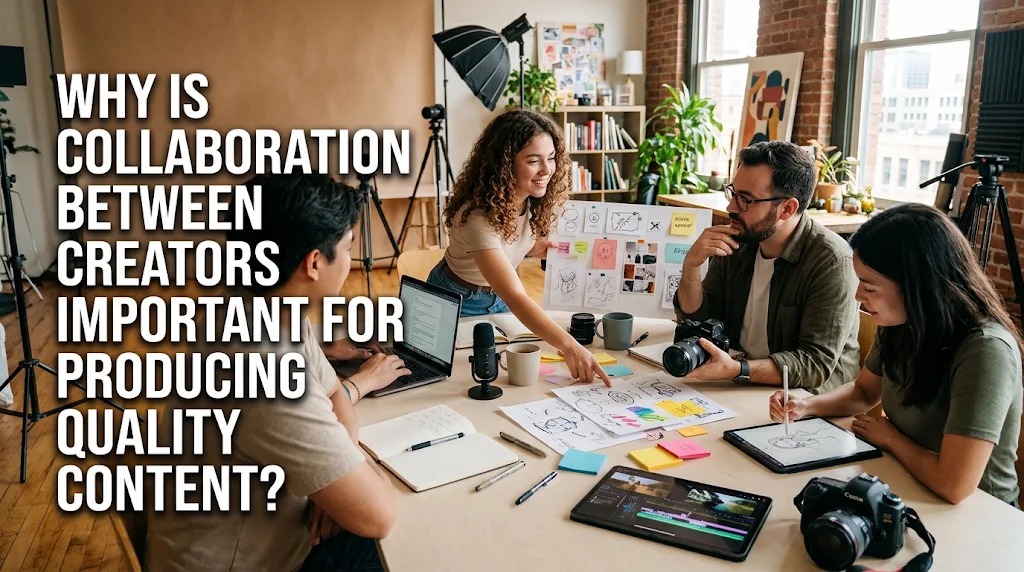
The digital content industry continues to grow as more people use social media and online platforms to share information, entertainment, and creative ideas. This development has encouraged individuals to become content creators in various fields, including writing, photography, graphic design, video production, and digital marketing. However, producing high-quality content requires more than individual creativity. It also involves knowledge, technical abilities, and different perspectives that can be developed through collaboration.
Collaboration between creators is an activity in which two or more individuals work together to produce content, exchange ideas, or complete creative projects. Each person contributes specific skills and experiences to achieve a shared objective. Through this process, creators can improve content quality, discover innovative approaches, and reach audiences beyond their individual networks.
Collaboration is also an important part of building a strong creator community. By working together, members can learn from one another, develop professional relationships, and create more valuable content. Understanding its importance can help creators make better use of teamwork to grow in the competitive digital industry.
UNDERSTANDING THE IMPORTANCE OF COLLABORATION BETWEEN CREATORS
Collaboration between creators refers to a process in which individuals with different abilities and creative backgrounds work together to develop content. This activity can involve writing articles, producing videos, designing promotional materials, creating podcasts, or managing digital campaigns. Each participant contributes ideas and expertise according to their respective abilities.
The main purpose of collaboration is to combine individual strengths to produce better results. For example, a video creator may have strong editing skills but need help developing an interesting script. By working with a writer, both creators can combine their abilities to produce more informative and engaging videos.
Collaboration also allows creators to understand different creative approaches. They can exchange experiences, discuss production techniques, and evaluate ideas before publishing their work. This process helps reduce individual limitations and encourages the development of higher-quality content.
COMBINING DIFFERENT SKILLS AND CREATIVE IDEAS
One of the biggest advantages of collaboration is the opportunity to combine different skills. Every creator has unique abilities, knowledge, and experiences that can contribute to a creative project. When these strengths are brought together, the resulting content can become more complete and interesting.
For instance, a digital content project may involve a graphic designer, photographer, writer, and social media specialist. The designer can create visual elements, the photographer can provide relevant images, the writer can develop informative messages, and the social media specialist can plan content distribution. Each contribution supports a different aspect of the project.
In addition to technical skills, collaboration encourages creative idea development. Discussions between creators can produce new perspectives that may not emerge when someone works independently. Different opinions can also help participants identify weaknesses in their initial concepts and discover more effective ways to communicate information.
IMPROVING CONTENT QUALITY AND AUDIENCE ENGAGEMENT
Producing quality content requires careful planning, accurate information, clear communication, and appealing presentation. Collaboration allows creators to evaluate their work from different perspectives before publishing it. This process can help identify errors, improve visual presentation, and make the final content more relevant to its intended audience.
Constructive feedback is particularly valuable because creators may sometimes overlook weaknesses in their own work. Other collaborators can provide suggestions about writing style, video quality, storytelling, design, or information accuracy. By considering these suggestions, creators can improve their content and deliver a better experience to their audiences.
Collaboration can also increase audience engagement. When creators with different audiences work together, their content may reach people who have not previously discovered their work. For example, a collaboration between an educational content creator and a technology reviewer can attract audiences interested in both learning and digital innovation. This creates opportunities to expand visibility and encourage meaningful interactions.
EXPANDING PROFESSIONAL NETWORKS AND CAREER OPPORTUNITIES
Working with other creators provides opportunities to build professional networks. Through collaborative projects, individuals can establish relationships with people who have different expertise, professional backgrounds, and industry connections. These relationships can become valuable for future creative activities and career development.
For beginners, collaboration offers a practical way to gain experience and understand professional working standards. They can learn how to communicate with project partners, divide responsibilities, manage deadlines, and complete tasks according to agreed expectations. These experiences are useful for individuals who want to pursue careers in digital media, marketing, design, or other creative industries.
Furthermore, strong professional connections can lead to new opportunities, including freelance projects, business partnerships, sponsorships, and invitations to participate in creative campaigns. Although these opportunities are not guaranteed, maintaining good relationships and producing reliable work can help creators build a positive professional reputation.
BUILDING A STRONG CREATOR COMMUNITY THROUGH TEAMWORK
Collaboration does not only benefit individual creators but also strengthens the overall development of a creator community. When members regularly work together, they become more familiar with one another's abilities and interests. This understanding makes it easier to organize projects, share responsibilities, and develop activities that benefit the entire community.
A supportive community can encourage members to exchange knowledge, participate in workshops, and provide feedback on creative projects. Experienced creators can guide beginners, while new members can introduce fresh ideas and perspectives. This creates a learning environment where everyone has opportunities to contribute and improve.
To maintain effective collaboration, communities need clear communication, shared objectives, and mutual respect. Members should understand their responsibilities and appreciate the contributions of others. By developing these principles, creator communities can establish stronger relationships and produce consistent, meaningful, and valuable digital content.
CONCLUSION
Collaboration between creators is important because it combines different skills, encourages creativity, and improves the quality of digital content. Through teamwork, creators can exchange ideas, receive constructive feedback, reach wider audiences, and develop more effective content strategies. These benefits make collaboration a valuable approach for individuals who want to grow in the digital content industry.
Furthermore, collaborative activities help creators expand professional networks, discover career opportunities, and strengthen their communities. Successful collaboration requires clear communication, shared responsibilities, and mutual support. By building positive working relationships and respecting each other's expertise, creators can produce higher-quality content while developing long-term opportunities in the creative industry.
Recent Posts

Bagaimana Sistem SKS pada Program Kuliah... 22.11.2026/35 View

How Does Technology Make Daily Evaluation... 21.11.2026/69 View

Apa Strategi Menghadapi Kesenjangan antara Kompetensi... 21.11.2026/70 View

Mengapa Inventaris Aset Penting bagi Kelancaran... 21.11.2026/67 View

When Should Musicians Join a Record... 21.11.2026/69 View
