

Why Is Color Blindness Testing Important for Drivers and Workers?
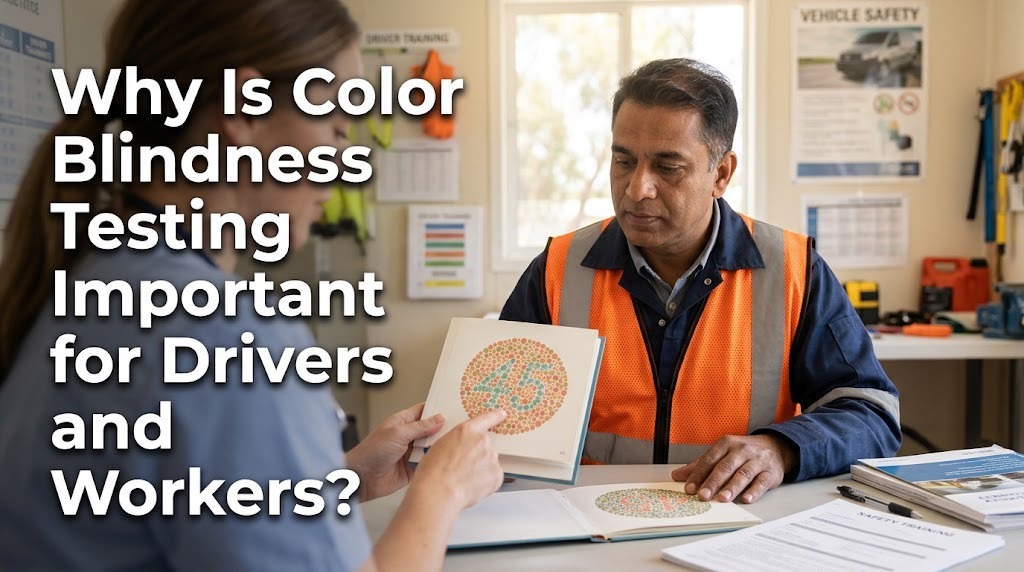
Color blindness testing is an important part of identifying visual conditions that may affect a person's ability to distinguish different colors. Although color blindness does not necessarily prevent someone from driving or working, certain color vision deficiencies can create challenges in activities that depend on recognizing specific color signals. These activities include identifying traffic lights, reading warning indicators, interpreting safety signs, and operating equipment in workplaces.
For drivers and workers, understanding color vision abilities can help reduce potential safety risks and improve awareness of visual limitations. Color blindness tests can also help determine whether someone needs additional visual assessments or practical adjustments to perform daily responsibilities safely. Therefore, early testing is useful for promoting road safety, workplace protection, and better visual health.
WHY IS COLOR BLINDNESS TESTING IMPORTANT FOR DRIVERS?
Color blindness testing is important for drivers because road environments contain many visual signals that use different colors to communicate information. Traffic lights, road signs, vehicle indicators, and warning signals often depend on color recognition. Drivers with certain types of color vision deficiencies may have difficulty distinguishing some of these signals, particularly red and green. Identifying these difficulties can help individuals understand their visual abilities and take appropriate precautions while driving.
However, color blindness does not automatically mean that someone cannot drive safely. Traffic lights are also distinguished by their positions, while road signs often use different shapes, symbols, and written instructions. A professional eye examination can help determine whether a person's color vision deficiency creates practical difficulties. The results can also provide useful information for assessing individual driving requirements and applicable regulations.
HOW CAN COLOR BLINDNESS AFFECT ROAD SAFETY?
Color vision deficiencies can influence how drivers interpret visual information on the road. For example, individuals with red-green color blindness may find it difficult to distinguish certain traffic light colors, especially under challenging lighting conditions or when signals are viewed from a distance. They may also experience difficulties recognizing colored warning indicators on vehicle dashboards. These challenges can increase the importance of using additional visual information when making driving decisions.
Weather and environmental conditions can make color recognition more challenging. Rain, fog, poor lighting, and strong sunlight may reduce visibility and make certain signals harder to identify. Drivers who understand their color vision limitations can develop strategies such as paying attention to traffic light positions, road markings, symbols, and surrounding traffic movements. Regular eye examinations also help identify other vision problems that may affect driving performance.
WHY IS COLOR BLINDNESS TESTING IMPORTANT FOR WORKERS?
Color blindness testing is important for workers whose responsibilities involve identifying colors as part of their daily activities. Several occupations require employees to recognize colored signals, electrical wires, warning lights, safety labels, and equipment indicators. For example, electricians, laboratory technicians, transportation workers, and industrial operators may need to distinguish specific colors to complete certain tasks correctly. Difficulties recognizing these colors could increase the risk of mistakes if alternative identification methods are unavailable.
Testing helps employers and healthcare professionals understand whether an employee has a color vision deficiency that may affect particular job responsibilities. It can also help identify suitable workplace adjustments, such as adding written labels, symbols, or different visual indicators. However, color blindness should not automatically disqualify someone from employment. Job suitability should be assessed according to actual responsibilities, safety requirements, and relevant regulations rather than color vision status alone.
WHICH JOBS MAY REQUIRE COLOR BLINDNESS TESTING?
Certain occupations may require color vision assessments because accurate color recognition is important for operational safety and job performance. Electrical workers, for example, may need to distinguish wire insulation colors when installing or repairing electrical systems. Railway employees and aviation personnel may also encounter visual signals that communicate important operational information. In these situations, an inability to distinguish specific colors may create challenges that need to be evaluated professionally.
Other occupations that may involve color vision requirements include laboratory technicians, maritime workers, pilots, quality control inspectors, and industrial machine operators. Some healthcare professionals may also need to recognize color changes in medical samples, test indicators, or diagnostic materials. However, the requirements differ depending on the position, workplace, and applicable professional standards. Not every employee in these occupations has identical color vision requirements, so assessments should be based on the actual tasks involved.
WHAT TYPES OF COLOR BLINDNESS TESTS ARE USED FOR DRIVERS AND WORKERS?
Several examination methods can be used to evaluate color vision in drivers and workers. One of the most widely recognized methods is the Ishihara Color Blindness Test, which uses circular plates containing colored dots that form numbers or patterns. Individuals are asked to identify the figures displayed on each plate. This examination is particularly useful for screening red-green color vision deficiencies.
Another method is the Farnsworth D-15 test, which requires individuals to arrange colored caps according to their perceived color similarities. This examination can provide additional information about difficulties distinguishing certain colors. Depending on the occupational requirements, eye care professionals may also use specialized color vision assessments to evaluate specific visual abilities. The choice of test depends on the individual's needs and the standards required for the relevant activity or profession.
HOW CAN DRIVERS AND WORKERS MANAGE COLOR VISION DEFICIENCIES?
People with color vision deficiencies can use several practical strategies to manage activities that involve color recognition. Drivers can pay attention to traffic light positions, road signs, symbols, and other visual indicators rather than depending entirely on color differences. Keeping vehicle dashboards and windshields clean can also help maintain good visibility. These strategies may improve awareness, although they do not replace proper driving skills or professional visual assessments.
In workplaces, employers can introduce visual systems that combine colors with written labels, symbols, shapes, or different indicator patterns. Electrical equipment, for example, can use additional identification labels to reduce dependence on wire colors alone. Digital systems can also provide alternative warning signals through text, sounds, or different display patterns. Such adjustments can improve workplace accessibility while helping employees perform their responsibilities more confidently and safely.
CONCLUSION
Color blindness testing is important for drivers and workers because it helps identify visual limitations that may affect activities involving color recognition. For drivers, testing can provide information about their ability to distinguish traffic signals and other road indicators. For workers, it can help determine whether particular job responsibilities require additional visual assessments or workplace adjustments.
However, having color blindness does not automatically mean that someone is unable to drive or perform certain jobs. The actual impact depends on the type of color vision deficiency, individual abilities, occupational responsibilities, and applicable regulations. Through professional examinations and appropriate safety measures, people with color blindness can better understand their visual condition and participate in many daily and professional activities.
Recent Posts

Bagaimana Sistem SKS pada Program Kuliah... 22.11.2026/40 View

How Does Technology Make Daily Evaluation... 21.11.2026/71 View

Apa Strategi Menghadapi Kesenjangan antara Kompetensi... 21.11.2026/73 View

Mengapa Inventaris Aset Penting bagi Kelancaran... 21.11.2026/69 View

When Should Musicians Join a Record... 21.11.2026/73 View
