

Why Is Communication Skill Important for a Radio Announcer?
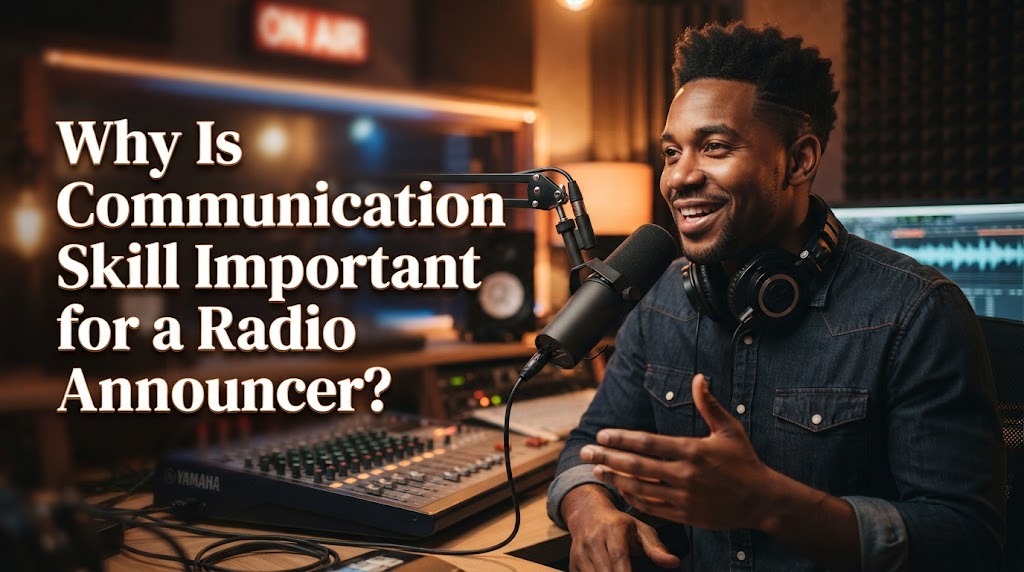
A radio announcer is a professional who communicates with listeners through spoken words, music, information, and entertainment. Unlike television presenters, radio announcers cannot rely on visual expressions or gestures to support their message. Their voice and communication skills become the main tools for creating a connection with the audience. This makes effective communication one of the most important abilities for anyone working as a radio announcer. Strong communication skills help announcers deliver information clearly, naturally, and in an engaging way.
THE ROLE OF COMMUNICATION IN RADIO BROADCASTING
Communication is the foundation of radio broadcasting because listeners depend entirely on the announcer's voice to understand the information being presented. A radio announcer must be able to organize ideas and explain them in a way that is easy to follow. Clear pronunciation, appropriate word choices, and natural speaking patterns can make a broadcast more comfortable to listen to. Good communication also helps prevent misunderstandings, especially when the announcer discusses news, public information, or important announcements.
An effective announcer also understands that communication is not simply about talking continuously. The announcer needs to know when to speak, when to pause, and how to adjust the delivery according to the situation. These abilities create a smoother listening experience and make the broadcast feel more professional.
HELPING LISTENERS UNDERSTAND INFORMATION
Radio announcers often deliver information that listeners need to understand quickly. They may discuss current events, traffic conditions, weather, entertainment news, advertisements, or community announcements. If the information is delivered too quickly or with unclear wording, listeners may miss important details. Strong communication skills allow announcers to explain information in a structured and understandable manner.
An announcer should also consider the characteristics of the target audience. Simple language may be more effective when discussing general information, while specialized topics may require careful explanations. By adapting communication to the audience, announcers can make their programs more accessible and useful.
BUILDING A CONNECTION WITH THE AUDIENCE
Good communication helps a radio announcer create a personal connection with listeners even though they cannot see each other. Voice tone, speaking style, humor, and conversational language can make listeners feel as though they are interacting with someone familiar. This connection is important because audiences are more likely to continue listening to programs that feel friendly and engaging. A warm and natural communication style can also make the announcer more memorable.
Audience connection becomes especially important during interactive programs. When receiving phone calls, messages, or requests from listeners, the announcer needs to respond naturally and respectfully. Good communication allows the announcer to maintain the flow of the program while making listeners feel valued.
SUPPORTING EFFECTIVE PUBLIC SPEAKING
Radio announcing requires many public speaking skills, even though the audience cannot see the speaker. An announcer must control pronunciation, volume, speed, tone, and pauses while speaking. These elements influence how listeners interpret the message and the personality of the program. Effective public speaking also helps announcers remain confident when handling unexpected situations.
Communication skills become particularly useful when an announcer needs to improvise. A technical problem, unexpected news update, or change in the program schedule can require an immediate response. An announcer with strong communication abilities can continue speaking calmly and professionally while adjusting to the situation.
IMPROVING VOICE DELIVERY AND EXPRESSION
A good radio announcer understands that the same words can create different impressions depending on how they are delivered. A serious announcement requires a different tone from an entertainment segment or a promotional message. Voice variation prevents the program from sounding monotonous and helps listeners recognize changes in the content. Communication skills allow announcers to use their voices effectively to express meaning and emotion.
Proper pacing is also essential. Speaking too quickly can make information difficult to understand, while speaking too slowly may cause listeners to lose interest. By controlling speaking speed and using appropriate pauses, an announcer can make the broadcast clearer and more engaging.
HANDLING INTERACTIONS AND LIVE SITUATIONS
Live radio requires announcers to communicate effectively under pressure. They may need to interview guests, answer listener questions, introduce songs, read advertisements, or respond to unexpected events. Each situation requires different communication strategies. The announcer must listen carefully, understand what is happening, and respond appropriately without disrupting the broadcast.
Listening skills are therefore just as important as speaking skills. An announcer who listens carefully can ask relevant questions and provide appropriate responses. This is particularly important during interviews because good listening creates a natural conversation rather than a series of disconnected questions.
STRENGTHENING PROFESSIONALISM AND CREDIBILITY
Communication skills can influence how professional and trustworthy a radio announcer appears to the audience. Accurate pronunciation, organized explanations, respectful language, and confident delivery can increase listener confidence. This is especially important when an announcer presents information that affects the public. Poor communication may cause confusion and reduce the credibility of both the announcer and the radio station.
Professional communication also requires responsibility. Announcers should verify important information, avoid misleading statements, and consider the possible impact of their words. Combining strong communication with responsible broadcasting practices helps create a reliable relationship between the station and its audience.
DEVELOPING COMMUNICATION SKILLS AS A RADIO ANNOUNCER
Communication skills can be developed through regular practice and evaluation. Beginners can practice reading scripts aloud, recording their voices, and listening to the recordings to identify pronunciation or pacing problems. They can also practice spontaneous speaking by explaining topics without preparing a complete script. These exercises can gradually improve confidence, fluency, and voice control.
Another effective approach is studying professional radio programs and observing how experienced announcers introduce topics, transition between segments, and interact with audiences. Feedback from instructors, colleagues, or experienced broadcasters can also help identify areas that need improvement. Consistent practice is important because professional communication develops through repeated experience.
CONCLUSION
Communication skill is important for a radio announcer because the voice is the primary medium used to deliver messages and connect with listeners. Strong communication helps announcers explain information clearly, maintain audience attention, handle live interactions, and build professional credibility. It also supports effective public speaking, voice expression, improvisation, and interviewing skills. For beginners, these abilities can be developed through regular speaking practice, active listening, recording exercises, and constructive feedback. Ultimately, an announcer with strong communication skills can create broadcasts that are informative, natural, engaging, and trusted by the audience.
Recent Posts

Bagaimana Sistem SKS pada Program Kuliah... 22.11.2026/35 View

How Does Technology Make Daily Evaluation... 21.11.2026/69 View

Apa Strategi Menghadapi Kesenjangan antara Kompetensi... 21.11.2026/69 View

Mengapa Inventaris Aset Penting bagi Kelancaran... 21.11.2026/67 View

When Should Musicians Join a Record... 21.11.2026/68 View
