

Why Is Community Awareness Important for Maintaining Clean and Attractive Tourist Destinations?
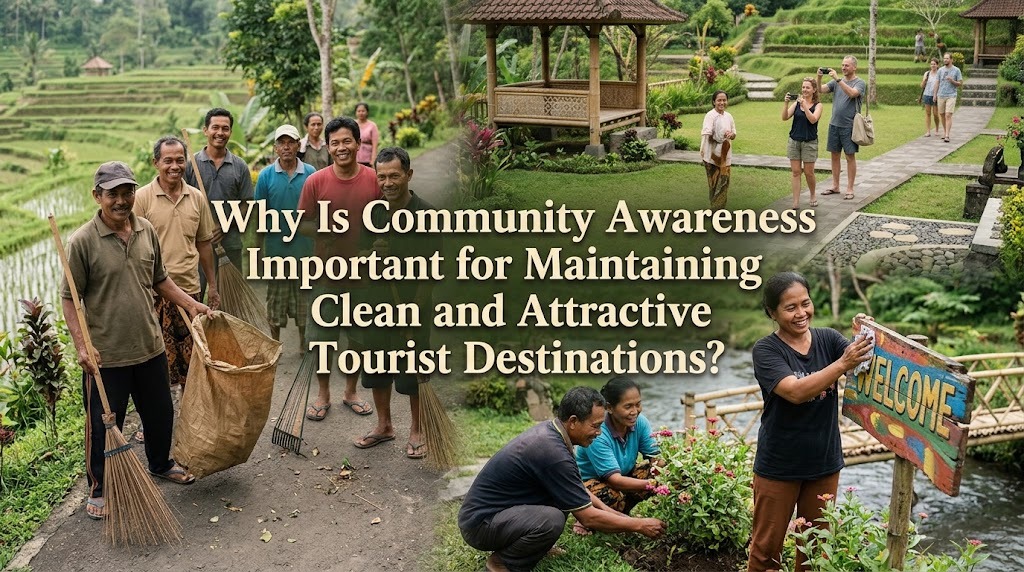
Clean and attractive tourist destinations play an important role in creating positive experiences for visitors and supporting local tourism development. However, maintaining these conditions cannot depend entirely on tourism managers or local governments. Community awareness is equally important because residents interact with the environment every day and have a direct influence on the condition of their surroundings. Through responsible behavior and active participation, communities can help maintain cleanliness, protect natural resources, and create welcoming environments for tourists. Therefore, increasing public awareness is an essential step toward developing sustainable and attractive tourism destinations.
UNDERSTANDING THE IMPORTANCE OF COMMUNITY AWARENESS IN TOURISM
Community awareness refers to the understanding and willingness of residents to take responsibility for maintaining their surroundings and supporting tourism development. In a tourist destination, this awareness includes keeping public areas clean, managing waste properly, protecting natural resources, and treating visitors respectfully. Residents who understand the importance of tourism are more likely to participate in activities that improve destination quality. Their daily behavior can influence how visitors perceive and experience the area.
Community awareness also creates a sense of shared responsibility among residents. Maintaining a tourist destination should not be considered the responsibility of only a few tourism group members or government officials. Instead, everyone can contribute through simple actions such as avoiding littering, maintaining public facilities, and participating in community activities. When these habits become part of everyday life, clean and attractive destinations can be maintained more consistently.
MAINTAINING CLEANLINESS AND IMPROVING VISITOR COMFORT
Cleanliness is one of the first things visitors notice when arriving at a tourist destination. Areas free from scattered rubbish, unpleasant odors, and poorly maintained facilities create a more comfortable atmosphere. Visitors are generally more interested in spending time at destinations that provide clean surroundings and suitable public facilities. Therefore, community involvement is essential for maintaining these conditions.
Residents can contribute by organizing regular clean-up activities, separating waste, providing suitable rubbish bins, and keeping roads and public spaces free from litter. Local business owners can also help by maintaining the cleanliness of their shops, food stalls, and surrounding areas. Village tourism awareness groups can coordinate these activities and encourage consistent participation. Through community cleanliness programs, destinations can provide better visitor experiences and maintain a positive reputation.
PROTECTING THE ENVIRONMENT AND NATURAL RESOURCES
Many village tourism destinations depend on natural attractions such as rivers, forests, beaches, waterfalls, agricultural landscapes, and mountains. These resources provide recreational opportunities and contribute to the unique identity of a destination. However, excessive waste, pollution, uncontrolled construction, and irresponsible visitor behavior can damage the environment. Without proper protection, natural attractions may gradually lose their beauty and tourism value.
Community awareness encourages residents to understand that environmental protection is a shared responsibility. People can participate in tree planting, river clean-ups, waste reduction, and conservation activities. They can also educate visitors about responsible behavior, such as avoiding damage to plants and respecting wildlife. Through environmental conservation, communities can protect natural resources while ensuring that tourism activities remain beneficial for future generations.
BUILDING A POSITIVE IMAGE AND ATTRACTING MORE VISITORS
The cleanliness and appearance of a tourist destination can strongly influence its public image. Visitors who enjoy a clean environment and comfortable facilities are more likely to recommend the destination to friends and family. They may also share photographs, videos, and positive experiences through social media. These recommendations can introduce the destination to new audiences without requiring expensive promotional campaigns.
Community behavior also contributes to the overall impression of a destination. Friendly residents, helpful local guides, and well-maintained public spaces can make visitors feel welcome and appreciated. On the other hand, poor cleanliness and unfriendly interactions may discourage people from returning. Therefore, destination reputation depends not only on attractive scenery but also on the quality of the environment and the behavior of the local community.
ENCOURAGING COMMUNITY PARTICIPATION AND COOPERATION
Maintaining a clean and attractive tourist destination requires cooperation among residents, village tourism awareness groups, business owners, and local governments. Each stakeholder has different responsibilities but shares the same objective of improving tourism quality. Residents can maintain their surroundings, tourism groups can organize community programs, and village governments can provide supporting facilities and regulations. Strong cooperation helps prevent environmental maintenance from becoming an inconsistent or individual effort.
Community participation can be encouraged through regular meetings, environmental campaigns, educational programs, and collective activities. Tourism awareness groups can also involve schools, youth organizations, community groups, and local businesses in cleanliness initiatives. These activities help residents understand the benefits of maintaining tourism destinations together. Community cooperation strengthens local responsibility and creates a more organized approach to tourism management.
SUPPORTING SUSTAINABLE TOURISM DEVELOPMENT
Community awareness is closely connected to sustainable tourism because it helps balance environmental protection, economic opportunities, and social interests. A destination that is clean and well maintained can continue attracting visitors without unnecessarily damaging the resources that support tourism activities. Residents can also benefit from tourism-related businesses while protecting the natural and cultural assets that make their village unique. This balance is important for maintaining tourism opportunities over the long term.
Sustainable practices can include reducing single-use plastics, improving waste management, conserving water, protecting green spaces, and educating visitors about responsible tourism. Communities should also monitor environmental conditions and evaluate whether tourism activities are creating negative impacts. These efforts require consistent participation rather than temporary campaigns. Through sustainable tourism practices, residents can help preserve destination quality and create long-term benefits for their communities.
CONCLUSION
Community awareness is important for maintaining clean and attractive tourist destinations because residents play a direct role in protecting the environment, improving visitor comfort, and supporting tourism activities. Their participation helps maintain cleanliness, preserve natural resources, strengthen destination reputation, and encourage cooperation among local stakeholders. These efforts also support sustainable tourism development by ensuring that local resources remain valuable for future generations. Ultimately, a clean and attractive tourist destination begins with a community that understands and takes responsibility for its surroundings.
Recent Posts

Bagaimana Sistem SKS pada Program Kuliah... 22.11.2026/37 View

How Does Technology Make Daily Evaluation... 21.11.2026/70 View

Apa Strategi Menghadapi Kesenjangan antara Kompetensi... 21.11.2026/73 View

Mengapa Inventaris Aset Penting bagi Kelancaran... 21.11.2026/68 View

When Should Musicians Join a Record... 21.11.2026/71 View
