

Why Is Construction Material Recycling Economically Beneficial?
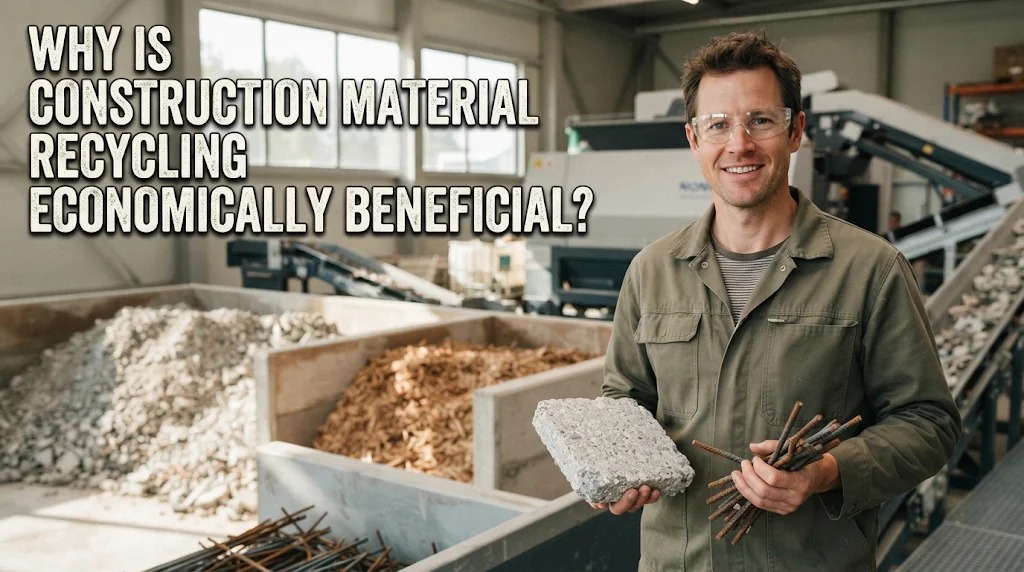
Construction material recycling offers economic advantages by turning discarded building materials into resources that can be used again. Construction projects generate various types of waste, including concrete, bricks, wood, steel, aluminum, glass, and plastic. Instead of sending all these materials to disposal facilities, companies can recover suitable items and process them into reusable products.
This approach helps construction businesses manage expenses while reducing the demand for newly extracted raw materials. Recycling can also create employment opportunities, support local industries, and encourage the development of new businesses. Understanding these benefits can help construction companies make more informed decisions about material management and project sustainability.
REDUCING CONSTRUCTION DISPOSAL COSTS
One direct economic benefit of recycling is the potential reduction in waste disposal expenses. Construction companies often need to pay for waste collection, transportation, and disposal. When large quantities of reusable materials are recovered, the amount of waste requiring disposal can decrease.
For example, separating concrete, metal, and wood at construction sites can reduce the volume of mixed debris sent to disposal facilities. Although recycling requires sorting and processing costs, companies may achieve savings when the value of recovered materials and avoided disposal expenses outweigh those costs.
LOWERING RAW MATERIAL PURCHASES
Recycled construction materials can reduce the need to purchase certain new resources. Recovered concrete can be processed into recycled aggregates, while suitable metal scraps can be used as raw materials in manufacturing. Reusable bricks and timber may also serve specific construction purposes.
By incorporating recycled materials into suitable projects, companies can reduce their dependence on newly purchased supplies. The actual savings depend on material quality, processing expenses, transportation distances, and project requirements.
CREATING ADDITIONAL BUSINESS OPPORTUNITIES
Construction waste recycling creates opportunities for businesses involved in collecting, sorting, transporting, processing, and selling recovered materials. Entrepreneurs can establish services that supply recycled aggregates, reclaimed timber, metal scraps, or other recovered products.
These activities can create additional sources of income and support cooperation between construction companies and recycling providers. As demand for sustainable building materials develops, businesses that offer reliable recycled products may find new market opportunities.
GENERATING EMPLOYMENT OPPORTUNITIES
Recycling activities require workers to collect, classify, transport, process, inspect, and distribute recovered materials. These tasks can create employment opportunities in both small-scale recycling operations and larger industrial facilities.
Local communities may benefit from jobs in material collection, equipment operation, warehouse management, and quality inspection. Developing recycling facilities can also support related services, such as transportation and equipment maintenance.
INCREASING THE VALUE OF UNUSED MATERIALS
Materials that appear useless at construction sites may still have economic value. Clean metal scraps can be sold to recycling businesses, intact bricks can be reused, and suitable timber can be transformed into furniture or other products.
Recovering these materials allows companies to obtain value from resources that would otherwise be discarded. However, their selling price depends on condition, quantity, demand, and the costs required to prepare them for reuse or recycling.
IMPROVING PROJECT RESOURCE EFFICIENCY
Recycling encourages construction companies to monitor how materials are purchased, stored, used, and discarded. This process helps project managers identify unnecessary consumption and improve inventory control.
Better resource management can reduce material losses caused by inaccurate measurements, poor storage, and inefficient construction methods. As a result, companies may improve project budgeting and avoid unnecessary purchases throughout the construction process.
SUPPORTING LOCAL ECONOMIC DEVELOPMENT
Local recycling facilities can help keep some economic activities within nearby communities. Construction companies can work with local waste collectors, material processors, transportation providers, and small businesses to recover and distribute useful materials.
This cooperation can reduce the need to transport certain waste materials over long distances. It may also encourage investment in local recycling infrastructure and strengthen business relationships between construction projects and surrounding communities.
REDUCING LONG-TERM ENVIRONMENTAL EXPENSES
Improper construction waste disposal can create environmental problems that require additional management and cleanup expenses. Pollution, blocked drainage systems, and uncontrolled waste accumulation may place financial pressure on communities and local authorities.
Recycling can help reduce some of these risks by limiting the volume of waste that requires disposal. Although it cannot eliminate every environmental impact, responsible material recovery can support more efficient waste management and reduce certain long-term costs.
STRENGTHENING BUSINESS COMPETITIVENESS
Companies that manage construction waste responsibly may improve their reputation among clients, investors, and business partners. Sustainable practices can demonstrate that a company pays attention to resource efficiency and environmental responsibility.
Some clients and project owners also consider environmental performance when selecting construction partners. Businesses that can document effective waste reduction and recycling practices may be better positioned to meet these expectations and participate in projects with sustainability requirements.
SUPPORTING A CIRCULAR CONSTRUCTION ECONOMY
A circular construction economy focuses on keeping materials in use for as long as practical instead of following a pattern of extracting, using, and discarding resources. Recycling plays an important role by returning recovered materials to production and construction activities.
This approach can create long-term economic value by reducing dependence on new resources and encouraging innovation in material recovery. Construction companies can support this system through reusable designs, selective demolition, material separation, and cooperation with recycling industries.
CONCLUSION
Construction material recycling is economically beneficial because it can reduce disposal expenses, lower raw material purchases, create business opportunities, and generate employment. It also encourages better resource management and supports local economic development.
However, the financial advantages depend on material quality, market demand, processing costs, and access to suitable recycling facilities. With careful planning and effective cooperation, construction companies can turn waste management into a valuable part of their business operations while supporting a more sustainable construction industry.
Recent Posts

How Does Technology Make Daily Evaluation... 21.11.2026/58 View

Apa Strategi Menghadapi Kesenjangan antara Kompetensi... 21.11.2026/60 View

Mengapa Inventaris Aset Penting bagi Kelancaran... 21.11.2026/56 View

When Should Musicians Join a Record... 21.11.2026/55 View

Daily Evaluation or Daily Planning Which... 21.11.2026/63 View
