

Why Is Data Analysis Important for Logistics Management Decisions?
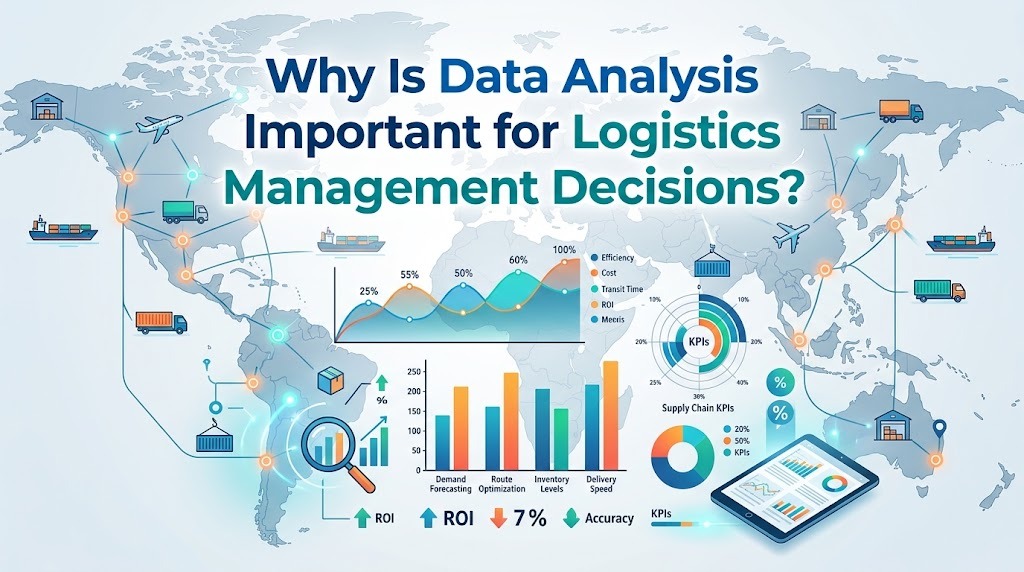
Data analysis plays an important role in modern logistics management because it helps businesses make informed decisions based on accurate information. Logistics activities involve transportation, inventory control, warehousing, order processing, and product distribution. Without reliable data, companies may struggle to identify operational problems, control expenses, and deliver products on time. Data analysis allows managers to examine patterns, measure performance, and predict potential challenges before they become serious problems. By using data effectively, businesses can improve logistics efficiency, reduce costs, and provide better customer service.
UNDERSTANDING DATA ANALYSIS IN LOGISTICS
Data analysis in logistics management is the process of collecting, organizing, and examining information to improve operational decisions. The information may include delivery times, transportation costs, inventory levels, warehouse productivity, customer orders, and supplier performance. Managers use this information to understand how logistics activities operate and identify areas that require improvement. For example, delivery records can reveal whether certain routes regularly experience delays. This knowledge helps businesses develop more effective plans and allocate resources appropriately.
Data analysis can involve several methods, including descriptive analysis, diagnostic analysis, predictive analysis, and prescriptive analysis. Descriptive analysis explains what has happened, while diagnostic analysis investigates why it happened. Predictive analysis estimates what may happen in the future, and prescriptive analysis recommends possible actions. These methods help logistics teams move beyond assumptions and make decisions supported by evidence. Accurate and relevant data is essential because incomplete information can lead to misleading conclusions and ineffective strategies.
IMPROVING TRANSPORTATION AND DELIVERY EFFICIENCY
Transportation is one of the largest operational concerns for many logistics businesses because it affects delivery speed, fuel consumption, and shipping expenses. Data analysis helps optimize transportation by examining route distances, traffic conditions, vehicle utilization, fuel consumption, and delivery schedules. Managers can compare different routes to identify which options offer better performance. They can also determine whether certain vehicles are being underused or whether delivery schedules need adjustment. These insights help companies improve transportation planning and use resources more efficiently.
Historical delivery data can also reveal recurring delays and transportation problems. For example, a company may discover that shipments to a particular area frequently arrive late during specific hours. Managers can respond by adjusting departure times, selecting alternative routes, or changing delivery schedules. Real-time tracking data can provide additional information when traffic conditions or other disruptions change unexpectedly. By combining route analysis and performance monitoring, businesses can improve delivery reliability while controlling transportation costs.
OPTIMIZING INVENTORY MANAGEMENT
Inventory management requires businesses to maintain enough stock to meet customer demand without accumulating unnecessary products. Data analysis helps managers examine historical sales, seasonal patterns, supplier lead times, and stock movement. This information supports more accurate demand forecasting and better purchasing decisions. When businesses understand which products sell quickly and which remain in storage for long periods, they can adjust inventory levels accordingly. As a result, companies can reduce stock shortages, excess inventory, and avoidable storage expenses.
Data analysis also helps businesses establish suitable reorder points and safety stock levels. A reorder point indicates when new inventory should be ordered, while safety stock provides a buffer against unexpected demand or supplier delays. These levels should reflect actual business conditions rather than relying entirely on fixed assumptions. Regularly reviewing inventory records helps managers identify discrepancies and correct inaccurate stock information. Data-driven inventory planning improves product availability, supports faster order fulfillment, and reduces the risk of unnecessary purchasing.
REDUCING OPERATIONAL COSTS
Controlling operational expenses is essential for maintaining profitability in logistics management. Businesses face costs related to transportation, fuel, labor, warehousing, packaging, equipment maintenance, and product handling. Cost analysis helps managers understand how these expenses are distributed and identify activities that consume more resources than expected. For example, data may reveal that certain delivery routes require excessive fuel or that a warehouse spends too much time processing orders. By identifying these inefficiencies, companies can prioritize improvements that provide meaningful financial benefits.
Data analysis also allows businesses to compare costs across different periods, suppliers, transportation providers, and warehouse locations. Managers can use these comparisons to evaluate service performance and determine whether operational changes are producing the expected results. However, the cheapest option is not always the best choice because lower costs may come with slower delivery or reduced service quality. Companies should consider both financial performance and customer expectations when making decisions. Balancing cost and service quality helps businesses improve efficiency without compromising reliability.
SUPPORTING BETTER FORECASTING AND RISK MANAGEMENT
Logistics operations are affected by changing customer demand, supplier disruptions, weather conditions, transportation problems, and market uncertainty. Predictive analytics helps businesses estimate potential changes by examining historical information and relevant current data. For example, sales trends can help companies prepare inventory for seasonal demand increases. Supplier performance records may also reveal patterns that indicate a greater risk of late deliveries. These insights allow managers to prepare alternative arrangements before disruptions significantly affect operations.
Data analysis can support risk management by identifying weak points throughout the logistics process. Businesses can evaluate their dependence on particular suppliers, transportation routes, warehouses, or distribution partners. They can then develop backup plans, maintain appropriate safety stock, and establish procedures for responding to unexpected events. Forecasts are not always accurate, especially when unusual events occur or data is limited. Therefore, managers should combine analytical results with professional judgment and update their plans when new information becomes available. Proactive risk management helps companies respond more effectively to uncertainty and maintain operational continuity.
IMPROVING CUSTOMER SATISFACTION AND BUSINESS PERFORMANCE
Customer satisfaction depends on reliable deliveries, accurate orders, reasonable shipping times, and clear communication. Data analysis helps improve customer service by examining delivery performance, order accuracy, complaints, returns, and customer feedback. Businesses can identify recurring problems and determine which parts of the logistics process need attention. For example, frequent complaints about late deliveries may indicate problems with route planning, warehouse processing, or supplier coordination. Addressing the underlying causes helps companies provide more consistent services.
Managers can also use key performance indicators (KPIs) to evaluate logistics performance over time. Useful indicators include on-time delivery rates, average order fulfillment time, inventory accuracy, transportation costs, and warehouse productivity. Regular monitoring allows businesses to compare actual results with their targets and assess whether improvement strategies are effective. Data visualization dashboards can make complex information easier to understand and share across departments. By using measurable results to guide decisions, companies can improve accountability, strengthen customer trust, and support long-term business growth.
CONCLUSION
Data analysis is important for logistics management decisions because it helps businesses improve transportation, optimize inventory, control expenses, forecast demand, and manage operational risks. Accurate information enables managers to identify problems, evaluate performance, and choose strategies based on evidence rather than assumptions. It also supports better customer service by helping companies improve delivery reliability and order accuracy. However, businesses must maintain data quality, protect sensitive information, and interpret analytical results carefully. Ultimately, effective data analysis helps logistics operations become more efficient, responsive, and competitive.
Recent Posts

Bagaimana Sistem SKS pada Program Kuliah... 22.11.2026/60 View

How Does Technology Make Daily Evaluation... 21.11.2026/87 View

Apa Strategi Menghadapi Kesenjangan antara Kompetensi... 21.11.2026/85 View

Mengapa Inventaris Aset Penting bagi Kelancaran... 21.11.2026/83 View

When Should Musicians Join a Record... 21.11.2026/87 View
