

Why Is Data Science Becoming Essential in the Modern Workplace?
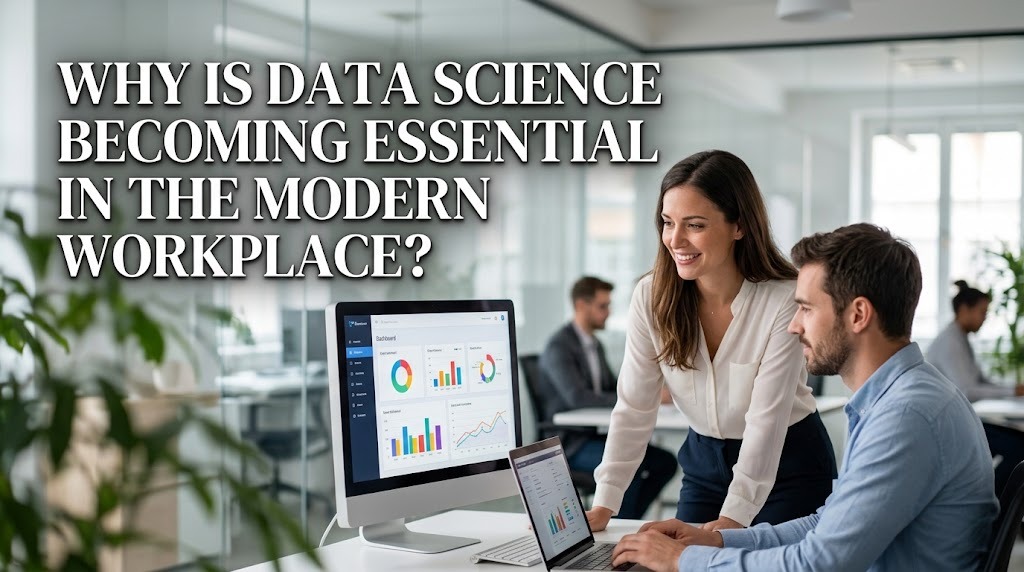
In today's rapidly changing digital environment, data science is becoming an essential part of the modern workplace. Businesses and organizations generate large amounts of information through customer transactions, digital platforms, employee activities, and operational systems. When analyzed properly, this information can help organizations understand their performance, identify problems, and make better decisions. As competition increases and technology continues to develop, companies need reliable ways to turn data into practical insights. This is why data science is increasingly valuable across industries, from finance and healthcare to education, manufacturing, and digital marketing.
WHAT MAKES DATA SCIENCE IMPORTANT IN THE MODERN WORKPLACE?
Data science combines statistics, mathematics, programming, and analytical methods to extract meaningful insights from raw data. In the modern workplace, it helps organizations understand what is happening, investigate why it happens, and estimate what might happen in the future. Instead of depending entirely on intuition, managers can use reliable evidence to evaluate business performance and choose appropriate strategies.
The growing importance of data science is also connected to digital transformation. Many organizations now use cloud platforms, automated systems, online services, and digital communication tools that continuously produce information. Without appropriate analytical methods, much of this information may remain unused. Data science helps convert it into useful knowledge that supports planning, problem-solving, and innovation. As a result, employees who understand data can contribute more effectively to organizational goals and adapt to changing workplace requirements.
HOW DOES DATA SCIENCE IMPROVE BUSINESS DECISION-MAKING?
One of the most important benefits of data science is its ability to support evidence-based decision-making. Businesses can analyze sales records, customer feedback, market conditions, and operational performance to identify patterns that may not be obvious through manual observation. For example, a retail company can examine historical sales data to determine which products are popular during particular seasons. Managers can then use these findings to plan inventory, organize promotions, and allocate budgets more effectively.
Data science also supports predictive analytics, which uses historical data and analytical models to estimate future outcomes. A company may forecast customer demand, identify possible financial risks, or anticipate equipment maintenance needs. These predictions are not guaranteed to be correct, but they can help decision-makers prepare for different scenarios. By combining analytical findings with professional experience and business knowledge, organizations can reduce uncertainty and make more informed choices.
HOW DOES DATA SCIENCE INCREASE WORKPLACE EFFICIENCY?
Data science helps organizations improve efficiency by identifying unnecessary costs, delays, and repetitive activities. By examining operational data, businesses can discover which processes consume excessive time or resources and determine where improvements are needed. For example, a logistics company can analyze delivery routes, traffic conditions, and shipment records to identify opportunities for more efficient transportation. Manufacturers can examine machine performance data to detect unusual behavior and schedule maintenance before certain problems lead to costly interruptions.
Another important application is automation. Data science can support systems that classify documents, detect unusual transactions, organize customer requests, or generate routine analytical reports. These applications allow employees to spend less time on repetitive tasks and more time on activities requiring creativity, judgment, and interpersonal communication. However, automation should be implemented carefully because not every task can be handled reliably by an algorithm. Organizations should regularly evaluate system performance and maintain appropriate human oversight to ensure that efficiency improvements do not compromise accuracy or service quality.
HOW DOES DATA SCIENCE TRANSFORM CUSTOMER SERVICE AND MARKETING?
Understanding customers is essential for organizations that want to remain competitive. Data science enables businesses to analyze purchasing histories, customer preferences, website interactions, and feedback to understand how people interact with their products and services. These insights can help companies identify customer needs, improve product design, and develop more relevant marketing campaigns. For example, an online shopping platform may recommend products based on previous purchases and browsing activity.
In customer service, data analytics can help organizations identify common complaints, evaluate response times, and recognize recurring service problems. Companies can use these findings to improve support procedures and allocate staff more effectively. Marketing teams can also measure campaign performance, compare audience responses, and determine which channels produce better results. Nevertheless, organizations must respect data privacy and security when collecting and using customer information. Personalization should be transparent and responsible, with appropriate safeguards against unauthorized access and misuse.
WHAT SKILLS AND TECHNOLOGIES MAKE DATA SCIENCE VALUABLE AT WORK?
The value of data science depends on the ability to combine technical expertise with practical problem-solving. Important skills include statistical analysis, programming, data cleaning, data visualization, and critical thinking. Programming languages such as Python and R help professionals analyze information, while SQL allows them to retrieve data from databases. Visualization tools help present findings through charts, dashboards, and reports that managers and other employees can understand.
Modern workplaces may also use machine learning and artificial intelligence to recognize patterns, classify information, and generate predictions. However, choosing the right technology requires a clear understanding of the problem, available data, and expected outcomes. Professionals must also communicate limitations, recognize potential bias, and protect sensitive information. Employees outside specialized data science roles can benefit from basic data literacy because it helps them interpret reports, ask relevant questions, and evaluate evidence. Combining technical knowledge with communication, collaboration, and ethical judgment makes data science more useful across different departments.
CONCLUSION
Data science is becoming essential in the modern workplace because it helps organizations make better decisions, improve efficiency, understand customers, and respond to changing business conditions. Through data analysis, predictive modeling, automation, and visualization, companies can transform large amounts of information into practical insights that support their objectives. Its applications extend across industries and create opportunities for employees with different levels of technical expertise.
However, successful data science implementation requires more than advanced tools. Organizations need reliable data, skilled professionals, clear goals, and responsible practices that protect privacy and reduce bias. Employees can prepare for this changing environment by developing data literacy, analytical thinking, and communication skills. As workplaces become increasingly digital, the ability to understand and use data effectively will remain an important advantage for individuals and organizations.
Recent Posts

Bagaimana Sistem SKS pada Program Kuliah... 22.11.2026/46 View

How Does Technology Make Daily Evaluation... 21.11.2026/74 View

Apa Strategi Menghadapi Kesenjangan antara Kompetensi... 21.11.2026/75 View

Mengapa Inventaris Aset Penting bagi Kelancaran... 21.11.2026/72 View

When Should Musicians Join a Record... 21.11.2026/75 View
