

Why Is Disaster Education Important for Vulnerable Populations?
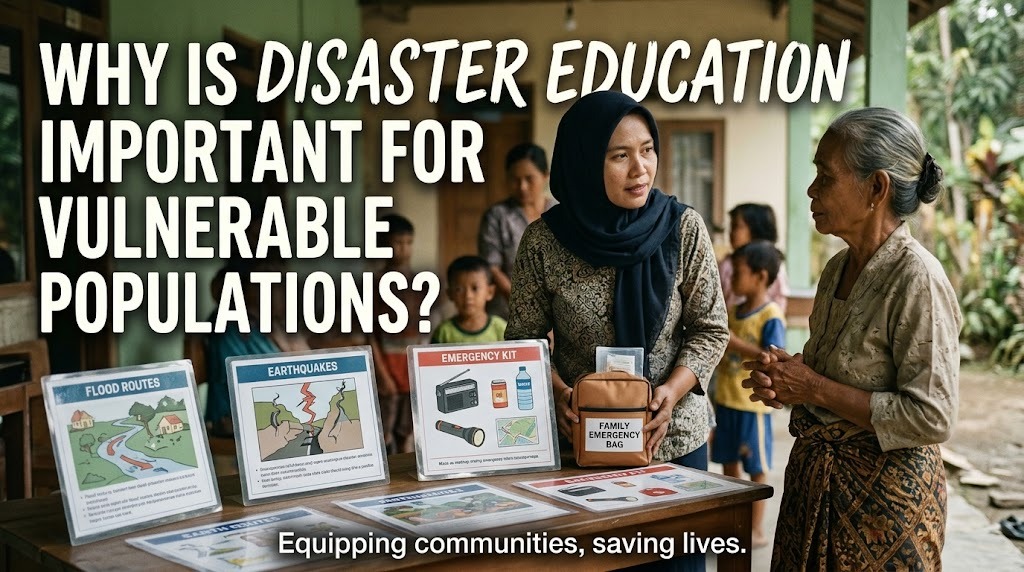
Natural disasters such as floods, earthquakes, tsunamis, landslides, and volcanic eruptions can affect anyone. However, some groups face greater difficulties when preparing for and responding to emergencies. Children, older adults, people with disabilities, pregnant women, and individuals with limited financial resources may have additional challenges accessing information, evacuating, or receiving emergency assistance.
Disaster education helps vulnerable populations understand potential hazards and learn how to respond safely. Through accessible information, practical training, and community support, people can improve their preparedness before emergencies occur. Providing inclusive disaster education is an important step toward reducing casualties and building safer communities.
UNDERSTANDING DISASTER RISKS AND WARNING SIGNS
Disaster education helps people recognize the hazards that may affect their surroundings. Different locations have different risks, such as flooding in low-lying areas, landslides near steep slopes, or tsunamis along vulnerable coastlines.
By understanding these risks, vulnerable individuals can recognize warning signs and respond more appropriately. For example, residents near rivers can learn to monitor rising water levels, while coastal communities can understand the importance of responding immediately to tsunami warnings. This knowledge helps people make informed decisions before conditions become dangerous.
HELPING PEOPLE RESPOND QUICKLY DURING EMERGENCIES
Knowing what to do during a disaster can reduce confusion and panic. Disaster education teaches people when to evacuate, which routes to follow, and where to find safe locations.
Practical training also helps individuals understand basic emergency procedures. They can learn how to protect themselves during earthquakes, avoid dangerous floodwater, and follow instructions from emergency personnel. These skills are especially important for people who may need additional time or assistance to reach safety.
PROTECTING CHILDREN THROUGH AGE-APPROPRIATE EDUCATION
Children may have difficulty understanding disaster warnings and making decisions during emergencies. They often depend on parents, teachers, or other adults for protection and guidance.
Schools can introduce disaster education through simple lessons, illustrations, storytelling, and evacuation simulations. These activities help children recognize warning signals and understand basic safety procedures without creating unnecessary fear. When children practice regularly, they can become more familiar with appropriate responses and share useful information with their families.
SUPPORTING OLDER ADULTS DURING DISASTERS
Older adults may face challenges related to mobility, hearing, vision, or access to emergency information. These conditions can make it more difficult for them to receive warnings and evacuate quickly.
Disaster education should provide clear instructions about evacuation procedures, emergency contacts, and available support services. Community organizations can also help older residents prepare emergency supplies and identify people who can assist them during an evacuation. Including older adults in preparedness activities helps ensure that their needs are considered.
IMPROVING ACCESSIBILITY FOR PEOPLE WITH DISABILITIES
People with disabilities may require specific arrangements during emergencies. For example, individuals with mobility impairments may need accessible evacuation routes, while people with hearing impairments may require visual warning systems.
Disaster education should use accessible communication methods, including sign language, audio information, large-print materials, and easy-to-understand instructions. Training should also include practical evacuation procedures that reflect different support needs. This approach allows people with disabilities to understand risks and participate more actively in their own safety planning.
INCREASING ACCESS TO EMERGENCY INFORMATION
Access to reliable information is essential during disaster situations. However, vulnerable populations may experience difficulties receiving warnings because of limited internet access, language barriers, low literacy levels, or communication disabilities.
Authorities should distribute emergency information through multiple channels, such as radio, television, mobile notifications, community announcements, and printed materials. Messages should use clear language and provide specific instructions about the location of danger and the actions residents need to take. Accessible communication helps prevent misunderstandings and supports faster responses.
STRENGTHENING FAMILY AND COMMUNITY PREPAREDNESS
Disaster education encourages families and communities to prepare together. Households can discuss evacuation routes, choose meeting points, prepare emergency bags, and identify important contact numbers.
Neighbors can also establish support networks to assist residents who may need help during emergencies. Community members can participate in evacuation drills, first-aid training, and local disaster awareness programs. Strong social connections make it easier to share information and coordinate assistance when disasters occur.
REDUCING HEALTH RISKS AFTER DISASTERS
The impact of disasters does not end when the immediate danger has passed. Floodwater, damaged sanitation facilities, contaminated drinking water, and poor shelter conditions can create additional health risks.
Disaster education helps people understand basic hygiene, safe water practices, food protection, and disease prevention during recovery. It can also explain when to seek medical assistance and how to access available health services. This knowledge helps vulnerable individuals protect their health while living in temporary shelters or returning to affected homes.
BUILDING CONFIDENCE AND INDEPENDENT DECISION-MAKING
People who understand disaster risks are better prepared to make decisions during emergencies. Education helps individuals recognize reliable warnings, evaluate dangerous conditions, and follow appropriate safety procedures.
This knowledge can reduce dependence on last-minute instructions and encourage people to take preventive action. Although support from authorities and communities remains essential, informed individuals can participate more actively in protecting themselves and their families.
THE ROLE OF GOVERNMENTS AND COMMUNITY ORGANIZATIONS
Governments, schools, health institutions, and community organizations have important responsibilities in providing inclusive disaster education. They can organize public campaigns, distribute accessible learning materials, and conduct training programs in vulnerable neighborhoods.
Local authorities should also identify groups that may require additional assistance and include their needs in emergency plans. Cooperation between public institutions and residents helps ensure that disaster education reaches different population groups. Programs should be evaluated regularly to determine whether the information and training remain relevant.
CONCLUSION
Disaster education is important for vulnerable populations because it improves awareness, strengthens emergency skills, and helps people respond more safely to dangerous situations. It also supports accessible communication, community cooperation, and better protection for individuals who may face additional challenges during disasters.
Effective disaster education must be inclusive, practical, and continuous. By providing suitable information and involving vulnerable groups in preparedness activities, communities can reduce disaster risks and create safer environments for everyone.
Recent Posts

Bagaimana Sistem SKS pada Program Kuliah... 22.11.2026/37 View

How Does Technology Make Daily Evaluation... 21.11.2026/70 View

Apa Strategi Menghadapi Kesenjangan antara Kompetensi... 21.11.2026/73 View

Mengapa Inventaris Aset Penting bagi Kelancaran... 21.11.2026/68 View

When Should Musicians Join a Record... 21.11.2026/71 View
