

Why Is Early Color Blindness Testing Important for Children?
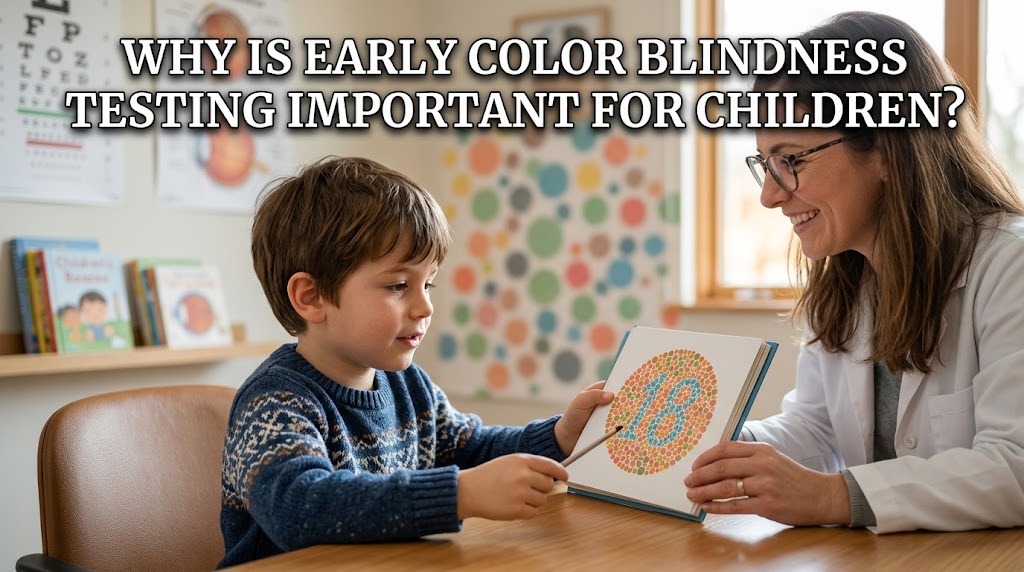
Color vision plays an important role in children's daily activities, especially during their early development. Children use colors to recognize objects, understand educational materials, follow instructions, and interact with their surroundings. However, some children have difficulty distinguishing certain colors because of a condition known as color blindness or color vision deficiency. This condition is often present from birth and may go unnoticed because children do not always realize that their color perception is different from that of others.
Early color blindness testing is important because it helps identify color vision difficulties before they significantly affect a child's learning and development. Through appropriate examinations, parents and teachers can better understand a child's visual needs and provide suitable support. Recognizing the condition early can also help children develop confidence and adapt to different situations at school and in everyday life.
IDENTIFYING COLOR VISION PROBLEMS EARLY
One of the main benefits of early color blindness testing is that it helps identify color vision deficiencies before children experience significant difficulties. Some children may have trouble distinguishing red and green, while others may struggle to recognize blue and yellow. Because these differences are not always obvious, parents may not notice the condition until a child begins school. A proper color vision examination can help detect these problems more accurately.
Early identification also allows parents to understand how their children perceive colors differently. For example, a child who cannot easily distinguish certain colors may select the wrong colored object or misunderstand instructions that depend on color recognition. These situations do not necessarily indicate a lack of attention or intelligence. Instead, they may be related to differences in color perception that require appropriate support.
SUPPORTING CHILDREN'S LEARNING ACTIVITIES
Colors are commonly used in educational activities, especially during early childhood and elementary school. Teachers often use colored pictures, diagrams, maps, charts, and learning materials to explain different subjects. Children with color vision deficiencies may find it difficult to interpret information when important details are communicated through color alone. This can make certain classroom activities more challenging.
Early testing helps parents and teachers recognize these difficulties and adjust teaching methods when necessary. For example, teachers can combine colors with labels, symbols, patterns, or written instructions so children do not have to rely entirely on color differences. Learning materials can also be designed with sufficient contrast to make important information easier to recognize. These adjustments help children participate in educational activities more comfortably and reduce unnecessary learning obstacles.
PREVENTING MISUNDERSTANDINGS AND LEARNING DIFFICULTIES
Children who have color blindness may sometimes be misunderstood by parents or teachers. For instance, a child might color an object differently from its commonly recognized appearance or give an incorrect answer when asked to identify a particular color. Without proper understanding, adults may assume that the child is careless, inattentive, or unable to follow instructions. In reality, the child may simply perceive certain colors differently.
Early color blindness testing helps prevent these misunderstandings by providing clearer information about the child's visual condition. Once the condition is identified, adults can respond with more appropriate guidance and expectations. Children can also learn that having color vision difficulties does not mean they are less intelligent or incapable of learning. This understanding can create a more supportive environment at home and school.
BUILDING CHILDREN'S CONFIDENCE AND EMOTIONAL WELL-BEING
Children who experience difficulties recognizing colors may feel confused or embarrassed when their answers differ from those of their classmates. They might become uncomfortable during activities that involve identifying colors, drawing, painting, or completing visual assignments. If these experiences happen repeatedly without explanation, some children may begin to lose confidence in their abilities. Therefore, recognizing color vision deficiencies early can support their emotional well-being.
Parents and teachers can help by explaining the condition in simple and positive language. Children should understand that color blindness is a difference in how the eyes perceive colors, not a sign of weakness or a lack of intelligence. Providing appropriate learning support can also help them feel more comfortable participating in school activities. With proper understanding, children can develop confidence and avoid unnecessary frustration.
HELPING PARENTS AND TEACHERS PROVIDE APPROPRIATE SUPPORT
Early examination gives parents and teachers useful information about the child's color vision abilities. This information can help them recognize which activities may require additional attention and which teaching approaches are more suitable. For example, parents can avoid using color as the only way to organize toys, clothing, or school supplies. They can also encourage children to use labels and other visual clues when distinguishing objects.
Teachers can make similar adjustments in the classroom by providing alternative instructions and learning materials. Instead of asking students to identify information only through red or green markings, teachers can include text, shapes, or patterns. These simple changes can make educational activities more accessible without separating children with color blindness from their classmates. Cooperation between parents, teachers, and eye care professionals is important to ensure children receive consistent support.
CHOOSING THE RIGHT COLOR BLINDNESS TEST FOR CHILDREN
Different color blindness tests can be used to evaluate children's color vision, depending on their age and ability to understand instructions. The Ishihara Color Test is commonly used to screen for red-green color vision deficiencies through plates containing colored dots and hidden numbers or shapes. However, younger children who cannot recognize numbers may need alternative testing methods. Eye care professionals can select an examination that matches the child's developmental level.
Other methods, such as color arrangement tests, may also be used to assess how children distinguish different shades. During the examination, children may be asked to organize colored objects or identify differences between specific colors. Digital tests can provide preliminary information, but their results may be affected by screen quality, brightness, and color settings. For reliable assessment, children should undergo appropriate testing conducted or interpreted by qualified eye care professionals.
CONCLUSION
Early color blindness testing is important for children because it helps identify color vision deficiencies before they interfere with learning activities and everyday experiences. Early identification allows parents and teachers to understand children's visual needs, prevent misunderstandings, and provide appropriate educational support. It can also help children maintain confidence and participate more comfortably in different activities.
Although color blindness usually cannot be cured when it is inherited, appropriate support and learning adjustments can help children manage its effects. Parents should consider professional color vision examinations if they notice that their children frequently struggle to distinguish certain colors. With early recognition and proper guidance, children with color vision deficiencies can continue learning, developing, and enjoying their daily activities.
Recent Posts

Bagaimana Sistem SKS pada Program Kuliah... 22.11.2026/42 View

How Does Technology Make Daily Evaluation... 21.11.2026/72 View

Apa Strategi Menghadapi Kesenjangan antara Kompetensi... 21.11.2026/74 View

Mengapa Inventaris Aset Penting bagi Kelancaran... 21.11.2026/70 View

When Should Musicians Join a Record... 21.11.2026/73 View
