

Why Is Environmental Education Important In Addressing Climate Change?
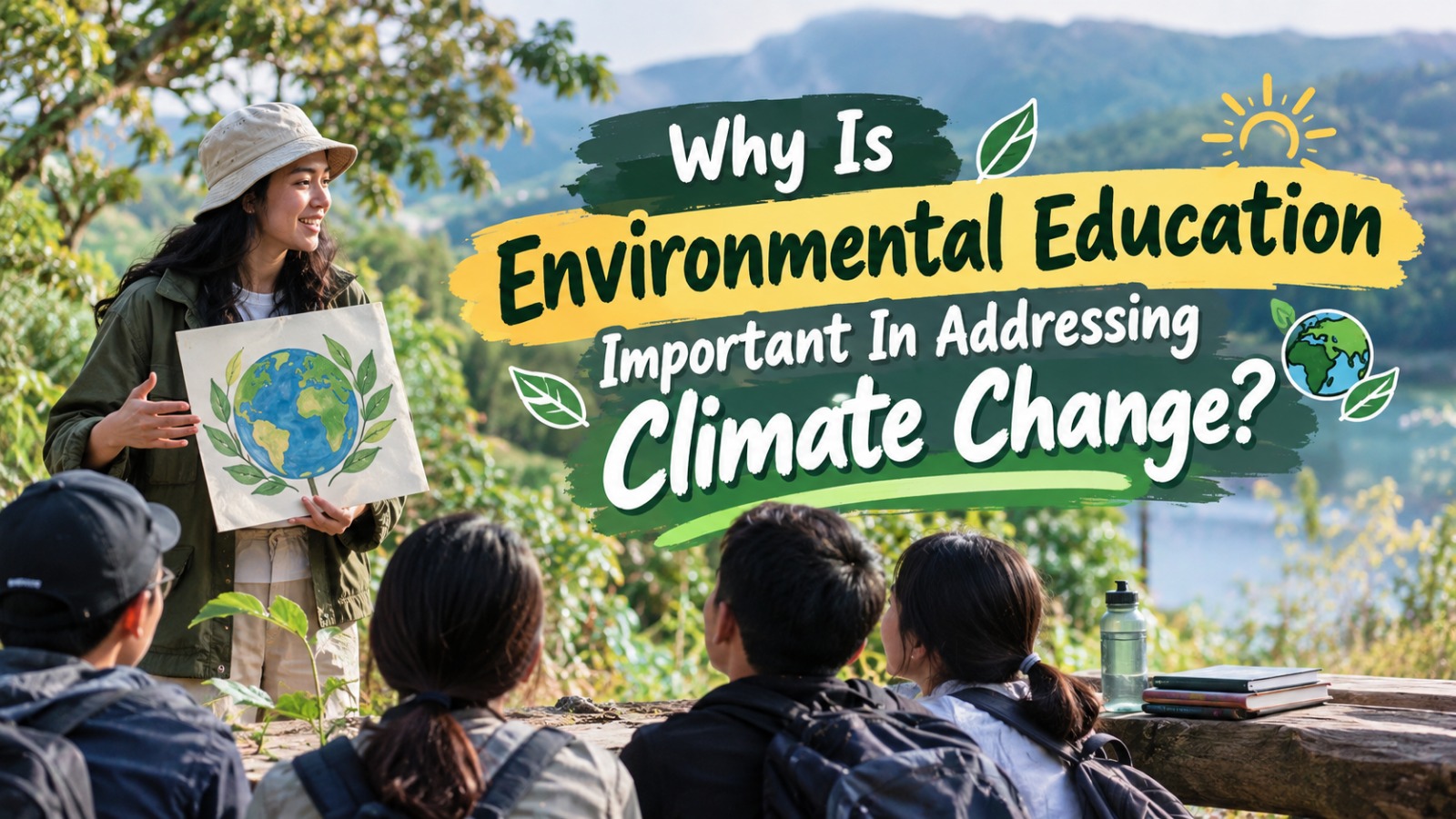
Climate change is one of the most serious environmental challenges facing the world today. Rising temperatures, extreme weather, melting glaciers, and changing rainfall patterns affect ecosystems and human communities. Although governments and businesses play important roles in reducing greenhouse gas emissions, individuals also need to understand how their actions influence the environment. Environmental education helps people understand climate change, recognize its causes, and learn how to respond responsibly. Through schools, community programs, and public campaigns, environmental education can encourage practical solutions and support a more sustainable future.
UNDERSTANDING CLIMATE CHANGE THROUGH ENVIRONMENTAL EDUCATION
Environmental education helps people understand how the natural environment works and how human activities affect it. Students learn about greenhouse gases, global warming, deforestation, pollution, and the importance of natural resources. This knowledge explains why burning fossil fuels and destroying forests contribute to climate change. Understanding the causes and consequences of climate change is an important first step toward taking meaningful action. With accurate information, people can make better decisions and distinguish scientific evidence from misleading claims.
Environmental education also explains how climate change affects different regions and communities. For example, coastal areas may face rising sea levels, while agricultural regions can experience changing rainfall and droughts. Learning about these risks helps people understand why climate action is necessary. It also encourages communities to prepare for environmental challenges before they become more severe.
BUILDING ENVIRONMENTALLY RESPONSIBLE HABITS
One important goal of environmental education is to encourage people to adopt environmentally responsible habits. Students and community members can learn to save electricity, reduce waste, reuse materials, and avoid unnecessary consumption. These everyday actions can reduce resource use and help lower greenhouse gas emissions when practiced consistently. Small individual actions become more meaningful when they are supported by businesses, communities, and government policies. Environmental education helps people understand not only what actions to take but also why those actions matter.
For example, students can switch off unused lights, bring reusable bottles, separate recyclable waste, and walk or cycle for suitable short journeys. Families can also reduce food waste and choose energy-efficient appliances when possible. Although these actions cannot solve climate change alone, they can support wider environmental efforts. Developing responsible habits early can encourage people to maintain sustainable lifestyles as they grow older.
PROMOTING CLIMATE AWARENESS IN SCHOOLS
Schools are important places for teaching students about environmental issues and climate change. Teachers can explain climate science through lessons, experiments, discussions, and practical projects. Activities such as planting trees, creating school gardens, and organizing waste-reduction campaigns allow students to apply what they learn. Practical environmental learning helps students connect scientific knowledge with real-life problems. It can also develop teamwork, creativity, and problem-solving skills.
Environmental education should be included in different subjects when appropriate, including science, geography, economics, and social studies. This approach helps students understand that climate change involves not only nature but also human behavior, technology, and public policy. Schools can also encourage students to measure electricity use or observe local environmental changes. These activities make learning more engaging and help students become informed participants in climate action.
ENCOURAGING COMMUNITY PARTICIPATION
Environmental education can motivate communities to work together to address climate change. Community workshops, public discussions, and local campaigns can explain practical ways to conserve resources and protect ecosystems. Residents can participate in tree planting, river cleanups, recycling programs, and the restoration of local green spaces. Community participation turns environmental knowledge into collective action. When people work together, they can share resources, exchange ideas, and create solutions suited to local conditions.
Local environmental programs can also help communities identify risks such as flooding, drought, and poor waste management. Residents who understand these risks may be better prepared to protect their homes and natural surroundings. Community leaders can use educational activities to encourage responsible decisions and support local environmental policies. Cooperation between residents, schools, businesses, and local authorities can make climate initiatives more effective.
DEVELOPING CRITICAL THINKING AND PROBLEM-SOLVING SKILLS
Climate change is a complex issue that requires careful thinking and informed decisions. Environmental education teaches learners to examine evidence, compare possible solutions, and understand the consequences of different choices. Students can explore questions about renewable energy, sustainable transportation, forest conservation, and waste reduction. Critical thinking helps people evaluate environmental information instead of accepting every claim they encounter. These skills are especially important when misleading information about climate change spreads through social media.
Problem-solving activities can also encourage students to develop creative environmental solutions. For instance, a school group might design a campaign to reduce plastic waste or propose ways to save water on campus. Students can research the problem, collect information, discuss possible approaches, and evaluate the results. These experiences prepare young people to contribute to future environmental decisions and innovations.
SUPPORTING GOVERNMENT POLICIES AND SUSTAINABLE DEVELOPMENT
Environmental education can help people understand why climate policies and sustainable development matter. When citizens understand the effects of greenhouse gas emissions, they can make more informed decisions about energy, transportation, waste management, and land use. They can also participate more effectively in public discussions and support policies based on reliable evidence. An informed public can encourage greater accountability and stronger environmental protection. Education does not guarantee that people will support every climate policy, but it helps them assess choices using better information.
Environmental education also connects climate action with economic and social well-being. Renewable energy, efficient buildings, sustainable agriculture, and ecosystem restoration can create opportunities while reducing environmental pressure. However, these changes must consider affordability, fairness, and the needs of vulnerable communities. Teaching these connections helps people understand that sustainable development requires balancing environmental protection, economic progress, and social well-being.
OVERCOMING CHALLENGES IN ENVIRONMENTAL EDUCATION
Despite its benefits, environmental education faces several challenges. Some schools lack trained teachers, learning materials, funding, or opportunities for outdoor activities. In other communities, people may have limited access to reliable climate information or may struggle to connect global climate issues with local experiences. Environmental education must be accessible, accurate, and relevant to the people it serves. Lessons should use clear language, trustworthy scientific evidence, and examples that reflect local environmental conditions.
Governments, educational institutions, and environmental organizations can help address these barriers by providing teacher training, updated resources, and community learning programs. Digital platforms can expand access to educational materials, although internet access and digital literacy remain important considerations. Programs should also encourage practical activities rather than relying only on theory. By combining scientific knowledge with local experience, environmental education can become more inclusive and effective.
CONCLUSION
Environmental education is important in addressing climate change because it helps people understand environmental problems, develop responsible habits, and participate in practical solutions. It also strengthens critical thinking, encourages community cooperation, and helps citizens make informed decisions about climate policies. Education alone cannot stop climate change, but it provides essential knowledge and skills for effective climate action. When schools, communities, governments, and businesses work together, environmental education can support lasting behavioral change and stronger environmental protection. Investing in environmental learning today helps prepare future generations to build a more sustainable and climate-resilient world.
Recent Posts

Bagaimana Sistem SKS pada Program Kuliah... 22.11.2026/49 View

How Does Technology Make Daily Evaluation... 21.11.2026/76 View

Apa Strategi Menghadapi Kesenjangan antara Kompetensi... 21.11.2026/78 View

Mengapa Inventaris Aset Penting bagi Kelancaran... 21.11.2026/74 View

When Should Musicians Join a Record... 21.11.2026/78 View
