

Why Is Inflation a Major Challenge for Small Businesses?
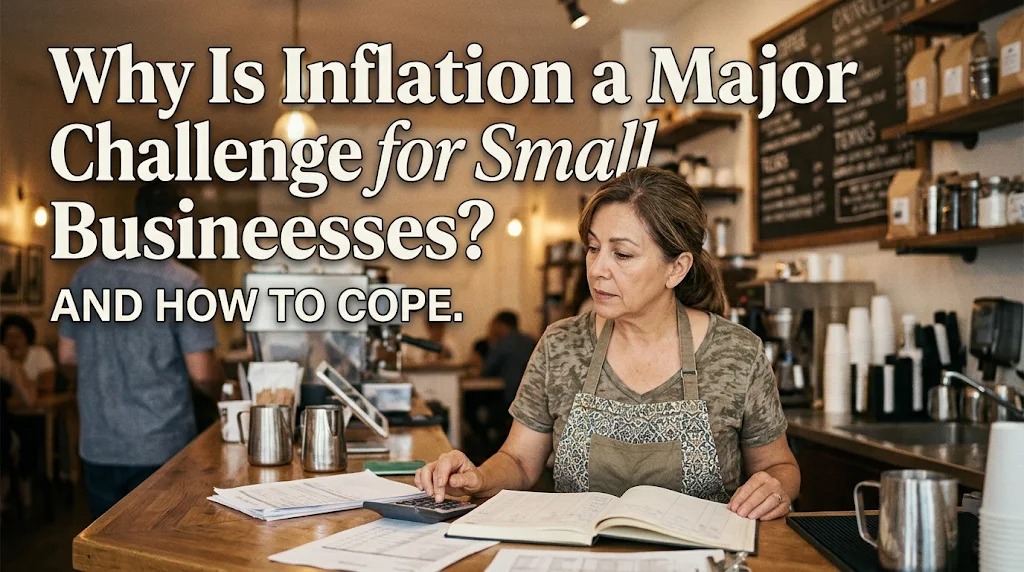
Inflation is a major challenge for small businesses because it increases the cost of operating, producing, and selling goods or services. When prices rise, business owners may need to spend more money on raw materials, employee wages, transportation, electricity, and other essential expenses. Unlike large companies, small businesses often have limited financial resources and less flexibility to absorb unexpected cost increases. Understanding how inflation affects small businesses helps explain why maintaining profitability and business stability can become more difficult during periods of rising prices.
INCREASING OPERATIONAL AND PRODUCTION COSTS
One of the biggest challenges small businesses face during inflation is the increase in operational expenses. Business owners may need to pay more for electricity, water, rent, internet services, packaging, and equipment maintenance. These expenses are necessary to keep daily business activities running, making them difficult to eliminate completely.
Production costs can also increase when raw materials and supplies become more expensive. For example, a small bakery may have to spend more money on flour, sugar, eggs, cooking oil, and packaging materials. If these expenses continue to rise, the business may experience lower profit margins unless it adjusts its selling prices or finds more efficient ways to operate. Managing operating costs therefore becomes an important priority during inflation.
REDUCED CUSTOMER PURCHASING POWER
Inflation can reduce customers' purchasing power because their income may not increase at the same rate as the prices of goods and services. As essential expenses become more expensive, consumers often become more careful about how they spend their money. They may prioritize basic necessities and reduce purchases that are considered less important.
This change in consumer behavior can affect small businesses, particularly those selling nonessential products or services. Customers may purchase fewer items, choose cheaper alternatives, or postpone their buying decisions. As a result, businesses can experience declining sales even when their products remain in demand. Understanding changes in consumer purchasing power helps business owners adjust their products, pricing, and marketing strategies.
DIFFICULTIES IN MAINTAINING PROFIT MARGINS
A business's profit margin represents the portion of revenue remaining after covering its costs. During inflation, small businesses may struggle to maintain healthy profit margins because expenses increase while customer spending becomes more limited. Raising selling prices can help cover higher costs, but it may also discourage customers from making purchases.
Business owners must carefully evaluate the relationship between product prices, production expenses, and customer demand. If prices increase too much, customers may move to competitors offering more affordable alternatives. On the other hand, keeping prices unchanged for too long can reduce profitability and make it difficult to cover operating expenses. Finding the right balance is essential for maintaining business profitability during uncertain economic conditions.
LIMITED ACCESS TO FINANCING AND BUSINESS CAPITAL
Small businesses often have more limited access to financing than larger companies. During inflation, central banks may increase interest rates to control rising prices. Higher interest rates can make business loans and other financing options more expensive, increasing the financial burden on entrepreneurs who depend on borrowed capital.
Limited access to affordable financing can make it difficult for small businesses to purchase inventory, upgrade equipment, expand operations, or manage temporary cash shortages. Business owners may also become more cautious about taking loans because repayment costs can affect future cash flow. Maintaining sufficient working capital and carefully evaluating borrowing decisions are therefore important for small businesses facing inflation.
CHANGES IN BUSINESS STRATEGIES AND MARKET COMPETITION
Inflation often requires small businesses to review their strategies and adapt to changing market conditions. Business owners may need to negotiate with suppliers, compare alternative materials, improve inventory management, and reduce unnecessary operational expenses. These adjustments can help businesses maintain efficiency without immediately increasing product prices.
Innovation and customer relationships can also support business resilience. For example, businesses may introduce more affordable product options, offer different package sizes, or improve customer service to maintain consumer interest. Monitoring competitors and understanding customer preferences can help entrepreneurs make informed decisions. Businesses that respond carefully to economic changes may be better prepared to maintain their operations during inflation.
CONCLUSION
Inflation creates major challenges for small businesses by increasing operating costs, reducing customer purchasing power, weakening profit margins, and making financing more expensive. These pressures can affect daily operations and long-term business development. By improving cost management, monitoring customer demand, maintaining sufficient working capital, and adapting business strategies, small business owners can strengthen their financial resilience and navigate periods of economic uncertainty.
Recent Posts

Bagaimana Sistem SKS pada Program Kuliah... 22.11.2026/35 View

How Does Technology Make Daily Evaluation... 21.11.2026/69 View

Apa Strategi Menghadapi Kesenjangan antara Kompetensi... 21.11.2026/69 View

Mengapa Inventaris Aset Penting bagi Kelancaran... 21.11.2026/67 View

When Should Musicians Join a Record... 21.11.2026/68 View
