

Why Is International Cooperation Important In Combating Climate Change?
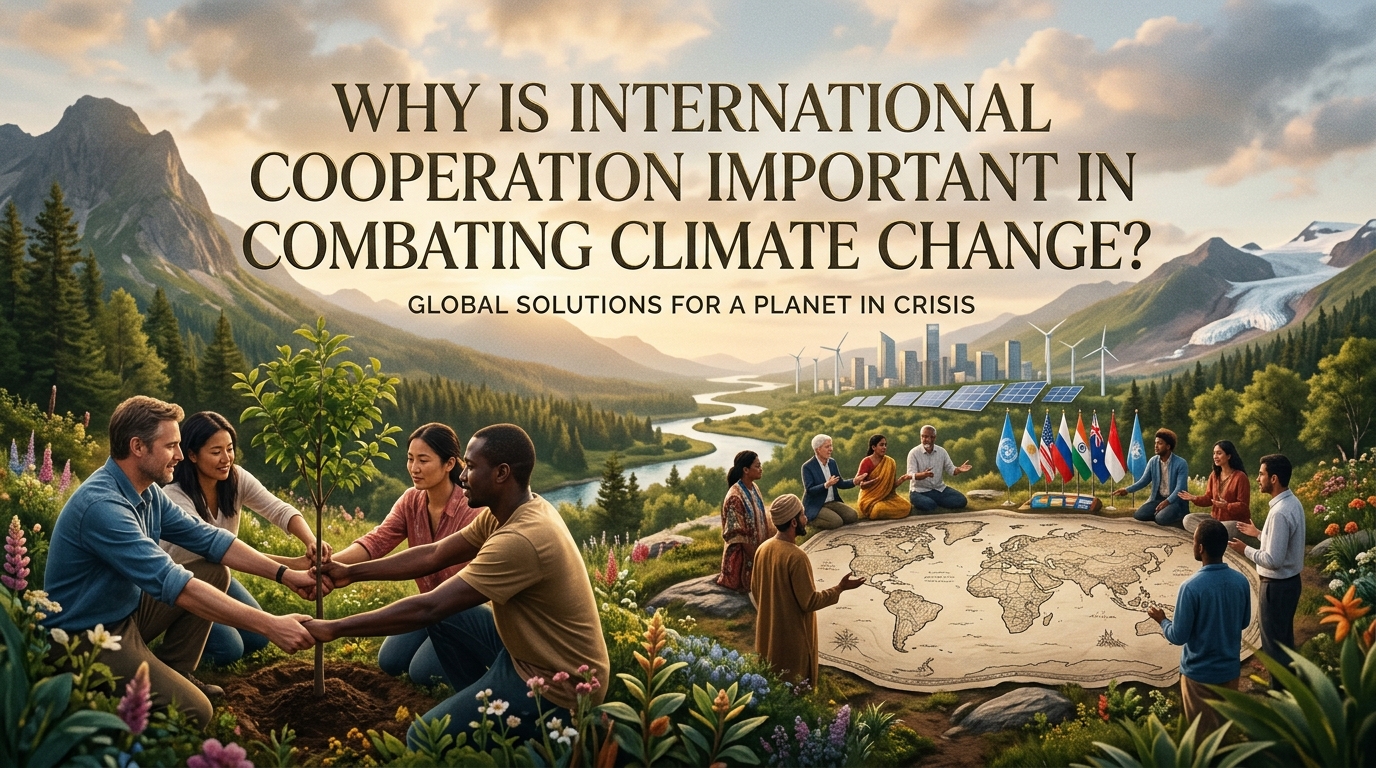
Climate change is a global challenge that affects countries in different ways. Rising temperatures, extreme weather, melting glaciers, and rising sea levels threaten human health, food supplies, economies, and natural ecosystems. Because greenhouse gases travel throughout the atmosphere, emissions produced in one country can contribute to climate change worldwide. No country can solve climate change alone, making international cooperation essential. By working together, countries can reduce emissions, share knowledge, provide financial support, and protect vulnerable communities from climate-related risks.
CLIMATE CHANGE REQUIRES GLOBAL ACTION
Climate change crosses national borders, so its effects cannot be managed effectively by individual countries alone. Greenhouse gases released by industries, transportation, agriculture, and energy production contribute to global warming regardless of where the emissions occur. For example, rising sea levels can threaten coastal communities across many countries, while changing weather patterns can affect food production and water availability. These challenges require coordinated international action to address their causes and consequences. Cooperation allows countries to develop shared goals and avoid relying only on separate national efforts.
Countries also have different levels of responsibility, resources, and vulnerability. Developed economies have contributed a large share of historical greenhouse gas emissions, while many developing countries have fewer financial resources to respond to climate impacts. Some island nations face serious risks from rising sea levels despite contributing relatively little to global emissions. International cooperation creates opportunities for countries to discuss these differences and develop fairer solutions. Working together can help ensure that climate action protects people and supports sustainable development worldwide.
REDUCING GREENHOUSE GAS EMISSIONS
One of the main goals of international cooperation is to reduce greenhouse gas emissions. Countries can work together to expand renewable energy, improve energy efficiency, protect forests, and develop cleaner transportation systems. International agreements can encourage governments to establish climate targets and report their progress. Shared goals also help countries coordinate policies and increase confidence that other nations are taking action. Collective emissions reduction is essential because global warming depends on the total amount of greenhouse gases released and accumulated in the atmosphere.
Countries can also exchange technologies and practical knowledge that make cleaner energy more accessible. For example, international partnerships can support the development of solar power, wind energy, battery storage, and low-emission industrial processes. Cooperation can help reduce costs through research partnerships, shared expertise, and larger markets for clean technologies. However, countries must also strengthen their domestic policies to turn international commitments into real results. Consistent action and transparent progress reporting help ensure that climate promises lead to measurable reductions in emissions.
STRENGTHENING INTERNATIONAL CLIMATE AGREEMENTS
International climate agreements provide a framework for countries to work toward common environmental goals. One important example is the Paris Agreement, adopted in 2015 under the United Nations Framework Convention on Climate Change. Its central temperature goal is to hold the increase in global average temperature to well below 2°C above pre-industrial levels and pursue efforts to limit it to 1.5°C. Countries submit national climate plans, known as nationally determined contributions, and are expected to strengthen their efforts over time. These commitments help establish a shared direction for global climate action.
International agreements also create opportunities for countries to review progress, discuss challenges, and improve their plans. Regular reporting and global assessments help governments understand whether current efforts are sufficient to meet shared goals. Nevertheless, agreements cannot succeed through promises alone. Effective implementation, accountability, and stronger national policies are necessary to turn commitments into meaningful action. Cooperation becomes more effective when countries communicate openly and follow through on their responsibilities.
PROVIDING FINANCIAL SUPPORT TO DEVELOPING COUNTRIES
Many developing countries face significant barriers to climate action because they lack sufficient funding and technical resources. They may need financial support to build renewable energy facilities, strengthen flood defenses, improve water systems, and protect agricultural production. International cooperation can help mobilize climate finance from public institutions, development banks, private investors, and other funding sources. This support can make climate projects possible in countries that might otherwise struggle to afford them. It can also help communities prepare for climate risks while pursuing economic development.
Financial assistance is particularly important for countries and communities that are highly vulnerable to climate change. Funding can support early warning systems, disaster preparedness, resilient infrastructure, and recovery after climate-related disasters. However, financial support should be accessible, transparent, and appropriate to local needs. Developing countries also need support that considers their debt burdens and administrative capacity. Fair climate finance can strengthen trust between countries and help ensure that vulnerable populations are not left behind.
SHARING TECHNOLOGY AND SCIENTIFIC KNOWLEDGE
Technology and scientific research are essential for understanding climate change and developing effective solutions. Countries can cooperate by sharing climate data, conducting joint research, and improving access to renewable energy technologies. International scientific partnerships help researchers study rising temperatures, changing rainfall patterns, ocean conditions, and other environmental changes. This information enables governments to make better decisions based on evidence. Knowledge sharing also helps countries avoid repeating mistakes and learn from successful climate projects elsewhere.
Technology cooperation can be especially valuable for countries with limited research facilities or technical expertise. Training programs and international partnerships can help local engineers, scientists, farmers, and policymakers develop practical skills. For example, improved weather forecasting can help farmers plan planting schedules, while flood-monitoring technology can support disaster preparedness. However, technology must be affordable, reliable, and suitable for local conditions. Accessible climate technology can help more countries reduce emissions and adapt to environmental changes.
HELPING COUNTRIES ADAPT TO CLIMATE CHANGE
Even if emissions decline, some climate impacts will continue because the climate system responds slowly to greenhouse gases already released. Therefore, countries must cooperate to strengthen climate adaptation, which means adjusting to actual or expected climate impacts to reduce harm. International partnerships can help coastal communities prepare for sea-level rise, farmers respond to changing rainfall, and cities manage extreme heat. Countries can share practical adaptation methods and scientific information to improve their preparedness. These efforts can reduce damage to communities, livelihoods, and essential services.
International cooperation is also important when climate-related disasters affect several countries or overwhelm local resources. Neighboring nations can coordinate emergency assistance, share disaster information, and support humanitarian responses. Regional organizations can develop joint plans for floods, droughts, wildfires, and other hazards that cross borders. Adaptation projects should prioritize vulnerable communities and consider local knowledge when developing solutions. Coordinated adaptation planning helps countries prepare for future risks and recover more effectively from climate-related emergencies.
PROTECTING FORESTS AND BIODIVERSITY
Forests, wetlands, mangroves, and other ecosystems play important roles in regulating the climate and supporting biodiversity. Forests absorb and store carbon dioxide, while healthy ecosystems provide habitats, protect soil, and help maintain water supplies. However, deforestation, land degradation, and habitat destruction can release stored carbon and weaken these natural benefits. International cooperation can support forest conservation, ecosystem restoration, and the protection of endangered species. Protecting natural ecosystems is an important part of global climate action.
Many ecosystems extend across national borders, and environmental problems in one country can affect neighboring regions. Countries can cooperate to prevent illegal logging, improve forest monitoring, and promote sustainable land management. They can also support local and Indigenous communities whose knowledge and livelihoods are closely connected to forests. Restoration projects should use appropriate native species and protect existing natural habitats rather than simply focusing on the number of trees planted. International environmental partnerships can help preserve biodiversity while supporting climate mitigation and adaptation.
OVERCOMING CHALLENGES IN INTERNATIONAL COOPERATION
Although international cooperation is essential, it can be difficult to achieve because countries have different economic priorities, energy needs, and political interests. Some economies depend heavily on fossil fuels, while others lack the resources to transition quickly to cleaner energy. Governments may also disagree about how climate costs and responsibilities should be shared. These differences can slow negotiations and weaken climate commitments. Trust, fairness, and open communication are therefore important for building lasting international partnerships.
Countries can address these challenges by setting realistic goals, providing transparent information, and recognizing different national circumstances. Wealthier countries can support developing nations through finance, technology, and capacity building. Governments can also encourage cooperation among businesses, universities, research institutions, and civil society organizations. Progress should be measured through clear indicators and regular reviews rather than promises alone. Shared responsibility and consistent implementation can help strengthen international climate efforts despite political and economic differences.
CONCLUSION
International cooperation is important in combating climate change because greenhouse gas emissions and their effects cross national borders. By reducing emissions, strengthening climate agreements, providing financial support, sharing technology, and protecting ecosystems, countries can achieve more together than they can independently. Cooperation also helps vulnerable nations prepare for climate impacts and recover from disasters. Although differences in resources and national priorities can create challenges, fair partnerships and effective implementation can improve global progress. Ultimately, global cooperation is essential for building a safer, more sustainable future for people and the planet.
Recent Posts

Bagaimana Sistem SKS pada Program Kuliah... 22.11.2026/51 View

How Does Technology Make Daily Evaluation... 21.11.2026/81 View

Apa Strategi Menghadapi Kesenjangan antara Kompetensi... 21.11.2026/81 View

Mengapa Inventaris Aset Penting bagi Kelancaran... 21.11.2026/77 View

When Should Musicians Join a Record... 21.11.2026/82 View
