

Why Is Lead Used as a Shield Against Radiation?
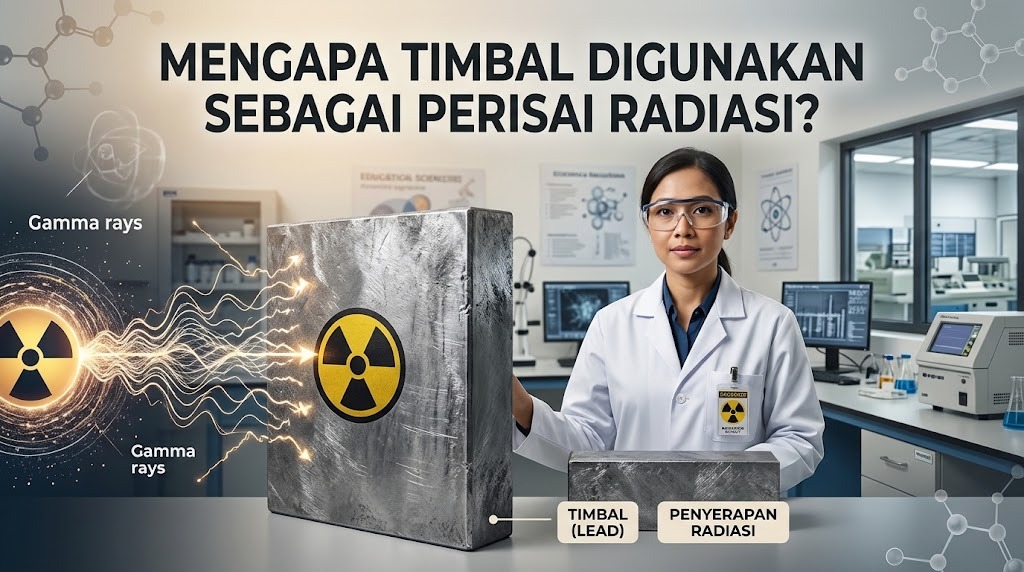
When dealing with high-energy ionizing radiation—such as X-rays and gamma rays—specialized barriers are required to protect human tissue and sensitive equipment. Because these types of radiation possess immense penetrating power, standard walls or clothing are insufficient to stop them.
Scientists and engineers rely on dense, heavy elements to absorb or block incoming radiation before it can cause biological harm. Among all available materials, lead has historically remained the gold standard for radiation protection.
HIGH DENSITY AND ATOMIC NUMBER
The primary reason lead is so effective against radiation lies in its atomic structure and physical density. Lead has a very high atomic number (atomic number 82), meaning its atoms contain a large number of protons and densely packed electrons.
When high-energy photons like X-rays or gamma rays strike lead, they encounter a massive concentration of electrons and heavy nuclei. This dense barrier dramatically increases the likelihood that incoming radiation will collide with atomic particles, lose its energy, and be successfully absorbed or scattered.
HOW LEAD ABSORBS PHOTONS
Lead interacts with high-energy radiation primarily through physical processes known as the photoelectric effect and Compton scattering. When a low- to medium-energy X-ray photon strikes a lead atom, it transfers all of its energy to an inner-shell electron, which absorbs the energy and is ejected.
For higher-energy gamma rays, lead's dense atomic mass forces photons to collide repeatedly with electrons, gradually draining their kinetic energy until they are completely neutralized. Because lead is so dense, a relatively thin sheet can absorb the same amount of radiation that would require feet of concrete or inches of steel.
PRACTICAL APPLICATIONS IN MEDICINE AND INDUSTRY
Lead's exceptional shielding properties make it indispensable across medical, scientific, and industrial settings:
- Medical Imaging: Lead aprons, thyroid collars, and mobile shields protect patients and technicians during X-ray and fluoroscopy procedures.
- Radiology Rooms: Hospital walls and control booth windows are lined with lead sheets or lead glass to contain radiation inside treatment areas.
- Industrial Radiography: Heavy lead containers, known as pigs, safely store and transport radioactive isotopes used in material testing.
These practical applications ensure that workers and patients remain safe from unnecessary ionizing exposure.
PRACTICALITY, COST, AND WORKABILITY
While elements like gold or platinum also possess high atomic numbers and density, they are far too expensive and rare to use as bulk shielding materials. Lead, on the other hand, is relatively abundant, inexpensive, and easy to mine.
Furthermore, lead has a very low melting point (327.5°C or 621.5°F) and exceptional malleability. This means manufacturers can easily melt, mold, and shape lead into custom sheets, bricks, or protective garments to fit complex architectural and engineering designs.
LIMITATIONS AND TOXICITY CONCERNS
Despite its unmatched shielding efficiency, lead does have notable drawbacks, primarily related to chemical toxicity. Lead is a heavy metal that is poisonous to humans and wildlife if ingested or inhaled, which is why modern lead shields are usually coated in vinyl, fabric, or paint to prevent direct skin contact.
Additionally, in high-energy particle accelerators or space applications, alternative materials like water, polyethylene, or concrete are often preferred because lead can generate secondary neutron radiation when struck by extremely high-speed cosmic rays.
CONCLUSION
In conclusion, lead is used as a radiation shield because of its high atomic number, extreme density, and superior photon absorption capabilities. Its heavy concentration of electrons effectively stops X-rays and gamma rays in a relatively thin layer.
Combined with its affordability, ease of manufacturing, and malleability, lead remains an essential material in modern radiation safety. By understanding its physical properties, industries and hospitals continue to utilize lead to protect human health securely and efficiently
Recent Posts

Bagaimana Sistem SKS pada Program Kuliah... 22.11.2026/53 View

How Does Technology Make Daily Evaluation... 21.11.2026/82 View

Apa Strategi Menghadapi Kesenjangan antara Kompetensi... 21.11.2026/81 View

Mengapa Inventaris Aset Penting bagi Kelancaran... 21.11.2026/77 View

When Should Musicians Join a Record... 21.11.2026/82 View
