

Why Is Learning Concentration Different Among Students?
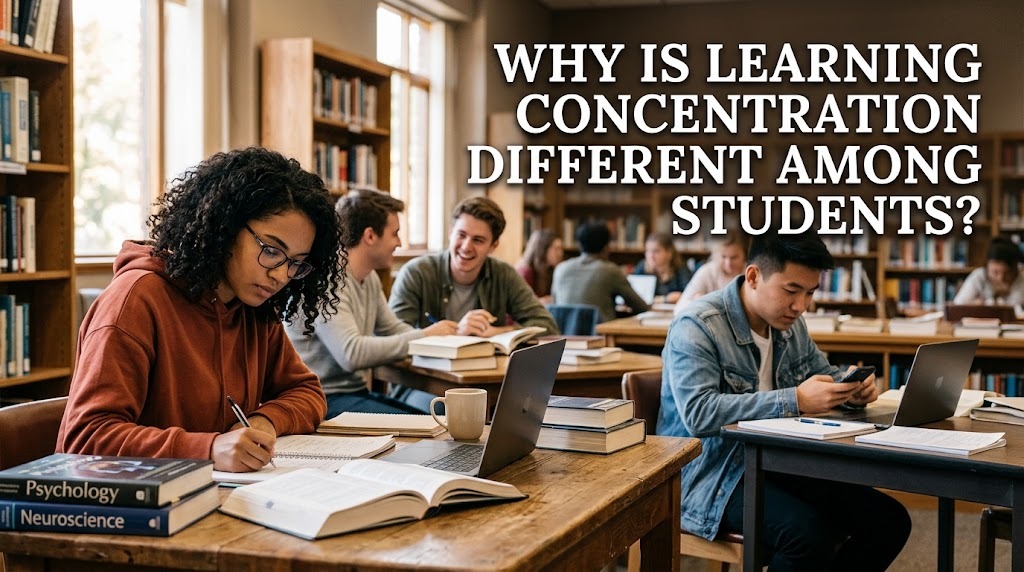
Learning concentration can vary from one student to another. Some students may be able to focus for a longer period on certain activities, while others may need more frequent breaks or different learning methods. These differences are normal because concentration can be influenced by individual conditions, learning preferences, environment, and daily habits.
There is no single level of concentration that applies equally to every student. Factors such as sleep, motivation, physical condition, emotional state, learning environment, and interest in a subject can affect attention. Understanding these differences can help students avoid unnecessary comparisons and focus on developing study habits that suit their own needs.
DIFFERENCES IN LEARNING PREFERENCES
Students may respond differently to various learning activities. One student may concentrate better while reading independently, while another may understand material more effectively through discussion, practice, or visual resources. These differences can influence how easily students maintain learning concentration during particular tasks.
Learning preferences can also change depending on the subject. A student may focus easily during a practical activity but find a long reading assignment more challenging. Using appropriate learning methods can make academic activities more engaging and may help students maintain attention.
SLEEP, ENERGY, AND PHYSICAL CONDITION
Physical condition can influence how students concentrate. Students who are well-rested may feel more prepared for learning, while fatigue can make sustained attention more difficult. Sleep patterns, meals, hydration, and daily activity can all be relevant to a student's overall readiness to learn.
Energy levels can also vary throughout the day. Some students may feel more focused in the morning, while others may find it easier to concentrate later. Recognizing personal patterns can help students create a study schedule that matches periods when they feel more prepared to learn.
MOTIVATION AND INTEREST IN LEARNING
Interest in a subject can affect how willing students are to remain engaged with the material. Students may find it easier to concentrate when they understand why a topic is relevant to their goals or interests. In contrast, material that feels unfamiliar or difficult may require additional effort to maintain study focus.
Motivation can also change over time. Academic goals, personal interests, feedback, and previous learning experiences may influence how students approach a particular subject. Setting clear and realistic learning goals can help provide direction when motivation is lower.
EMOTIONAL CONDITIONS AND LEARNING ENVIRONMENT
Emotions can influence where students direct their attention. Worry, frustration, stress, or other strong emotions may make it harder to focus on academic tasks. A supportive routine and appropriate opportunities to rest can help students manage everyday academic demands.
The learning environment also matters. Noise, interruptions, mobile phones, uncomfortable seating, or an untidy study space can make concentration more difficult. Students can experiment with different environments and identify conditions that help them maintain attention more comfortably.
INDIVIDUAL NEEDS AND DIFFERENT LEARNING CONDITIONS
Every student has different experiences, responsibilities, strengths, and learning needs. Differences in prior knowledge can also affect concentration because familiar material may require less effort than a completely new concept. Students should therefore avoid assuming that another person's study routine will automatically work for them.
Instead, students can observe which factors support or interrupt their own concentration. Self-evaluation can help them identify suitable study times, learning methods, environments, and break patterns. If concentration difficulties consistently interfere with schoolwork or daily activities, students can discuss their concerns with a trusted teacher, parent, counselor, or appropriate professional.
CONCLUSION
Learning concentration is different among students because attention can be influenced by learning preferences, sleep, physical condition, motivation, emotional state, environment, prior knowledge, and individual learning needs. These factors can interact differently for each person, so differences in concentration are not unusual.
Rather than comparing their concentration directly with others, students can focus on understanding their own learning patterns. Suitable study methods, realistic goals, adequate rest, supportive environments, and consistent habits can help students develop concentration in ways that match their individual circumstances.
Recent Posts

Bagaimana Sistem SKS pada Program Kuliah... 22.11.2026/30 View

How Does Technology Make Daily Evaluation... 21.11.2026/65 View

Apa Strategi Menghadapi Kesenjangan antara Kompetensi... 21.11.2026/65 View

Mengapa Inventaris Aset Penting bagi Kelancaran... 21.11.2026/63 View

When Should Musicians Join a Record... 21.11.2026/64 View
