

Why Is Logistics Management Important for Improving Business Efficiency?
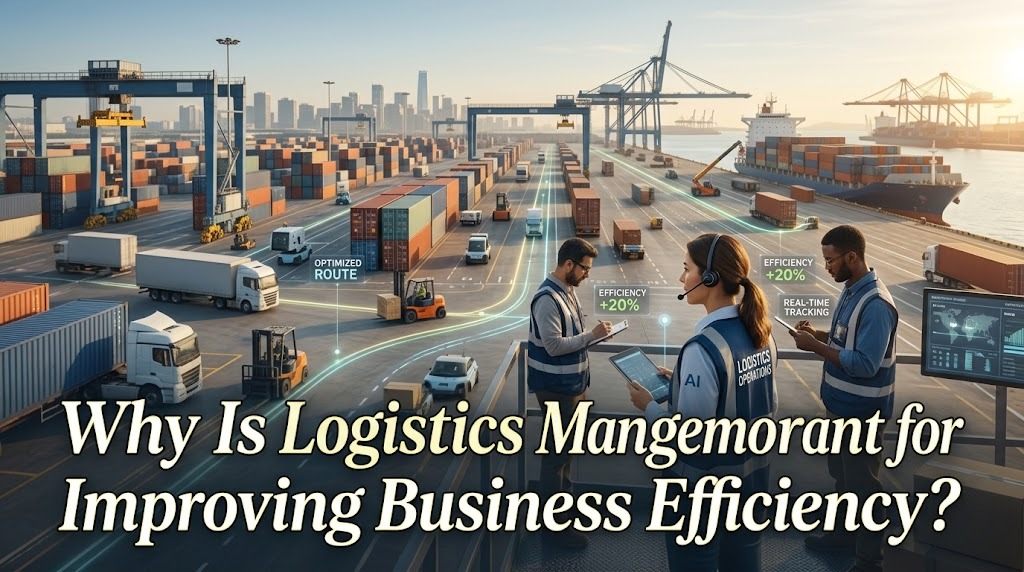
Logistics management is an essential part of modern business operations because it helps companies move products from suppliers to customers efficiently. It involves planning, organizing, and controlling activities such as transportation, warehousing, inventory management, and product distribution. Effective logistics management ensures that goods arrive at the right place, at the right time, and in the right condition. Without a well-organized logistics system, businesses may experience delivery delays, higher operational costs, and dissatisfied customers. Therefore, understanding the importance of logistics management is crucial for companies that want to improve productivity and remain competitive in the market.
UNDERSTANDING LOGISTICS MANAGEMENT
Logistics management refers to the process of planning and controlling the movement and storage of goods, services, and related information. Its main objective is to ensure that products move efficiently from their point of origin to their final destination. This process includes selecting transportation methods, managing warehouse activities, monitoring inventory, and coordinating deliveries. When these activities are organized properly, businesses can reduce unnecessary work and improve operational performance. As a result, logistics management helps companies maintain a smooth and reliable distribution process.
In addition, logistics management requires coordination between different departments, including purchasing, production, warehousing, and customer service. Each department must share accurate information to prevent mistakes and delays. For example, warehouse employees need updated inventory records to prepare customer orders correctly. Meanwhile, transportation teams need clear delivery schedules to ensure that products arrive on time. Good coordination allows businesses to use their resources effectively and achieve better results.
REDUCING OPERATIONAL COSTS
One of the most important benefits of logistics management is its ability to reduce operational costs. Transportation, storage, packaging, and inventory handling can consume a significant portion of a company's budget. By planning delivery routes carefully and selecting suitable transportation services, businesses can reduce fuel consumption and shipping expenses. Companies can also improve warehouse layouts to minimize unnecessary movement and save time. These improvements help businesses control spending without reducing the quality of their services.
Effective logistics management also helps prevent waste and unnecessary inventory expenses. Overstocking can increase storage costs, while insufficient stock may lead to missed sales and delayed orders. By monitoring inventory levels and analyzing customer demand, companies can maintain more appropriate stock quantities. Businesses can also compare supplier performance and negotiate better shipping arrangements. Consequently, cost control through logistics planning can improve profitability and support long-term business growth.
IMPROVING PRODUCTIVITY AND WORKFLOW
Business productivity improves when logistics activities follow clear procedures and schedules. Employees can complete their tasks more quickly when inventory information, order details, and delivery instructions are accurate. Standardized processes also reduce confusion between departments and help prevent repeated work. For instance, a warehouse management system can guide employees in locating products and preparing orders efficiently. This allows businesses to process more orders without unnecessarily increasing their workforce.
Technology can further improve logistics productivity by automating repetitive activities. Barcode scanners, inventory software, and digital tracking systems help employees record product movements with greater accuracy. These tools reduce manual data entry and make it easier to identify errors. Managers can also use performance reports to evaluate delivery times, warehouse efficiency, and employee workloads. With better information and organized workflows, companies can make faster and more informed decisions.
ENHANCING CUSTOMER SATISFACTION
Customer satisfaction is closely connected to the quality and reliability of logistics services. Customers generally expect products to arrive on time, match their orders, and remain in good condition during transportation. Effective logistics management helps businesses meet these expectations by improving order accuracy and delivery planning. Reliable shipping processes also reduce the likelihood of damaged goods, missing items, and unexpected delays. When customers receive their orders as promised, they are more likely to trust the company.
Clear communication is another important factor in providing a positive customer experience. Businesses can use tracking systems to provide updates about order preparation, shipment progress, and estimated delivery times. If a problem occurs, customer service teams can respond quickly and provide accurate information. Companies should also monitor customer complaints to identify weaknesses in their logistics operations. By focusing on reliable delivery and responsive service, businesses can strengthen customer loyalty and encourage repeat purchases.
USING TECHNOLOGY IN MODERN LOGISTICS
Digital technology plays an increasingly important role in improving logistics management. Transportation management systems help companies plan routes, organize shipments, and monitor transportation performance. Warehouse management systems support inventory tracking, order picking, and storage organization. Meanwhile, real-time tracking technologies allow businesses to monitor shipments and identify potential delays. These tools improve visibility across logistics operations and help managers respond to problems more effectively.
Advanced technologies such as artificial intelligence and data analytics can provide additional benefits. Artificial intelligence can help forecast demand, recommend delivery routes, and identify patterns that may affect transportation performance. Data analytics allows businesses to examine historical sales, shipping expenses, and delivery records to make better decisions. However, companies must ensure that their systems are secure, employees receive proper training, and data remains accurate. Choosing suitable technology can help businesses improve efficiency while controlling implementation costs.
BUILDING A COMPETITIVE BUSINESS STRATEGY
Efficient logistics management can become a major source of competitive advantage. Companies that deliver products quickly and reliably may attract more customers than businesses with inconsistent delivery services. Lower logistics costs can also allow companies to offer competitive prices while maintaining reasonable profit margins. In addition, organized distribution systems make it easier for businesses to expand into new markets and serve more customers. These advantages are especially important in industries where delivery speed and product availability influence purchasing decisions.
To achieve these benefits, businesses should regularly evaluate their logistics performance. Useful key performance indicators, or KPIs, include delivery accuracy, order fulfillment time, transportation costs, inventory turnover, and customer satisfaction. Managers can use these measurements to identify problems and set realistic improvement targets. Companies should also review supplier relationships, update operating procedures, and invest in employee development when necessary. Through continuous evaluation and improvement, logistics management can support sustainable growth and strengthen overall business performance.
CONCLUSION
Logistics management is important for improving business efficiency because it helps companies control costs, increase productivity, maintain accurate inventory, and deliver products reliably. Effective coordination between transportation, warehousing, and distribution activities enables businesses to use their resources more efficiently. Technology further supports these efforts by improving tracking, automating routine tasks, and providing useful information for decision-making. Companies that regularly evaluate their logistics performance can identify weaknesses and respond to changing customer needs. Ultimately, efficient logistics management helps businesses improve customer satisfaction, increase competitiveness, and achieve long-term success.
Recent Posts

Bagaimana Sistem SKS pada Program Kuliah... 22.11.2026/60 View

How Does Technology Make Daily Evaluation... 21.11.2026/87 View

Apa Strategi Menghadapi Kesenjangan antara Kompetensi... 21.11.2026/85 View

Mengapa Inventaris Aset Penting bagi Kelancaran... 21.11.2026/83 View

When Should Musicians Join a Record... 21.11.2026/87 View
