

Why Is Maintaining Relationships Important Among Extended Family Members?
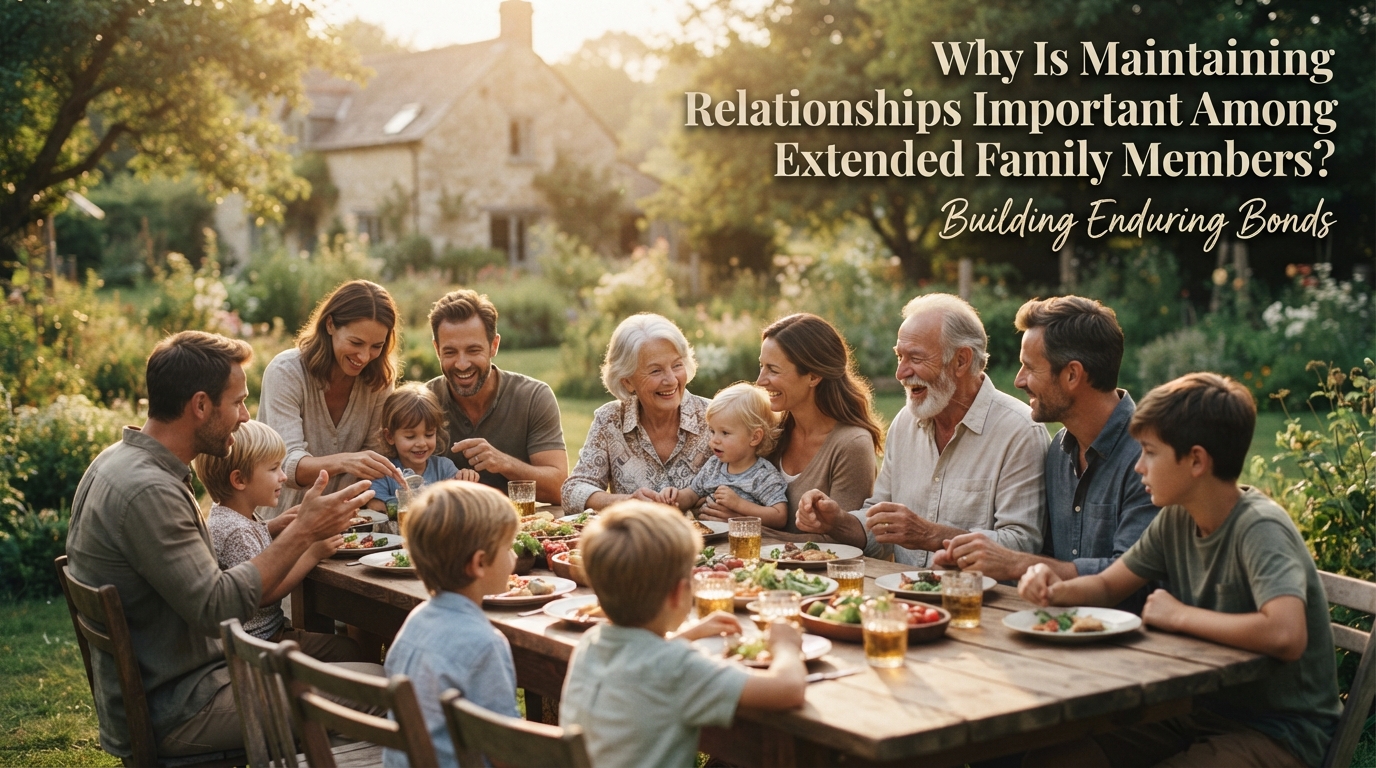
Maintaining relationships among extended family members is important because it strengthens emotional connections, creates a reliable support system, and promotes a sense of belonging. An extended family consists of relatives beyond parents and children, including grandparents, uncles, aunts, cousins, nieces, and nephews. Although family members may live in different homes or cities, maintaining good relationships helps them stay connected and involved in one another's lives.
In modern society, busy schedules, work commitments, education, and geographical distance can make family interactions less frequent. However, strong family relationships should remain a priority because they provide valuable emotional and social benefits. Through regular communication, mutual respect, and shared activities, relatives can maintain meaningful connections despite differences in age, lifestyle, and personal circumstances. Therefore, building and maintaining extended family relationships is essential for creating a supportive and harmonious family environment.
STRENGTHENING EMOTIONAL CONNECTIONS
One important reason to maintain relationships among extended family members is to strengthen emotional connections. Spending time together and communicating regularly helps relatives understand one another's feelings, experiences, and personal situations. These interactions create trust and make family members feel appreciated and accepted. Strong emotional connections can also reduce feelings of loneliness, especially when someone is experiencing difficult circumstances.
For example, grandparents can provide encouragement to younger relatives, while cousins can become close friends who share similar experiences. Family members who maintain regular contact are also more likely to recognize when someone needs attention or support. These meaningful connections help create a warm family environment where individuals feel that they belong.
PROVIDING SUPPORT DURING DIFFICULT TIMES
Extended family relationships are valuable because relatives can become an important source of emotional and practical support. When someone experiences financial difficulties, health problems, work pressure, or personal challenges, other family members may offer assistance and encouragement. Having trusted relatives to talk to can make difficult situations feel more manageable. Their presence can also help individuals feel less isolated when facing unexpected problems.
Support does not always have to involve financial assistance or major actions. Sometimes, listening to someone's concerns, offering useful advice, or visiting a relative can make a meaningful difference. However, assistance should be provided according to each person's abilities and circumstances. A supportive family relationship is built on genuine care rather than unreasonable expectations.
BUILDING TRUST AND MUTUAL RESPECT
Trust and mutual respect are essential foundations of healthy relationships among extended family members. Relatives who communicate honestly and respect one another's opinions can develop stronger connections over time. Trust allows family members to share personal experiences without constantly worrying about being judged or misunderstood. It also encourages individuals to become more comfortable asking for help when necessary.
Respect is equally important because every relative has different personalities, lifestyles, and beliefs. Family members should avoid forcing others to follow their personal preferences or interfering excessively in private matters. By respecting individual differences and maintaining honest communication, relatives can create relationships that remain strong even when disagreements occur.
PRESERVING FAMILY TRADITIONS AND CULTURAL VALUES
Maintaining extended family relationships helps preserve family traditions and cultural values across generations. Older relatives often introduce younger family members to traditional celebrations, family stories, customs, and important cultural practices. These experiences allow children to understand their family background and appreciate the values passed down by previous generations. Regular family interactions make it easier to maintain these traditions.
Family gatherings, holiday celebrations, and shared meals also provide opportunities for relatives to reconnect. Through these activities, younger generations can develop a stronger understanding of their cultural identity. Even when family members live far apart, maintaining communication and participating in important celebrations can help keep traditions alive.
DEVELOPING SOCIAL AND COMMUNICATION SKILLS
Strong relationships among extended family members provide opportunities to develop social and communication skills. Interacting with relatives of different ages and backgrounds teaches individuals how to listen, express opinions, and understand different perspectives. These experiences can help children become more confident when communicating with other people. Adults can also improve their ability to manage relationships and handle disagreements constructively.
Furthermore, family interactions encourage cooperation and empathy. Relatives often need to coordinate activities, discuss shared responsibilities, and make decisions together. Through these experiences, individuals learn how to compromise, respect others, and work toward common goals. These skills are useful not only within the family but also in educational, professional, and community environments.
CREATING A SENSE OF BELONGING AND FAMILY IDENTITY
Maintaining relationships with extended family members helps individuals develop a sense of belonging. Knowing that several relatives care about their well-being can provide emotional security and strengthen personal identity. Family connections also help individuals understand their background, family history, and place within a larger social network. This sense of connection can be especially meaningful during important stages of life.
For younger family members, knowing their relatives can create opportunities to build friendships and learn about different generations. For older relatives, maintaining contact with children and grandchildren can provide companionship and opportunities to share life experiences. These relationships create a shared family identity that can remain meaningful even when relatives live separately.
REDUCING MISUNDERSTANDINGS AND FAMILY CONFLICTS
Regular communication helps prevent misunderstandings among extended family members. When relatives rarely communicate, small problems can develop because of incomplete information, incorrect assumptions, or unexpressed expectations. Maintaining contact makes it easier to discuss concerns before they become serious disagreements. It also helps family members understand changes in one another's circumstances.
When conflicts occur, relatives who have established strong relationships may find it easier to discuss problems respectfully. They can listen to different perspectives, acknowledge mistakes, and work toward reasonable solutions. However, maintaining good relationships does not mean avoiding every disagreement. Instead, it means handling differences with patience, honesty, and consideration for one another.
ENCOURAGING COOPERATION AND SHARED RESPONSIBILITIES
Healthy extended family relationships encourage cooperation and shared responsibilities. Relatives can work together when organizing family events, caring for older family members, supporting children, or handling unexpected situations. Sharing responsibilities helps prevent one individual from carrying every burden alone. It also strengthens the understanding that family members can contribute in different ways.
Cooperation should be based on fairness and each person's abilities. For example, younger relatives may help older family members with technology, while adults may assist children with education or daily needs. These exchanges create opportunities for different generations to support one another. Over time, consistent cooperation can build stronger relationships and a more dependable family network.
MAINTAINING FAMILY CONNECTIONS IN THE DIGITAL ERA
Modern technology makes it easier for extended family members to maintain relationships despite geographical distance. Digital communication through messaging applications, video calls, and social media allows relatives to exchange news and share important moments. These tools are especially useful for family members who live in different cities or countries. Regular online interactions can help maintain emotional connections when face-to-face meetings are not possible.
However, digital communication should complement rather than completely replace personal interactions whenever meeting is practical. Families can arrange occasional visits, reunions, or celebrations to strengthen their relationships. Sharing photographs, discussing daily experiences, and remembering important occasions can also make relatives feel more involved in one another's lives. Using technology thoughtfully helps families remain connected despite busy modern lifestyles.
CONCLUSION
Maintaining relationships among extended family members is important because it strengthens emotional connections, builds trust, and creates a reliable support system. It also helps preserve family traditions, develop communication skills, reduce misunderstandings, and encourage cooperation between generations. These benefits contribute to a stronger sense of belonging and a healthier family environment.
Although distance, busy schedules, and personal differences can make family relationships challenging, consistent communication and mutual respect can help overcome these obstacles. Every family member can contribute by showing appreciation, offering support, and making time for meaningful interactions. Ultimately, strong extended family relationships create lasting connections that benefit individuals, families, and society.
Recent Posts

How Does Technology Make Daily Evaluation... 21.11.2026/57 View

Apa Strategi Menghadapi Kesenjangan antara Kompetensi... 21.11.2026/59 View

Mengapa Inventaris Aset Penting bagi Kelancaran... 21.11.2026/55 View

When Should Musicians Join a Record... 21.11.2026/54 View

Daily Evaluation or Daily Planning Which... 21.11.2026/61 View
