

Why Is Musical Intelligence Important for Personal Development?
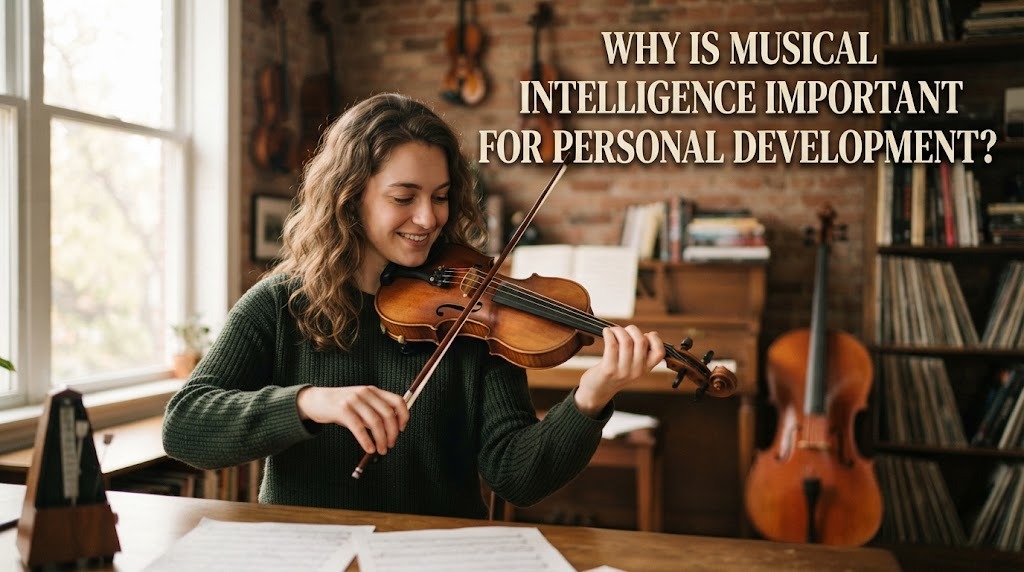
Musical intelligence plays an important role in personal development because it helps people understand sounds, express emotions, explore creativity, and develop new skills. It is not limited to singers, musicians, or composers, as anyone can benefit from engaging with music in everyday life. Learning to recognize rhythms, remember melodies, or play an instrument can encourage patience, concentration, and self-confidence. Music can also provide opportunities to connect with others and discover personal interests. By understanding the role of musical intelligence, individuals can use music as a tool to support their growth, learning, and overall well-being.
WHAT IS MUSICAL INTELLIGENCE?
Musical intelligence is the ability to recognize, understand, create, and respond to musical elements such as rhythm, melody, pitch, and tone. The concept is associated with psychologist Howard Gardner's theory of multiple intelligences, which describes different ways people may process information and demonstrate abilities. People with strong musical intelligence may recognize melodies easily, identify changes in rhythm, or remember songs after hearing them several times. Others may express this ability through singing, playing instruments, composing music, or appreciating different musical styles. Musical intelligence can develop through practice, exposure, and opportunities to explore music.
Musical intelligence is also relevant to people who do not have formal musical training. Someone who uses music to express emotions, recognizes patterns in songs, or enjoys creating simple rhythms can engage in musical thinking. These activities encourage people to listen carefully and pay attention to details. Over time, musical experiences may help individuals discover interests and abilities they did not previously recognize. Therefore, musical intelligence can be part of personal development at different ages and stages of life.
IMPROVES SELF-AWARENESS AND EMOTIONAL UNDERSTANDING
Self-awareness is an important part of personal development because it helps people recognize their emotions, preferences, strengths, and challenges. Music can support this process by giving individuals opportunities to explore how different sounds and melodies affect their feelings. For example, someone may notice that calm music helps them relax, while energetic songs make them feel more motivated. Recognizing these responses can help people understand their emotional preferences and choose suitable ways to manage everyday experiences. However, individual reactions to music vary, so the same song may affect different people in different ways.
Musical activities can also provide a way to express emotions that are difficult to communicate verbally. Writing lyrics, playing an instrument, or singing a meaningful song can help people reflect on their experiences. These activities may encourage them to explore feelings such as happiness, sadness, hope, or frustration in a constructive way. Developing emotional awareness through music does not mean that every emotion can be solved through a song. Instead, music can become one useful part of a broader approach to emotional well-being and self-understanding.
BUILDS SELF-CONFIDENCE AND PERSONAL IDENTITY
Musical intelligence can support self-confidence by giving individuals opportunities to learn new skills and recognize their progress. A beginner who learns to sing a song or play a simple melody may feel proud of achieving a goal that once seemed difficult. Performing in front of others can also provide opportunities to practice communicating and managing nervousness. These experiences may gradually help people feel more comfortable sharing their abilities. Confidence develops differently for everyone, and people do not need to perform publicly to benefit from musical activities.
Music can also help individuals explore their personal identity. Musical preferences often reflect interests, experiences, cultural backgrounds, and personal values. Creating a playlist, learning traditional songs, or writing original music can help people express aspects of who they are. Through these experiences, individuals may discover new interests or develop a stronger appreciation for their backgrounds. Musical expression can therefore provide a meaningful way to explore identity while respecting the different tastes and experiences of others.
DEVELOPS DISCIPLINE AND PATIENCE
Personal development often requires consistent effort, realistic goals, and the ability to continue learning when progress is slow. Learning music provides practical opportunities to develop these habits. For example, mastering a new instrument may require repeated practice, careful listening, and correction of mistakes. Learners often need to break difficult pieces into smaller sections before combining them into a complete performance. This process demonstrates how gradual effort can lead to improvement.
Regular musical practice can also encourage better time management. Someone who wants to learn an instrument may set aside a short period each day to practice specific techniques. By tracking progress and adjusting their goals, learners can become more aware of how they use their time. These habits may be useful in education, work, and other personal goals, although discipline developed through music does not automatically transfer to every situation. The value lies in practicing consistency, patience, and a willingness to improve.
ENHANCES CREATIVITY AND PROBLEM-SOLVING SKILLS
Creativity is an important aspect of personal development because it allows people to explore possibilities and develop new ideas. Musical intelligence encourages creativity through activities such as composing melodies, experimenting with rhythms, improvising, and combining different sounds. These activities allow individuals to make choices, test ideas, and discover different ways to express themselves. There is no single correct approach to every creative task, which gives learners room to experiment. Such experiences can make creative exploration more enjoyable and accessible.
Musical activities can also involve practical problem-solving. A person learning an instrument may need to identify why a passage sounds incorrect, adjust their timing, or find a more comfortable fingering technique. They must observe the problem, consider possible solutions, and test different approaches. These experiences provide practice in analyzing challenges and responding constructively to mistakes. Although musical practice does not guarantee better problem-solving in every area, it can create useful opportunities to develop flexible thinking and persistence.
SUPPORTS LEARNING AND MEMORY DEVELOPMENT
Musical intelligence can contribute to personal development by encouraging people to recognize patterns, remember sequences, and process auditory information. When learning a song, individuals often need to remember lyrics, melodies, rhythms, and the order of different sections. Repeated practice can strengthen their familiarity with these musical patterns. Songs can also serve as memory aids when learning certain types of information, such as vocabulary, basic facts, or ordered sequences. This approach is particularly useful when the melody and rhythm help organize the material.
Music may also make learning more engaging for some people. Students can use educational songs, rhythmic repetition, or musical examples to explore subjects in a different way. Learning an instrument requires attention and the coordination of several activities, including listening, reading notes, and controlling movements. These tasks can provide practice in specific cognitive skills, but musical training does not automatically improve every type of memory or guarantee higher academic achievement. For the best results, music should complement other learning methods, such as active recall, regular review, and adequate rest.
STRENGTHENS SOCIAL SKILLS AND COMMUNICATION
Personal development involves learning how to interact with others, cooperate, and communicate effectively. Group musical activities, such as singing in a choir, joining a band, or participating in community performances, create opportunities to practice these skills. Participants need to listen to one another, follow shared timing, and adjust their contributions to support the group. These activities can encourage cooperation, mutual respect, and a sense of belonging. They also allow individuals to meet people who share similar interests.
Music can provide a shared form of expression across different ages and backgrounds. People may connect through familiar songs, cultural traditions, or musical performances even when they have different experiences. Participating in music together can create opportunities for conversation and shared memories. However, musical activities do not replace the need to communicate clearly or respect other people's boundaries. Instead, they can complement everyday interactions and help individuals develop positive social experiences.
HELPS MANAGE STRESS AND SUPPORT EMOTIONAL WELL-BEING
Managing stress is an important part of personal development because daily responsibilities can affect mood, motivation, and concentration. Music can provide an enjoyable break from demanding activities and help some people feel calmer. For example, listening to familiar, relaxing music after studying or working may create an opportunity to unwind. Singing, playing an instrument, or moving to music can also offer a constructive way to release tension and redirect attention. The effects depend on the individual, the type of music, and the situation.
Developing musical intelligence may help people become more intentional about how they use music in their routines. Someone might choose gentle instrumental music during relaxation or energetic songs before physical activity. Others may prefer silence when they need to concentrate, which is equally valid. Music should be viewed as one possible stress-management strategy rather than a complete solution to persistent emotional difficulties. When stress significantly affects daily functioning, additional support from qualified professionals may be necessary.
ENCOURAGES LIFELONG LEARNING AND PERSONAL GROWTH
Personal development is an ongoing process that continues beyond school or formal education. Musical intelligence can encourage lifelong learning by introducing people to new skills, genres, instruments, and cultural traditions. Adults can begin learning an instrument, join a singing group, or explore music production even if they have never received formal training. These activities provide opportunities to set goals, challenge existing habits, and discover new interests. Learning something unfamiliar can also make daily life more engaging.
Music offers many ways to measure progress without requiring professional achievement. A person might learn a new song, improve their rhythm, understand a different musical style, or become more comfortable performing with others. Each small accomplishment can encourage further exploration. Musical activities can also adapt to different ages, abilities, schedules, and budgets. By remaining curious and open to learning, individuals can use music as an ongoing part of their personal growth.
HOW TO DEVELOP MUSICAL INTELLIGENCE FOR PERSONAL DEVELOPMENT
Developing musical intelligence can begin with simple activities that fit naturally into daily life. Listening to different genres and identifying their rhythms, instruments, and melodies can improve musical awareness. Singing familiar songs, clapping to a beat, or learning basic music theory can also help people understand how music works. Those interested in playing an instrument can start with beginner lessons or accessible online learning resources. Practicing regularly for short periods can be more manageable than attempting long sessions without a consistent routine.
It is also helpful to connect musical activities with personal goals. Someone who wants to improve confidence may practice singing privately before joining a group, while a person interested in creativity may experiment with songwriting or simple music production. Keeping track of progress can help learners recognize improvements and identify areas that need more practice. Comparing personal progress with other people's achievements is often less useful than focusing on individual goals and interests. Most importantly, musical development should remain an enjoyable learning experience rather than a source of unnecessary pressure.
CONCLUSION
Musical intelligence is important for personal development because it provides opportunities to build self-awareness, confidence, creativity, discipline, learning skills, and social connections. It can also support emotional well-being and encourage people to continue discovering new interests throughout life. These benefits do not require professional musical ability, as simple activities such as listening carefully, singing, dancing, or learning an instrument can offer meaningful experiences. However, the effects of music differ between individuals, and musical intelligence is only one of many ways to support personal growth. By exploring music consistently and choosing activities that match their interests, people can develop useful skills while making everyday life more enjoyable.
Recent Posts

Bagaimana Sistem SKS pada Program Kuliah... 22.11.2026/27 View

How Does Technology Make Daily Evaluation... 21.11.2026/65 View

Apa Strategi Menghadapi Kesenjangan antara Kompetensi... 21.11.2026/65 View

Mengapa Inventaris Aset Penting bagi Kelancaran... 21.11.2026/62 View

When Should Musicians Join a Record... 21.11.2026/63 View
