

Why Is Natural Selection Important in Human Evolution?
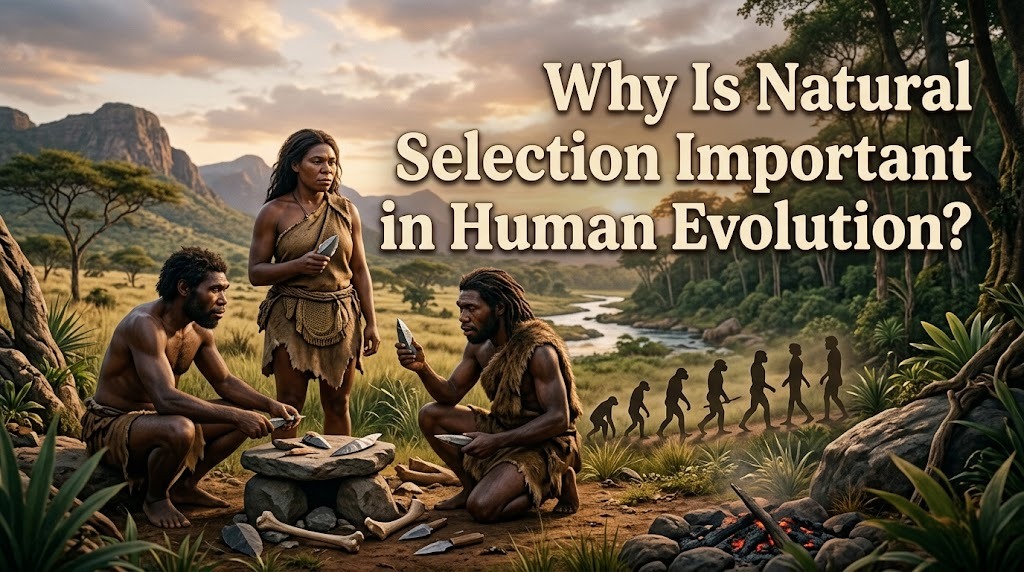
Natural selection is one of the most important processes in human evolution because it helps explain how inherited physical and biological characteristics change across generations. Throughout human history, our ancestors faced different environmental conditions, food sources, diseases, and survival challenges. Individuals with certain inherited traits were sometimes more likely to survive and reproduce, allowing those traits to become more common in later generations. Over millions of years, this process contributed to the development of many characteristics found in modern humans. Understanding natural selection helps explain how humans adapted to different environments and why physical and genetic differences exist among human populations.
WHAT IS NATURAL SELECTION IN HUMAN EVOLUTION
Natural selection is an evolutionary process in which inherited characteristics that improve survival or reproductive success in a particular environment may become more common over generations. It depends on genetic variation within a population, meaning that individuals can inherit different versions of genes. Some variations provide advantages under specific conditions, while others may have little effect or become disadvantages when environments change. Individuals do not develop useful genetic traits simply because they need them; instead, natural selection acts on existing inherited variation and can also act on new mutations. Over many generations, these processes can change the characteristics of a population.
In human evolution, natural selection contributed to changes in body structure, skin pigmentation, disease resistance, and the ability to digest certain foods. However, not every human characteristic evolved through natural selection alone. Genetic drift, migration, mutation, and other evolutionary processes also influenced human populations. Natural selection is important because it explains how environmental conditions can influence which inherited traits become more common. It also demonstrates that human evolution is a gradual process shaped by the interaction between biology and the environment.
HOW NATURAL SELECTION HELPED HUMANS ADAPT TO DIFFERENT ENVIRONMENTS
Early humans lived in a variety of environments, including tropical forests, grasslands, and colder regions. Each environment presented different challenges related to temperature, food availability, sunlight, and disease. Natural selection sometimes favored inherited characteristics that helped individuals cope with these conditions. For example, body proportions can influence how efficiently the body retains or releases heat. Over many generations, such differences can contribute to physical variation among populations living in different climates.
Skin pigmentation is another example of human adaptation. Melanin helps protect the skin against ultraviolet radiation, making darker pigmentation beneficial in regions with consistently high ultraviolet exposure. In areas with lower ultraviolet radiation, lighter pigmentation evolved in some populations and can help support vitamin D production. These adaptations developed over many generations and were influenced by factors such as migration and diet. They illustrate how natural selection can shape human physical characteristics without making one population inherently superior to another.
THE ROLE OF NATURAL SELECTION IN BRAIN AND BODY DEVELOPMENT
Natural selection contributed to the evolution of human anatomy, including changes in the skeleton, brain, and body proportions. Early members of the human evolutionary lineage developed adaptations for walking upright, which involved changes to the pelvis, spine, legs, and feet. These characteristics helped support efficient movement on two legs and became important features of human evolution. Other evolutionary changes affected the skull, teeth, and jaw as human diets and behaviors changed. These developments occurred over long periods and involved multiple interacting factors.
Human brain evolution was also influenced by a combination of biological and environmental pressures. Changes in social relationships, food acquisition, learning, and problem-solving may have contributed to the conditions under which different cognitive abilities evolved. However, natural selection did not act alone, and scientists continue to investigate how these factors interacted. Larger brain size does not automatically mean greater intelligence, and brain development cannot be explained by a single evolutionary cause. Natural selection provides an important framework for understanding these changes, but it is only one part of the broader history of human evolution.
HOW NATURAL SELECTION INFLUENCED DISEASE RESISTANCE
Disease has influenced human evolution by creating survival and reproductive challenges for populations. Individuals with certain inherited genetic variations may have had greater resistance to particular infections, allowing those variations to become more common over generations. One example involves sickle cell trait, which can provide some protection against severe malaria in people who carry one copy of the relevant genetic variant. However, inheriting two copies can cause sickle cell disease, illustrating that a genetic variation can have both benefits and serious costs. This situation demonstrates how natural selection can maintain a genetic variant when its effects depend on the combination of inherited copies and the surrounding environment.
Natural selection has also influenced other genetic characteristics associated with infectious diseases. The effects of particular variants depend on the diseases present, population history, and other genetic factors. Importantly, a trait that provides an advantage in one environment may offer little benefit in another. As environments and disease patterns change, the selective pressures affecting human populations can also change. These examples show that natural selection can produce complex outcomes rather than always favoring a single universally beneficial characteristic.
THE CONNECTION BETWEEN NATURAL SELECTION AND HUMAN DIET
Changes in human diets created new conditions that influenced biological evolution. As human populations developed different ways of obtaining, preparing, and consuming food, certain inherited traits became more advantageous in particular circumstances. Lactase persistence is a well-known example of this process. Most humans naturally experience a decline in lactase production after childhood, but some populations developed genetic variants that allow them to digest lactose into adulthood. These variants became common in several populations with long histories of dairy farming and milk consumption.
This example demonstrates how cultural practices can influence natural selection. Keeping livestock and consuming milk created conditions in which adults who could digest lactose often gained an additional source of nutrition. Over generations, the relevant genetic variants increased in frequency in some populations. However, lactose digestion is not necessary for a healthy diet, and many adults worldwide naturally produce less lactase while remaining healthy. Human dietary adaptations therefore reflect different histories and environments rather than a single ideal biological pattern.
WHY NATURAL SELECTION DOES NOT MAKE HUMANS PERFECT
Although natural selection can favor beneficial inherited traits, it does not produce perfect organisms. Evolution works with existing genetic variation and is influenced by environmental conditions, historical circumstances, and biological trade-offs. A characteristic that improves survival may also create disadvantages in other situations. For example, some genetic variants that provide protection against malaria can cause serious health problems when inherited in particular combinations. This demonstrates that evolutionary advantages often depend on specific circumstances.
Natural selection also does not guarantee that every harmful trait will disappear. Some genetic variants have little effect on reproductive success, while others can persist through genetic drift or because their effects vary between environments. In addition, modern medicine, technology, and social support have changed many of the conditions affecting human survival and reproduction. These factors do not stop evolution, but they can influence how selection operates. Understanding these limitations helps explain why human evolution is a complex process rather than a simple progression toward perfection.
WHY NATURAL SELECTION REMAINS IMPORTANT TODAY
Natural selection remains relevant because human populations continue to experience genetic changes across generations. Inherited traits can still influence how individuals respond to environmental conditions, infectious diseases, and other biological challenges. However, evolutionary changes generally occur across generations rather than through deliberate physical transformations during an individual's lifetime. Human populations also continue to exchange genes through migration and reproduction, contributing to genetic diversity. These processes make human evolution an ongoing biological phenomenon.
Modern technology and medicine have changed many environmental pressures, but they have not eliminated all differences in survival and reproduction. Researchers study human genetic variation to understand adaptation, population history, and the biological effects of environmental changes. Such research can also help explain why certain genetic variants are more common in some populations than others. Nevertheless, human characteristics are influenced by genetics, development, culture, and individual circumstances. Natural selection remains essential to evolutionary science because it helps explain how inherited biological traits change in response to changing conditions.
CONCLUSION
Natural selection is important in human evolution because it explains how inherited characteristics can become more or less common as populations adapt to different environments. It contributed to changes in skin pigmentation, body structure, disease resistance, dietary adaptations, and other aspects of human biology. However, human evolution also involves mutation, genetic drift, migration, and other processes that influence genetic diversity. Natural selection does not create perfect organisms or make one human population superior to another. Instead, it helps scientists understand how humans developed diverse characteristics while sharing a common evolutionary history.
Recent Posts

Bagaimana Sistem SKS pada Program Kuliah... 22.11.2026/51 View

How Does Technology Make Daily Evaluation... 21.11.2026/81 View

Apa Strategi Menghadapi Kesenjangan antara Kompetensi... 21.11.2026/81 View

Mengapa Inventaris Aset Penting bagi Kelancaran... 21.11.2026/77 View

When Should Musicians Join a Record... 21.11.2026/82 View
