

Why Is Nonverbal Communication Important in Job Interviews?
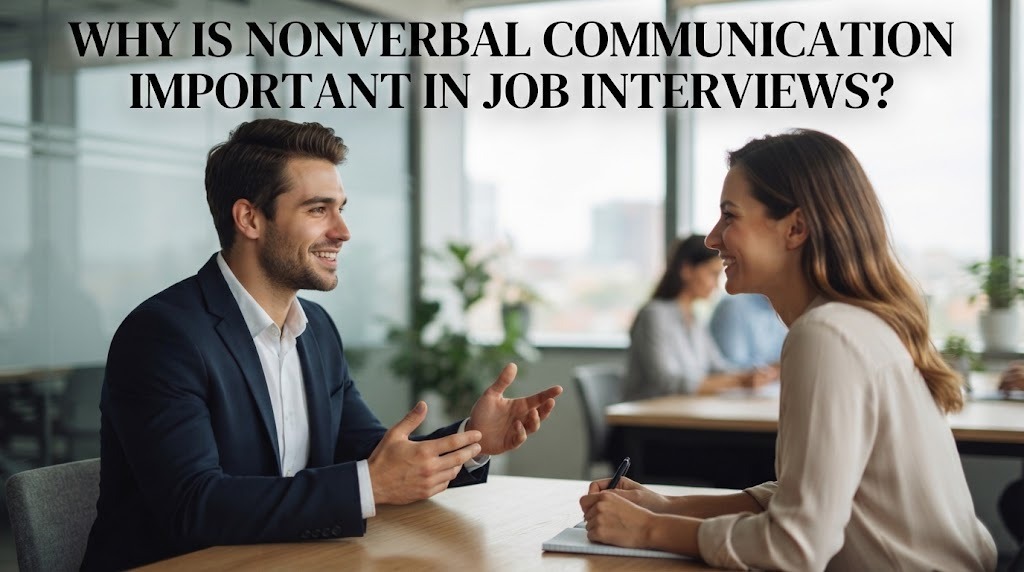
Nonverbal communication is an important part of a job interview because it can influence how candidates are perceived by interviewers. Communication is not only about the words a person uses but also about facial expressions, eye contact, posture, gestures, and tone of voice. These signals can show confidence, professionalism, interest, and respect during an interview. Even when a candidate gives a strong verbal answer, inappropriate nonverbal communication may create a different impression.
Job interviews require candidates to present themselves clearly and professionally. Understanding nonverbal communication can help candidates appear more confident and comfortable while interacting with interviewers. When verbal and nonverbal messages support each other, candidates can create a stronger and more positive impression.
SHOWS CONFIDENCE AND PROFESSIONALISM
Nonverbal communication can show whether a candidate feels confident during a job interview. Sitting with an upright but relaxed posture, maintaining appropriate eye contact, and using natural facial expressions can create an impression of confidence. Candidates do not need to appear extremely serious or overly formal, but they should demonstrate that they are comfortable communicating in a professional environment.
Professionalism can also be reflected through simple behaviors. Arriving prepared, greeting the interviewer politely, listening attentively, and maintaining appropriate body language can show that the candidate takes the interview seriously. These small signals may support the candidate's qualifications and make the overall interaction more positive.
CREATES A POSITIVE FIRST IMPRESSION
First impressions are important because interviewers begin forming an impression of a candidate from the moment the interview starts. A polite greeting, natural smile, confident posture, and appropriate eye contact can help create a positive first impression. These behaviors can make the candidate appear friendly, prepared, and interested in the opportunity.
However, candidates should avoid trying too hard to create a perfect impression. Forced smiles, excessive gestures, or an overly stiff posture may look unnatural. The best approach is to remain calm and allow nonverbal communication to appear naturally while maintaining professional behavior.
SHOWS INTEREST AND ATTENTION
Nonverbal communication can demonstrate whether a candidate is actively listening to the interviewer. Looking at the interviewer while they are speaking, maintaining an attentive facial expression, and responding appropriately can show interest and engagement. These signals are especially important when the interviewer explains the company, job responsibilities, or questions in detail.
Good listening behavior can also make the conversation feel more natural. Candidates who constantly look away, appear distracted, or show little reaction may unintentionally give the impression that they are not interested. By using appropriate nonverbal signals, candidates can show that they value the conversation and are paying attention to important information.
SUPPORTS VERBAL ANSWERS
Nonverbal communication works together with spoken answers during an interview. A candidate may explain their skills confidently, but their posture, facial expressions, and tone of voice can either support or weaken that message. For example, speaking clearly while maintaining a calm posture can make an answer sound more convincing and professional.
Consistency between verbal and nonverbal communication is important. If a candidate says they are excited about a position but uses a flat tone and appears uninterested, the interviewer may receive mixed signals. Therefore, candidates should make sure that their expressions, gestures, and tone generally match the meaning of their words.
BUILDS TRUST AND CONNECTION
Appropriate nonverbal communication can help create trust and connection between candidates and interviewers. Natural eye contact, respectful facial expressions, and attentive listening can make an interaction feel more open and comfortable. These behaviors can help the interviewer understand the candidate's personality beyond their written application or résumé.
Building a good connection does not mean becoming overly casual. Candidates should still respect professional boundaries and the formal nature of the interview. A balanced combination of friendliness, confidence, and professionalism can help create a comfortable communication environment.
HOW TO USE NONVERBAL COMMUNICATION EFFECTIVELY
Candidates can improve their nonverbal communication by practicing before the interview. They can practice answering common questions while paying attention to their posture, facial expressions, gestures, and tone of voice. Recording a practice session can also help candidates notice habits such as avoiding eye contact, moving too much, or speaking too quietly.
During the actual interview, candidates should focus on being calm, attentive, natural, and professional. They should maintain appropriate eye contact, sit comfortably, listen carefully, and use gestures only when they support the explanation. Instead of trying to control every movement, candidates should focus on communicating their ideas clearly and showing genuine interest in the position.
CONCLUSION
Nonverbal communication is important in job interviews because it can show confidence, create a positive first impression, demonstrate attention, support verbal answers, and build trust. Good nonverbal communication does not replace skills or qualifications, but it can strengthen the way candidates present themselves. By practicing appropriate body language and maintaining natural expressions, candidates can communicate more effectively during interviews.
Recent Posts

Bagaimana Sistem SKS pada Program Kuliah... 22.11.2026/40 View

How Does Technology Make Daily Evaluation... 21.11.2026/71 View

Apa Strategi Menghadapi Kesenjangan antara Kompetensi... 21.11.2026/73 View

Mengapa Inventaris Aset Penting bagi Kelancaran... 21.11.2026/69 View

When Should Musicians Join a Record... 21.11.2026/73 View
