

Why Is Numeracy Literacy Important for Young People?
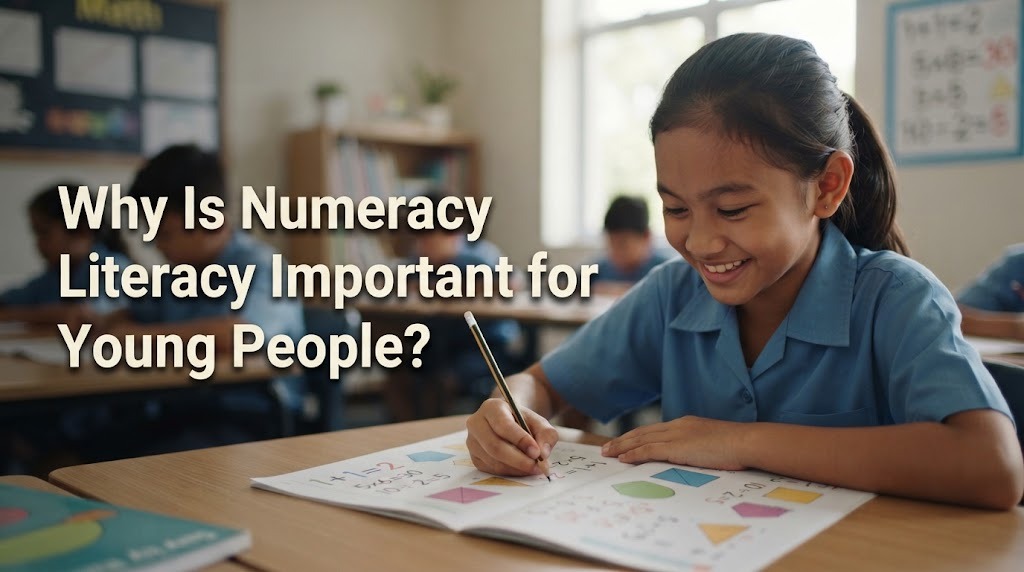
Numeracy literacy is an essential skill that helps young people understand numbers, interpret information, and make smart decisions in everyday life. In today's world, numerical information appears everywhere, from shopping and managing money to understanding technology and social issues. Young people need more than basic mathematical knowledge to face these situations confidently. They must also learn how to apply numbers, analyze data, and solve problems logically.
Developing numeracy literacy from an early age can support academic achievement, financial independence, and future career opportunities. It also encourages young people to become more critical, responsible, and confident when dealing with information. Therefore, numeracy literacy is an important foundation for personal growth and lifelong learning.
WHAT IS NUMERACY LITERACY?
Numeracy literacy is the ability to understand and use mathematical knowledge in different situations. It includes counting, calculating, measuring, recognizing patterns, and interpreting numerical information. However, numeracy literacy is not limited to solving mathematical exercises in school. It also involves applying mathematical thinking to real-life problems and making decisions based on accurate information.
For example, young people use numeracy literacy when comparing product prices, calculating travel expenses, reading statistics, or managing their savings. These activities require them to understand numbers and determine the most appropriate action. Strong numeracy skills help them become more independent and practical in handling daily responsibilities. This ability is increasingly important because modern life involves more information and data than ever before.
WHY IS NUMERACY LITERACY IMPORTANT FOR YOUNG PEOPLE?
Numeracy literacy is important because it helps young people develop logical thinking and practical problem-solving skills. When they understand numbers, they can analyze situations, compare different options, and make decisions more carefully. These abilities are useful not only in mathematics but also in science, economics, technology, and other subjects. Students with good numeracy skills can understand lessons more effectively and apply their knowledge beyond the classroom.
Numeracy literacy also prepares young people to become responsible individuals in society. They need to understand numerical information when making financial decisions, evaluating online information, or planning their future. Without sufficient numerical understanding, they may find it difficult to recognize misleading statistics or calculate important expenses. Therefore, numeracy literacy supports both educational development and everyday independence.
HOW DOES NUMERACY LITERACY IMPROVE CRITICAL THINKING?
Numeracy literacy improves critical thinking by teaching young people to examine information before reaching conclusions. They learn how to identify important details, recognize patterns, compare evidence, and evaluate possible solutions. For example, when reading a survey or statistical report, they can examine the numbers instead of accepting the information immediately. This encourages them to become more careful and analytical thinkers.
Furthermore, mathematical problem-solving trains young people to approach challenges systematically. They learn to understand a problem, select relevant information, and determine the most suitable method to solve it. These habits can be applied to academic assignments, personal decisions, and social situations. As a result, numeracy literacy helps young people develop stronger reasoning abilities and greater confidence in their decisions.
HOW DOES NUMERACY LITERACY HELP YOUNG PEOPLE MANAGE MONEY?
Financial management is one of the most practical benefits of numeracy literacy. Young people need numerical skills to create budgets, calculate expenses, compare prices, and understand savings. By learning how to manage money, they can distinguish between needs and wants and avoid unnecessary spending. These abilities help them develop responsible financial habits from an early age.
Numeracy literacy also helps young people understand percentages, discounts, interest rates, and basic financial risks. For example, they can compare the total cost of different products or calculate how much money they need to save for a particular goal. Understanding these concepts can reduce the risk of poor financial decisions. Therefore, numeracy literacy supports financial independence and prepares young people for adult responsibilities.
WHAT ROLE DOES NUMERACY LITERACY PLAY IN EDUCATION?
Numeracy literacy supports academic achievement because mathematical understanding is connected to many school subjects. Students use numerical skills when interpreting scientific measurements, understanding statistical information, analyzing research, and solving practical assignments. These abilities make it easier for them to connect different concepts and understand lessons more deeply. Numeracy literacy also encourages active participation in classroom activities.
Teachers can strengthen numeracy literacy through practical exercises, group discussions, educational games, and real-life examples. For instance, students can collect classroom data, create graphs, and explain the results to their classmates. Such activities make learning more engaging and help students understand the purpose of mathematical knowledge. With consistent practice, young people can improve their academic confidence and learning outcomes.
HOW DOES NUMERACY LITERACY PREPARE YOUNG PEOPLE FOR FUTURE CAREERS?
Numeracy literacy is valuable for future careers because many professions require numerical reasoning and data interpretation. Business professionals use numbers to manage budgets, engineers calculate measurements, and healthcare workers interpret medical data. Even careers that do not focus directly on mathematics often require employees to understand reports, compare information, and make decisions accurately. Strong numeracy skills can therefore support professional development.
In addition, modern workplaces increasingly use digital technology and data-based systems. Young people who understand numbers can adapt more easily to tasks involving spreadsheets, statistics, financial information, and digital applications. These abilities can also support further education and professional training. By developing numeracy literacy early, young people can build a stronger foundation for their future career goals.
HOW CAN YOUNG PEOPLE DEVELOP NUMERACY LITERACY?
Young people can develop numeracy literacy by practicing mathematical thinking in everyday activities. Simple habits such as calculating shopping expenses, planning a budget, measuring ingredients, and reading charts can improve their numerical understanding. They can also practice solving problems without immediately relying on calculators. These activities help them become more familiar with numbers and understand how mathematics works in real situations.
Schools and families also play an important role in supporting this development. Teachers can provide interactive learning experiences, while parents can encourage children to use numbers during daily activities. Educational applications and online learning resources can offer additional opportunities for practice. With regular learning and positive support, young people can gradually build stronger numeracy skills and become more confident in using them.
CONCLUSION
Numeracy literacy is important for young people because it strengthens critical thinking, improves academic performance, supports financial management, and prepares them for future careers. It enables them to understand numerical information, solve everyday problems, and make responsible decisions. These skills are essential in a world where information, technology, and data continue to influence daily life.
Developing numeracy literacy requires consistent practice and support from schools, families, and communities. By learning to apply mathematics in practical situations, young people can become more independent, confident, and prepared for future challenges. Ultimately, numeracy literacy is not just about understanding numbers but also about building essential skills for lifelong success.
Recent Posts

Bagaimana Sistem SKS pada Program Kuliah... 22.11.2026/31 View

How Does Technology Make Daily Evaluation... 21.11.2026/67 View

Apa Strategi Menghadapi Kesenjangan antara Kompetensi... 21.11.2026/66 View

Mengapa Inventaris Aset Penting bagi Kelancaran... 21.11.2026/64 View

When Should Musicians Join a Record... 21.11.2026/65 View
