

Why Is Operational Performance Evaluation Important for Companies?
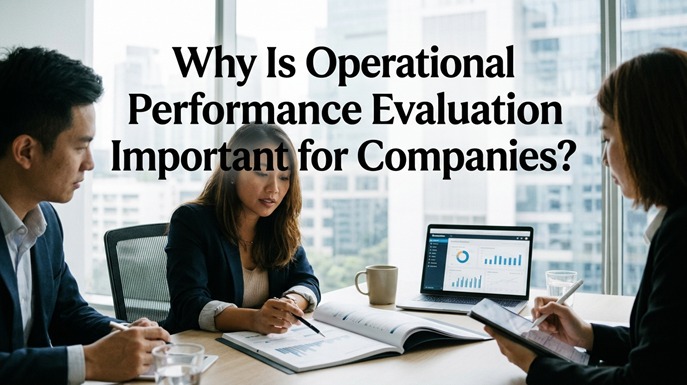
Operational performance evaluation is an essential process that helps companies understand how effectively their daily business activities are being managed. It involves reviewing different aspects of operations, such as employee productivity, production efficiency, product quality, resource utilization, and operating costs. Through regular evaluation, businesses can identify whether their activities are meeting established targets and supporting overall company objectives.
In an increasingly competitive business environment, companies cannot rely only on sales growth or financial results to measure success. They also need to understand how well their internal processes are performing. Operational performance evaluation provides valuable information that helps managers identify problems, improve workflows, and make better business decisions. By monitoring operational results consistently, organizations can increase efficiency, reduce unnecessary expenses, and achieve sustainable growth.
1. IDENTIFYING OPERATIONAL STRENGTHS AND WEAKNESSES
One of the main reasons operational performance evaluation is important is that it helps companies understand which business activities are working effectively and which require improvement. Every organization has different operational processes, and some may perform better than others. By reviewing these activities, managers can identify strengths that should be maintained and weaknesses that need immediate attention. This makes it easier to determine which areas deserve additional resources or management support.
For example, a manufacturing company may discover that its production department operates efficiently, but its packaging process frequently causes delays. This information allows managers to focus on improving the packaging workflow instead of changing processes that already perform well. As a result, businesses can make more targeted improvements and use their resources more effectively.
2. IMPROVING EMPLOYEE PRODUCTIVITY
Employee productivity has a significant influence on the overall performance of business operations. Evaluating operational activities helps managers understand how effectively employees complete their responsibilities and whether workloads are distributed appropriately. It can also reveal problems such as unclear job descriptions, insufficient training, inefficient schedules, or a lack of necessary equipment. Addressing these issues can create a more productive working environment.
For instance, a company may evaluate how long employees need to complete specific tasks and compare the results with established targets. Managers can then provide additional training or improve work procedures when necessary. However, employee performance should be assessed fairly by considering work quality, available resources, and job responsibilities rather than focusing only on speed.
3. REDUCING OPERATIONAL COSTS
Operational performance evaluation helps companies identify unnecessary expenses and opportunities to manage their budgets more effectively. Business activities often involve costs related to labor, materials, transportation, equipment, energy, and inventory storage. Without regular monitoring, inefficient processes may increase these expenses and reduce company profitability. Evaluating operational costs allows managers to understand where financial resources are being used and whether they provide sufficient value.
For example, a business may discover that excessive material waste is increasing its production expenses. By improving material handling procedures and monitoring resource usage, the company can reduce unnecessary spending. Cost control through regular evaluation helps organizations maintain financial stability without sacrificing product quality or customer service.
4. MAINTAINING PRODUCT AND SERVICE QUALITY
Product and service quality directly influence customer satisfaction and a company's reputation. Operational performance evaluation helps businesses determine whether their production and service processes consistently meet established quality standards. It also makes it easier to identify recurring defects, service errors, and other problems that may affect customers. Without proper evaluation, these issues can remain unnoticed and become more expensive to resolve.
Businesses can use quality inspections, customer feedback, and defect reports to measure performance. For example, a food manufacturer can evaluate product consistency, packaging conditions, and food safety procedures. By identifying quality problems early, companies can take corrective action, reduce product defects, and maintain customer confidence.
5. SUPPORTING BETTER BUSINESS DECISION-MAKING
Managers need accurate information to make effective decisions about business operations. Performance evaluation provides measurable data about productivity, costs, quality, delivery times, and resource utilization. This information helps decision-makers understand current conditions instead of relying entirely on assumptions or personal opinions. It also allows companies to compare actual results with business objectives.
For example, if operational data shows that a particular production process consistently takes longer than expected, managers can investigate the cause and decide whether additional equipment, employee training, or workflow changes are necessary. These decisions become more reliable when supported by accurate performance information. Therefore, data-driven decision-making helps companies select appropriate solutions and reduce the risk of ineffective business strategies.
6. INCREASING OPERATIONAL EFFICIENCY
Operational efficiency refers to a company's ability to achieve desired results while using resources effectively. Regular performance evaluation helps organizations identify unnecessary activities, repeated tasks, production delays, and inefficient workflows. By understanding these problems, managers can redesign processes to reduce wasted time and improve the use of available resources.
For example, a warehouse may evaluate its order preparation process and discover that employees spend too much time searching for products. The company can improve product labeling, storage arrangements, and inventory tracking procedures to speed up order fulfillment. These improvements help businesses increase productivity and maintain smoother daily operations.
7. IMPROVING CUSTOMER SATISFACTION
Operational performance has a direct relationship with customer satisfaction because internal business processes influence the quality, availability, and delivery of products or services. When operations are inefficient, customers may experience delayed orders, inconsistent product quality, or slow responses to complaints. Evaluating operational performance helps businesses identify the causes of these problems and develop suitable improvements.
Companies can monitor customer satisfaction through surveys, online reviews, complaint records, and service response times. For example, a retail business may evaluate delivery performance after receiving repeated complaints about late shipments. By improving warehouse coordination and transportation schedules, the company can provide more reliable services. Better operational performance ultimately helps strengthen customer trust and encourage long-term loyalty.
8. MEASURING PROGRESS THROUGH KEY PERFORMANCE INDICATORS
Companies need clear measurement standards to determine whether their operations are achieving the expected results. Key Performance Indicators (KPIs) are measurable values used to evaluate important aspects of business performance. Common operational KPIs include production output, order fulfillment time, inventory turnover, defect rates, employee productivity, and operating costs. Each indicator should relate to specific business objectives so that the results provide meaningful information.
For example, a logistics company may use on-time delivery rates to measure transportation performance. Meanwhile, a manufacturing business may monitor the percentage of defective products to evaluate production quality. By reviewing these indicators regularly, managers can recognize performance trends, identify problems, and determine whether improvement strategies are successful.
9. IDENTIFYING RISKS AND PREVENTING OPERATIONAL PROBLEMS
Operational evaluation also helps companies recognize potential risks before they develop into serious problems. These risks may include equipment failures, inventory shortages, supplier delays, employee errors, and inefficient production processes. Regular monitoring allows managers to detect warning signs and take preventive action before business activities are significantly affected.
For example, a manufacturing company can evaluate equipment performance and maintenance records to identify machines that frequently experience technical problems. Managers can then schedule preventive maintenance to reduce the possibility of unexpected breakdowns. This approach supports risk management, protects business resources, and helps maintain operational continuity.
10. SUPPORTING CONTINUOUS IMPROVEMENT AND BUSINESS GROWTH
Business conditions constantly change because of technological developments, customer expectations, market competition, and economic factors. Companies must therefore evaluate their operational performance regularly to ensure that their processes remain relevant and effective. Performance reviews provide opportunities to assess previous improvements, identify new challenges, and adjust operational strategies when necessary.
One approach that businesses can use is the Plan-Do-Check-Act (PDCA) cycle. This method involves planning an improvement, implementing it, checking the results, and taking further action based on the findings. By applying this process consistently, companies can improve their operations step by step. Continuous improvement helps organizations remain adaptable, strengthen competitiveness, and support long-term business growth.
CONCLUSION
Operational performance evaluation is important because it helps companies understand how effectively their business activities are functioning. Through regular assessments, organizations can identify weaknesses, improve employee productivity, control operational costs, maintain product quality, and make more informed decisions. It also supports customer satisfaction, risk prevention, and more efficient resource utilization.
However, evaluation should not be treated as a one-time activity. Businesses need to establish measurable performance indicators, review operational results consistently, and take corrective action whenever necessary. By making continuous performance improvement part of their management practices, companies can strengthen operational efficiency, achieve business objectives, and maintain a competitive advantage in the long term.
Recent Posts

Bagaimana Sistem SKS pada Program Kuliah... 22.11.2026/12 View

How Does Technology Make Daily Evaluation... 21.11.2026/63 View

Apa Strategi Menghadapi Kesenjangan antara Kompetensi... 21.11.2026/64 View

Mengapa Inventaris Aset Penting bagi Kelancaran... 21.11.2026/61 View

When Should Musicians Join a Record... 21.11.2026/59 View
