

Why Is Personality Development Important from an Early Age?
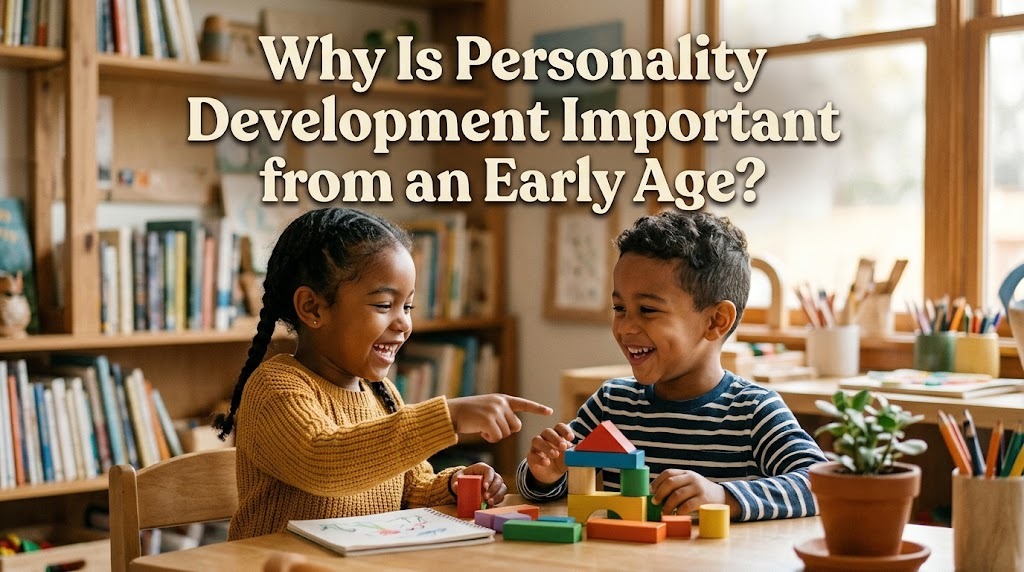
Personality development from an early age plays an important role in shaping how children think, feel, behave, and interact with other people. Childhood is a significant period of growth because children begin learning basic values, developing emotional responses, and forming habits that may influence their behavior in the future. During this stage, family members, teachers, friends, and surrounding environments contribute to the development of a child's personality.
Developing a positive personality early in life can help children become more confident, responsible, independent, and respectful. These characteristics are important not only for academic success but also for building healthy relationships and handling challenges. By providing proper guidance and positive experiences, parents and educators can help children develop strong personal qualities that support their growth into adulthood.
UNDERSTANDING PERSONALITY DEVELOPMENT IN CHILDHOOD
Personality development in childhood is the process through which children gradually develop their individual characteristics, attitudes, emotions, and patterns of behavior. It begins during the early stages of life and continues as children experience different situations and interact with people around them. During this process, children learn how to express themselves, respond to emotions, understand social expectations, and make simple decisions.
Early childhood is particularly important because children are highly influenced by their surroundings and everyday experiences. They observe the behavior of adults, imitate actions, and gradually develop their own understanding of right and wrong. Positive guidance and consistent support can help establish healthy behavioral patterns that become valuable foundations for future development.
BUILDING SELF CONFIDENCE FROM AN EARLY AGE
Self-confidence is one of the most important qualities that children can develop during their early years. Children who receive encouragement and appreciation are more likely to believe in their abilities and feel comfortable trying new activities. Confidence also helps them express their opinions, participate in group activities, and face unfamiliar situations without excessive fear.
Parents and teachers can support confidence by giving children opportunities to make choices, complete simple responsibilities, and learn from mistakes. Instead of expecting children to perform perfectly, adults should appreciate their effort and progress. This approach helps children understand that failure is part of learning and that improvement requires practice. Over time, these experiences can build a stronger sense of self-worth and independence.
DEVELOPING GOOD CHARACTER AND POSITIVE VALUES
Personality development from an early age helps children understand important values such as honesty, kindness, respect, responsibility, and fairness. These values influence how children treat other people and respond to different situations. When children learn positive behavior consistently, they gradually understand the importance of considering other people's feelings and respecting social rules.
Parents and educators play an important role in teaching these values through everyday examples. Children often learn more effectively by observing how adults behave than by simply listening to instructions. For example, parents who demonstrate honesty, apologize when they make mistakes, and treat others respectfully provide practical examples for children to follow. Developing positive values early can help establish a strong foundation for responsible behavior in adulthood.
IMPROVING EMOTIONAL INTELLIGENCE AND SELF CONTROL
Emotional intelligence refers to the ability to recognize, understand, and manage emotions while also considering the feelings of others. Developing this ability during childhood helps children respond to different situations in healthier ways. They gradually learn to identify feelings such as happiness, sadness, anger, and disappointment instead of expressing every emotion through uncontrolled behavior.
Self-control is another important part of emotional development. Children need guidance to understand how to manage frustration, wait for their turn, and respond appropriately when things do not happen as expected. Parents can support this process by helping children name their emotions, communicate their needs, and practice calming strategies. These skills can improve emotional stability and help children develop healthier relationships as they grow older.
SUPPORTING SOCIAL SKILLS AND HEALTHY RELATIONSHIPS
Personality development also influences how children communicate and build relationships with other people. Through interactions with family members, classmates, teachers, and friends, children learn to share, cooperate, listen, and respect different opinions. These experiences help them understand that successful relationships require mutual understanding and consideration.
Developing social skills early can make it easier for children to participate in group activities and adapt to different social environments. They also learn how to solve disagreements without using aggressive behavior and how to express their feelings appropriately. Positive social experiences can encourage empathy and cooperation, which are valuable qualities in school, family life, and future professional environments.
ENCOURAGING INDEPENDENCE AND RESPONSIBILITY
Independence is an important characteristic that allows children to complete tasks and make appropriate decisions without always depending on other people. Developing independence from an early age helps children become more confident in their abilities and understand that they can take an active role in everyday activities. Simple responsibilities, such as organizing toys, preparing school materials, or completing homework, can provide valuable learning experiences.
Responsibility develops when children understand that their actions have consequences. Parents can encourage this quality by giving age-appropriate tasks and allowing children to experience the results of their decisions within safe boundaries. When children make mistakes, adults can guide them to understand what happened and how to improve. These experiences gradually prepare children to become more independent and accountable individuals.
THE ROLE OF FAMILY AND SCHOOL IN PERSONALITY DEVELOPMENT
Family and school are two important environments that influence personality development during childhood. The family provides children's earliest experiences of communication, emotional support, discipline, and social behavior. A supportive home environment can help children feel secure, develop trust, and learn positive values through everyday interactions.
Schools provide additional opportunities for children to develop their personalities through education, friendships, teamwork, and extracurricular activities. Teachers can encourage discipline, curiosity, cooperation, and respect for differences. When families and schools provide consistent guidance, children receive stronger support in developing positive attitudes and behavior. Cooperation between parents and educators is therefore important for creating an environment that supports healthy personality development.
PREPARING CHILDREN TO FACE FUTURE CHALLENGES
Developing a positive personality early in life can help children prepare for challenges they may encounter during adolescence and adulthood. Qualities such as resilience, confidence, patience, and responsibility allow individuals to respond more effectively to difficulties. Children who learn how to manage disappointment and solve problems may become better prepared to handle academic pressure, social conflicts, and unexpected changes.
Early personality development also supports better decision-making. Children who understand positive values and personal boundaries can gradually learn to evaluate situations and consider the consequences of their actions. These abilities become increasingly important as they gain more independence and face greater responsibilities. Although personality continues to develop throughout life, the foundations established during childhood can provide valuable guidance for future growth.
CONCLUSION
Personality development from an early age is important because it helps children build self-confidence, positive values, emotional intelligence, social skills, independence, and responsibility. These qualities influence how children understand themselves, interact with others, and respond to different situations. Childhood provides valuable opportunities to establish positive habits and behavioral patterns that can support personal growth throughout life.
Parents, teachers, and surrounding communities all have important roles in supporting this process. Through positive examples, consistent guidance, emotional support, and meaningful experiences, children can develop healthy personalities and prepare themselves for future challenges. Ultimately, early personality development is an important foundation for raising confident, responsible, independent, and well-rounded individuals.
Recent Posts

Bagaimana Sistem SKS pada Program Kuliah... 22.11.2026/45 View

How Does Technology Make Daily Evaluation... 21.11.2026/73 View

Apa Strategi Menghadapi Kesenjangan antara Kompetensi... 21.11.2026/75 View

Mengapa Inventaris Aset Penting bagi Kelancaran... 21.11.2026/71 View

When Should Musicians Join a Record... 21.11.2026/75 View
